
Smith & Wesson M&P FPC 5.7: Buyer Fit and Specs
June 10, 2026
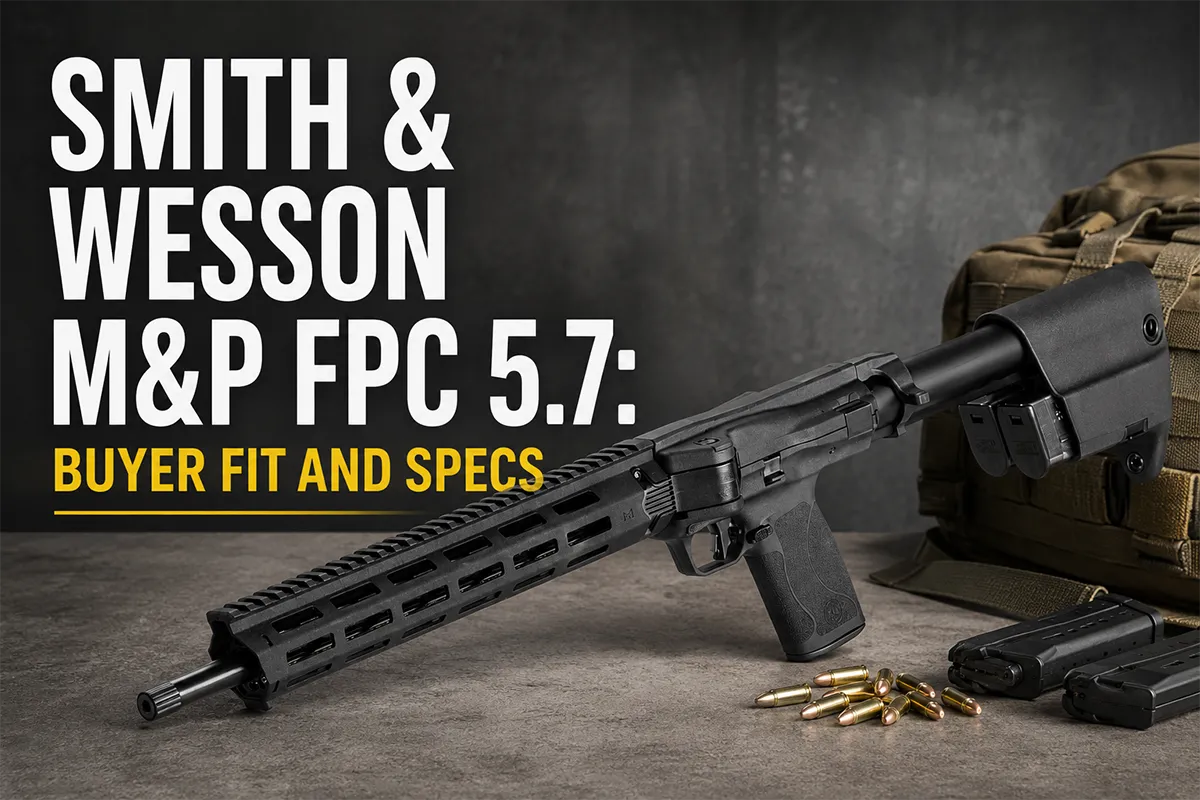
The Smith & Wesson M&P FPC 5.7 gives buyers a folding semi-auto carbine built around the 5.7×28 mm cartridge. It matters because it pairs compact storage with familiar M&P controls and shared magazines from the M&P 5.7 pistol. That makes it more than a simple chambering update for people comparing range, storage, and platform fit.
The short answer: research it if you already like the M&P 5.7 pistol, want a light 5.7×28 mm carbine, or need a rifle that folds without disturbing an optic. Skip it if low ammunition cost, common 9 mm magazines, or traditional rifle power are your main priorities.
Smith & Wesson M&P FPC 5.7 Specs at a Glance
Smith & Wesson lists the M&P FPC 5.7 as a rifle chambered in 5.7×28 mm on its official product page. American Rifleman also reported a 16.25-inch barrel, 16.38-inch folded length, 30.38-inch overall length, and three included 22-round magazines. Those numbers put it in the compact carbine lane, not the full-power rifle lane.
| Platform | Action | Caliber | Barrel/Weight | Capacity | OAL | MSRP/Street |
|---|---|---|---|---|---|---|
| FPC folding carbine | Semi-auto blowback | 5.7×28 mm | 16.25 in / 65.2 oz | 22 rounds | 16.38 in folded / 30.38 in open | $719 MSRP |
For GunGenius research, start with the semi-auto rifles category, then compare current listings under the Smith & Wesson brand page. Those two views help separate the FPC from AR-pattern rifles, rimfire folders, and heavier pistol-caliber carbines.
What Problem Does This Folding Pistol Carbine Solve?
The main problem is storage. Many carbines become awkward once an optic, sling, and case enter the picture. The FPC folds horizontally, so an optic can stay mounted on the top rail. That design helps owners store the carbine in a smaller case and keep the sight setup intact.
Magazine commonality is the second problem it solves. The 5.7 version uses M&P 5.7 pistol magazines. A buyer who already owns that pistol can research one magazine ecosystem instead of two. The stock also stores two spare magazines, so the carbine can carry extra ammunition on board.
Recoil is another reason the platform is getting attention. The 5.7×28 mm cartridge is known for light recoil and flat flight compared with many handgun cartridges. A 16-inch barrel can make the cartridge feel more useful at distance than it does from a handgun. It still is not a substitute for a centerfire rifle cartridge.
How It Compares With the 9 mm FPC
The 9 mm FPC remains the easier choice for buyers who value ammunition availability and lower practice cost. Nine millimeter magazines and loads are common, and many shooters already own compatible M&P pistols. That gives the 9 mm model a simple ownership case.
The Smith & Wesson M&P FPC 5.7 leans toward flatter shooting, lighter recoil, and a higher-velocity cartridge. It also weighs less than some other FPC variants. That mix suits range use, compact storage, and buyers who are already invested in 5.7×28 mm handguns.
Cost changes the equation. The 5.7 cartridge usually costs more than 9 mm, and defensive or specialty loads can narrow your choices. Buyers should price magazines, ammunition, optics, and a case before deciding that the newer chambering is the better value.
Choose the chambering around your actual use. Storage size, magazine sharing, ammunition cost, and optic setup matter more than the newest label.
Who Should Research the Smith & Wesson M&P FPC 5.7?
The strongest fit is the current M&P 5.7 owner. Shared magazines reduce clutter and make the carbine easier to evaluate as part of a small platform family. That buyer can compare one pistol and one folding carbine without learning a new control layout.
It also fits the buyer who wants a light range carbine with a compact storage footprint. The folding design is useful for vehicle-to-range transport, home storage, and small cases. The design does not turn it into a pocketable firearm, but it does reduce length in a practical way.
A third fit is the 5.7-curious shooter who wants more stability than a handgun provides. The carbine format adds shoulder support, a longer sight radius if irons are added, and more rail space. Those details make accuracy testing easier for many shooters.
Questions to Compare Against Other 5.7 Carbines
If you are comparing the Smith & Wesson M&P FPC 5.7 with other 5.7 carbines, focus on the whole system. Some platforms offer higher capacity. Others feel more like an AR or use a different magazine pattern. The FPC makes the most sense when folded storage and M&P magazine sharing matter.
Ask how often the rifle will leave the safe, how much 5.7 ammunition you will actually shoot, and whether a folded carbine changes your storage plan. A carbine that is easy to store may get used more often. A carbine that is expensive to feed may sit unused after the first few range trips.
Accessories should also stay realistic. A compact optic, two-point sling, and spare magazines cover most research needs. Heavy lights, oversized optics, and bulky cases can work against the main reason this platform exists. Keep the setup aligned with compact handling.
Where Buyers Should Be Careful
Do not treat the FPC 5.7 as a general-purpose rifle. The cartridge is useful, but it does not match the energy or terminal range of common centerfire rifle rounds. It is better viewed as a compact carbine for people who understand the tradeoff.
Also check local rules before shopping. Magazine capacity, rifle features, and threaded barrels can be regulated differently by state. This article is not legal advice. Use current state resources or a qualified local professional when rules affect your purchase.
Optics deserve attention too. The carbine does not need the same optic as a full-size rifle. Many buyers will be best served by a compact red dot, simple sling, and a case that works with the folded profile. Start simple, then add accessories after range time.
Research Checklist Before You Buy
- Confirm whether you want 5.7×28 mm or 9 mm for practice cost.
- Check magazine availability for the M&P 5.7 pattern.
- Compare folded length with your actual case or storage space.
- Decide whether the threaded barrel matters for your setup.
- Budget for optics, magazines, ammunition, and range testing.
- Review state rules before choosing standard or compliant magazines.
Bottom Line for GunGenius Readers
The Smith & Wesson M&P FPC 5.7 is not the cheapest FPC to feed, and it is not a replacement for a full-power rifle. Its value is narrower and more interesting. It combines a folding rifle profile, 5.7×28 mm performance, and M&P magazine sharing in one compact package.
That makes it worth researching for shooters who already like the M&P system or want a light 5.7 carbine for range use. Buyers who mainly want inexpensive practice should compare the 9 mm FPC first. Buyers who need more downrange energy should compare conventional rifle platforms instead.
For a focused search, compare current Smith & Wesson M&P FPC 5.7 listings against the 9 mm FPC and other 5.7 carbines. Look for magazine count, compliant versions, optic-ready setup, and total cost. The right answer depends on the system you want to build.