
EAA Girsan Witness2311 CMXX Buyer Fit and Specs
June 11, 2026
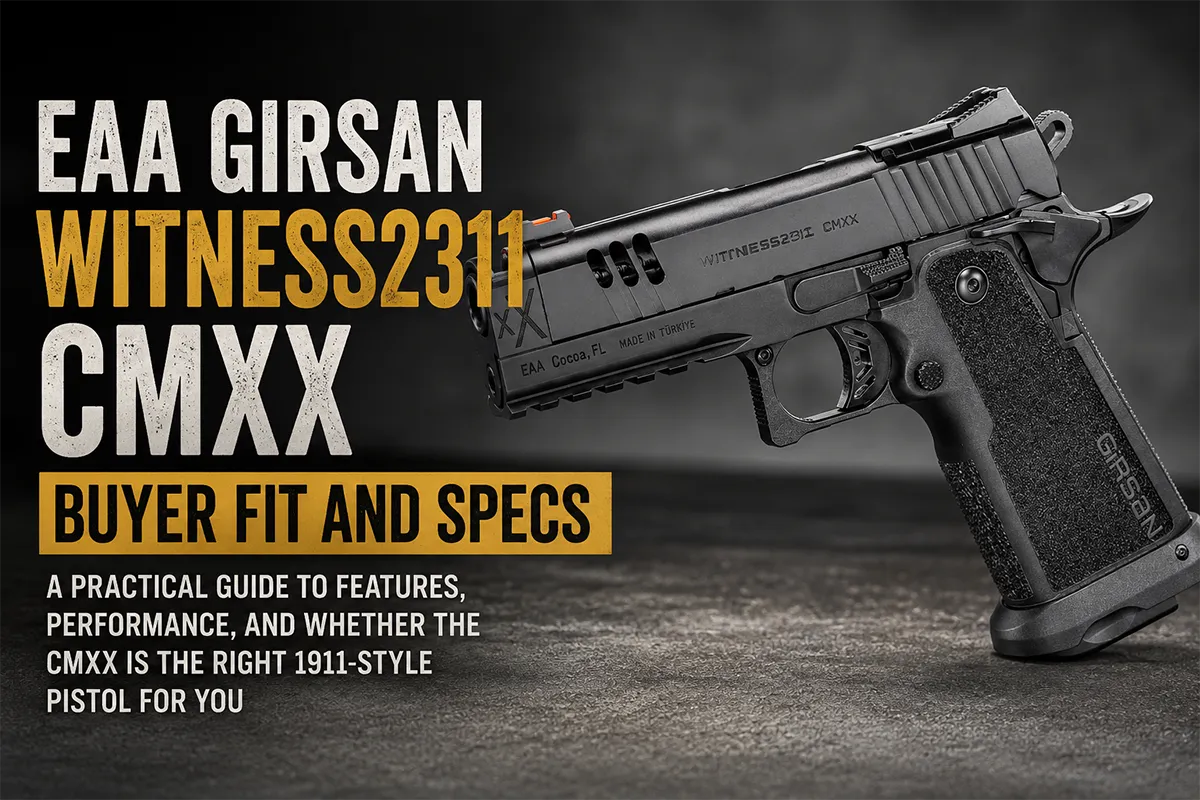
The EAA Girsan Witness2311 CMXX is a compact, compensated, double-stack 1911-style pistol for buyers comparing high-capacity carry-size handguns. It matters because it puts 9mm, .45 ACP, and 10mm options in one modern 2311 family. The question is not only caliber. Buyers also need to weigh grip size, optic footprint, trigger feel, safety layout, and how much recoil control they expect from the integral compensator.
For GunGenius readers, the CMXX fits the same research lane as other modern semi-auto pistols. It is a feature-heavy option from EAA, imported under the Girsan Witness2311 line. Factory details on EAA’s product page list the core features: standard double-stack magazines, a tuned trigger, a 4.25-inch bull barrel with compensator, an RMSc optic cut, and an automatic firing-pin block.
EAA Girsan Witness2311 CMXX at a glance
The short version is simple. This pistol tries to give 1911 fans a higher-capacity frame, a carry-ready profile, and recoil help from the factory. A classic single-stack 1911 is thinner and more traditional. A race-only open gun is more specialized. The CMXX sits between those lanes, which is why the buyer fit deserves a closer look.
| Platform | Action | Caliber | Barrel/Weight | Capacity | OAL | MSRP/Street |
|---|---|---|---|---|---|---|
| Compact 2311-style pistol | Single action | 9mm, .45 ACP, or 10mm | 4.25-inch bull barrel with integral compensator; weight varies by SKU | Varies by caliber and magazine | Varies by SKU; verify current listing | From $1,149 MSRP |
New pistol families often ship in waves, so SKU details matter. Treat any retailer listing as current only for that exact caliber, finish, and magazine package. Confirm the UPC, included magazines, optic cut, and return policy before comparing prices. That extra check is boring, but it prevents expensive surprises.
What problem does the CMXX solve?
Many buyers like the 1911 trigger and grip angle, but they want more capacity and easier optic mounting. Others want a compact 10mm or .45 ACP without moving to a large hunting-size pistol. The CMXX answers those problems with a double-stack magazine setup, an accessory rail, and an optics-ready slide.
The compensated barrel is the headline feature. A compensator redirects gas to help reduce muzzle rise. That does not remove recoil, and it does not replace practice. It can make the pistol feel flatter during normal range use, especially in stronger calibers. Buyers should still test the specific load they plan to use.
The other major change is the grip system. EAA says the frame removes the traditional 1911 grip safety and uses an automatic firing-pin block instead. That can make the grip feel slimmer and more direct. It also changes the manual of arms. Anyone used to a traditional 1911 should handle the pistol before deciding.
Caliber choice: 9mm, .45 ACP, or 10mm
Start with purpose, then pick the caliber. The 9mm version makes the most sense for range volume, lower ammo cost, and broad magazine availability. It also gives the compensator an easier job. If your goal is a familiar 2311-style range pistol with carry-size proportions, 9mm is the practical baseline.
The .45 ACP version speaks to buyers who want a larger bullet in a familiar 1911 chambering. It gives the CMXX a more traditional feel, even though the frame is modern. It may also interest shoppers who already stock .45 ACP. The tradeoff is usually capacity, ammo price, and more recoil than 9mm.
The 10mm version is the attention-getter. A compact compensated 10mm pistol is interesting for shooters who want more energy in a semi-auto handgun. It is also the option that demands the most homework. Check availability, magazine support, recoil tolerance, and whether the pistol balances well in your hands.
How the EAA Girsan Witness2311 CMXX compares
The EAA Girsan Witness2311 CMXX should be compared against three groups. First are compact 2011 pistols in 9mm. Those models may offer smoother triggers, broader aftermarket parts, or more refined fit. They can also cost much more. The CMXX makes its case on features per dollar.
Second are traditional single-stack 1911 pistols. A classic 1911 may have a thinner grip and a proven parts ecosystem. The CMXX counters with more magazine capacity, optics support, a rail, and a compensator. The right answer depends on whether you value tradition or modern setup flexibility.
Third are polymer-framed duty pistols. They often win on weight, maintenance simplicity, and holster support. The CMXX offers a different feel: single-action trigger, metal-frame heft, and 1911-style controls. Buyers who already like thumb safeties may see that as a benefit. Others may prefer simpler striker-fired controls.
Optics, controls, and carry fit
The RMSc optic footprint is useful, but it is not universal. Before buying a red dot, confirm the exact footprint, screw length, and whether an adapter plate is needed. Small optic details can turn a simple upgrade into a parts search. That is especially true on newer pistol families.
The ambidextrous thumb safety is a plus for left-handed shooters and anyone who trains with either hand. The accessory rail supports a compact weapon light, but the rail also affects holster fit. If you plan to carry the pistol, confirm holster options for your exact light and optic setup.
Grip texture is another practical point. Aggressive texture helps manage recoil, but it can rub during daily carry. The CMXX is described as carry ready, yet every buyer has a different tolerance for width, texture, and weight. Handle it with an unloaded magazine if possible.
Reliability questions to ask early
Reliability research should start before the first range trip. Ask which magazines ship with the pistol, whether spare magazines are easy to source, and whether the preferred defensive or hunting load matches the feed profile the pistol likes. A 2311-style pistol depends on magazine geometry more than many buyers expect.
Also check cleaning access, spring replacement guidance, and warranty terms. A compensated barrel can collect fouling faster around the ports. That does not make it fragile. It does mean maintenance should be part of the ownership plan, especially for 10mm buyers who shoot hotter loads.
Buyer research checklist
- Confirm which caliber is actually in stock, not only announced.
- Verify magazine capacity and spare magazine pricing for that caliber.
- Check optic footprint details before ordering a red dot.
- Confirm holster support with your chosen light and optic.
- Compare recoil comfort across 9mm, .45 ACP, and 10mm if possible.
- Read the current manual before relying on the safety system.
This checklist matters because the CMXX is not a single-spec pistol. The features are similar across the line, but each caliber can change the buying experience. A 9mm range pistol, a .45 ACP 1911 alternative, and a compact 10mm all solve different problems.
Who should shortlist this pistol?
Shortlist the CMXX if you want a modern 1911-style pistol with optics support, higher capacity, and a factory compensator. It is especially relevant if you are comparing compact 2011 pistol options but do not want premium custom pricing. The feature set is broad for the listed MSRP.
Skip it if you want the lightest possible carry gun, a traditional grip safety, or the widest holster ecosystem on day one. Newer pistol families can take time to build aftermarket support. That is not a flaw, but it is a practical buying factor.
The EAA Girsan Witness2311 CMXX is most interesting as a research target, not an impulse buy. Compare the exact SKU, pick the caliber by use case, and confirm the support gear before committing. Done that way, the CMXX can make sense for buyers who want 1911 handling with modern capacity and setup options.