
Henry H1 Rimfire Lever Action: Which Model Fits?
June 9, 2026
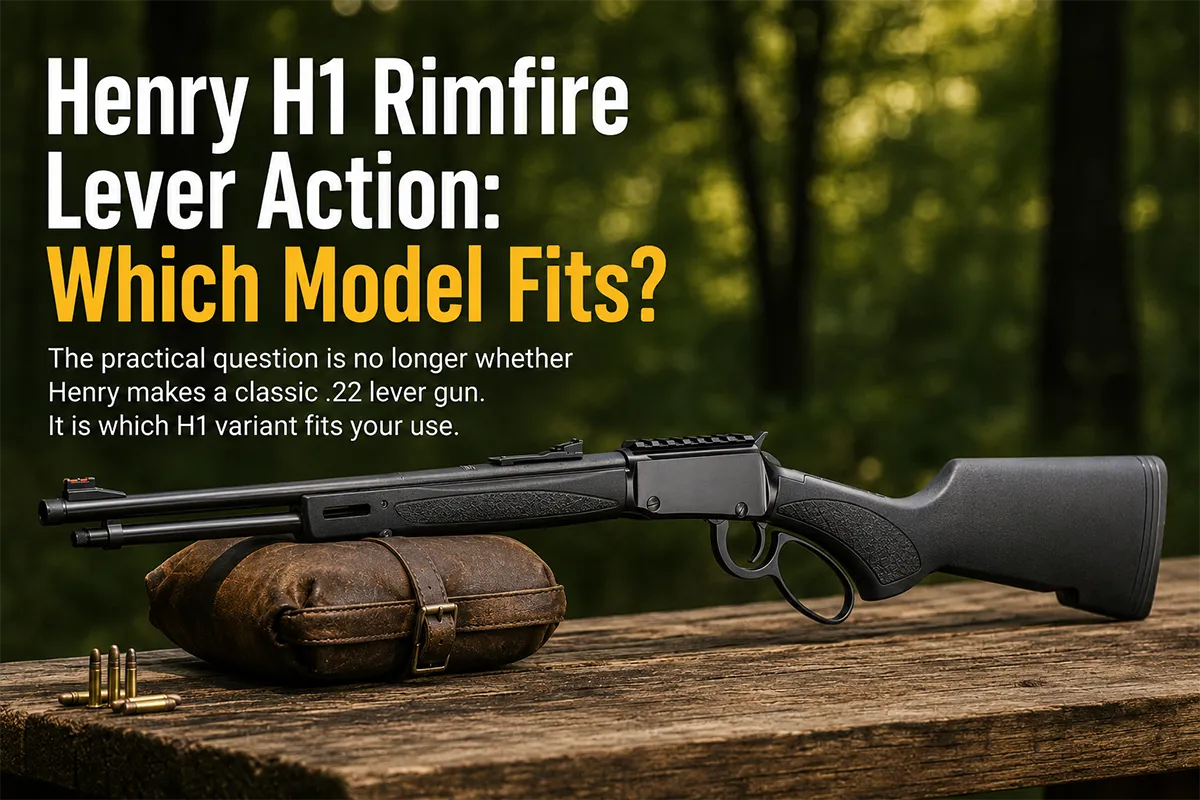
The Henry H1 rimfire lever action lineup got much broader after Henry announced its H1 expansion on April 17, 2026. The practical question is no longer whether Henry makes a classic .22 lever gun. It is which H1 variant fits your use: casual plinking, small-game hunting, optics-first range work, compact youth fit, or a modern threaded-barrel setup.
The short answer is simple. Choose the Western Rifle or Western Frontier if you want traditional walnut and open sights. Optics-focused buyers should look at the Sporter Rifle and Sporter Carbine. Shorter length-of-pull needs point to the Bandit. Modern compact setup points to the H1 X Model, the lightest setup in the family.
Henry H1 Rimfire Lever Action Lineup at a Glance
The H1 family now stretches from old-school field rifles to synthetic-stocked carbines. That is useful, but it also makes comparison harder. Focus on the job first, then compare barrel length, sights, stock shape, rail support, caliber, and length of pull.
| Model | Best Fit | Caliber | Barrel/Weight | Optics and Sights | Key Note |
|---|---|---|---|---|---|
| H1 Western Rifle | Classic plinking | .22 S/L/LR or .22 WMR | 18.5 in / varies by SKU | Semi-buckhorn, grooved receiver | Traditional feel with pistol-grip walnut |
| H1 Western Frontier | Classic field use | .22 S/L/LR or .22 WMR | 20 in octagon / varies by SKU | Semi-buckhorn, grooved receiver | Heavier traditional profile |
| H1 Sporter Rifle/Carbine | Optics-first rimfire use | .22 S/L/LR, .22 WMR, select .17 HMR | 16.5-18.5 in / about 5.35 lbs | Integrated Picatinny rail, no irons | Threaded barrel and Monte Carlo stock |
| H1 Bandit Rifle | Smaller shooters | .22 S/L/LR or .22 WMR | 18.5 in / about 5.25 lbs | Integrated Picatinny rail, no irons | 13-inch length of pull |
| H1 X Model | Modern compact setup | .22 S/L/LR or .22 WMR | 16.5 in / 5 lbs | Fiber optics and Picatinny rail | Threaded barrel, M-LOK slots, synthetic stock |
Why the H1 Expansion Matters
Rimfire lever rifles are often bought for simple reasons. They are fun, low-recoil, easy to carry, and useful for informal range days. The problem is that buyers now expect more than a plain iron-sight .22. Many want a low-power optic, a compact barrel, sling points, or a factory threaded muzzle for legal suppressor use.
Henry is answering that split market. The company kept traditional walnut models in the lineup, but it added factory options that reduce the need for aftermarket work. That matters for a buyer who wants a clean setup without guessing about rails, stock fit, or barrel threading.
It also gives the H1 a clearer role against semi-auto rimfires. A semi-auto .22 can still be faster for high-volume shooting. A lever action offers a different experience: manual cycling, simple handling, broad appeal for newer shooters, and a mechanical rhythm many owners enjoy.
Choose by Use Case, Not by Furniture
Classic Plinking and Backyard-Range Feel
The Western Rifle is the cleanest pick if you want a familiar Henry rimfire with a little more shape in the stock. It keeps adjustable semi-buckhorn sights, a grooved receiver cover, and walnut furniture. That makes it a good fit for buyers who want a simple rifle first and an optic only if their eyes demand one later.
The Western Frontier leans harder into tradition. Its 20-inch octagon barrel adds visual appeal and steadier front-end weight. That can feel great from field positions or a bench, but it is less compact than the carbine-style options.
Optics and Suppressor-Ready Research
The Sporter models are built for buyers who already know they want glass. They skip iron sights and use an integrated Picatinny rail. That approach keeps the top of the rifle simple and helps low-mounted optics sit where they belong.
The threaded barrel is the other major draw. If a suppressor is legal where you live, a threaded rimfire lever rifle can be a quiet and pleasant range setup. Confirm local rules, barrel thread specs, magazine-tube clearance, and safe suppressor alignment before buying any host.
Compact Fit for Smaller Shooters
The Bandit Rifle solves a common rimfire problem: adult-sized rifles can feel long to youth shooters or smaller-framed adults. Its 13-inch length of pull should make mounting easier without turning the rifle into a tiny trainer. It still keeps useful adult features, including a threaded barrel and rail.
Fit matters more than raw weight here. A rifle that is too long can push the shooter backward on the stock and make sight alignment messy. A shorter stock can help the shooter keep the head upright and the trigger reach natural.
Modern Rimfire Lever Gun Setup
The H1 X Model is the most distinct option. It uses black synthetic furniture, a 16.5-inch threaded barrel, fiber-optic sights, a rail, sling studs, M-LOK slots, and included spacers for length-of-pull adjustment. At about 5 pounds, it is also the lightest H1 rimfire lever action configuration Henry lists.
This is the model to research if you want a compact field rifle with modern controls and less concern about scratching wood. It will not have the same classic look as the Western rifles. That is the point. It trades nostalgia for setup flexibility.
Caliber Choice: .22 LR, .22 Magnum, or .17 HMR
Most buyers should start with .22 S/L/LR. Ammunition is widely available, recoil is minimal, and the rifle stays useful for plinking, casual target work, and small-game research. It is also the best starting point for new shooters who need lots of practice without much noise or cost.
The .22 Magnum models make sense when you want more reach and energy in a rimfire. They usually cost more to feed, but they can be a better match for field use where legal and appropriate. The .17 HMR Sporter Rifle is more specialized. It favors flatter trajectories and small targets, but it gives up some of the cheap, casual charm of .22 LR.
Research Checklist Before You Compare Prices
- Decide whether you want iron sights, an optic, or both.
- Check length of pull before assuming a youth or adult fit.
- Compare barrel length against storage, field carry, and bench use.
- Confirm whether a threaded barrel matters for your legal use case.
- Pick caliber by ammunition cost, range distance, and field needs.
- Look at sling support if the rifle will leave the bench often.
- Compare actual street prices, not only MSRP.
That checklist keeps the decision grounded. It also prevents a common buying mistake: choosing the best-looking model, then adding parts to make it do another model’s job. If you want optics and a threaded barrel, start with a Sporter or X Model. If you want open sights and walnut, start with the Western rifles.
Where It Fits in GunGenius Research
Use the GunGenius lever-action rifles category when comparing the H1 against other rimfire and centerfire lever guns. Then check the Henry brand page to see how the H1 sits beside larger Henry rifles, specialty models, and related catalog entries.
The Henry H1 rimfire lever action is not a single answer anymore. It is a family of answers. For most casual shooters, the Western Rifle or .22 LR Sporter will be the easiest place to start. For a compact, modern range and field setup, the H1 X Model deserves the first look.
Best fit beats best spec. Pick the H1 model that matches your sights, stock fit, and caliber needs before chasing extras.
If you are still unsure, narrow the choice to two models. Compare how each handles your sight plan, carry plan, and likely ammunition budget. The right Henry H1 rimfire lever action should feel easy to set up, not like a project waiting for replacement parts.