
SIG P385: Models, Compatibility, and Buyer Checks
October 1, 2026
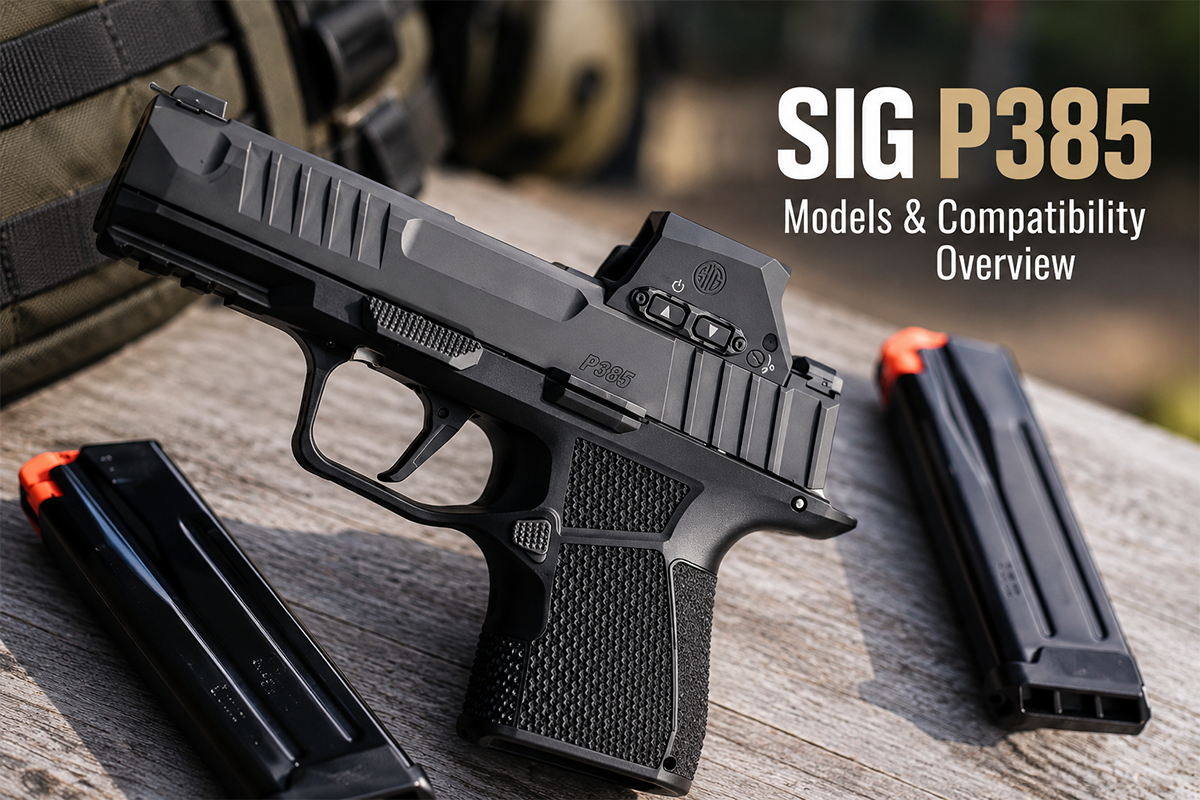
The SIG P385 is a new modular, striker-fired 9mm pistol family positioned between carry and full-size duty roles. SIG announced five versions on September 22, 2026: MACH3D, COMP, FULL, CARRY, and COMPACT. The important buyer questions are not limited to recoil claims. Grip fit, magazine compatibility, optics, holsters, model availability, and total setup cost will determine whether this new platform makes sense.
This is a separate design, not a renamed P320 or enlarged P365. It has a new serialized fire control unit (FCU), a low bore axis, an integrated recoil-dampening system, and adjustable MagStrap grip components. Some familiar parts carry over, but most do not. That distinction should guide every listing and accessory check.
What Is the SIG P385?
The SIG P385 is a family of polymer-grip, striker-fired 9mm pistols built around a removable FCU. The platform combines SIG’s Recoil Dampening System (SRDS), a low bore axis, fully ambidextrous controls, SIG-LOC PRO optic mounting, and adjustable MagStraps. Standard P320 magazines work, but the pistol uses its own slide, barrel, grip module, internal architecture, and holster pattern.
SRDS is integrated into the grip module and is intended to absorb vibration during recoil. The low bore axis places the barrel closer to the shooter’s hand. In theory, both features can limit muzzle movement and speed sight recovery. SIG claims at least a 20 percent reduction in muzzle rise depending on the model, while the MACH3D compensator carries a claim above 30 percent. Treat those figures as manufacturer measurements until broader independent testing uses consistent ammunition and methods.
SIG P385 Models at a Glance
| Model | Action | Caliber | Barrel/Weight | Capacity | OAL | Buyer Role |
|---|---|---|---|---|---|---|
| P385 CARRY | Striker | 9mm | 4 in / 28.94 oz | 17 and 21 round | 7.22 in | Carry or duty |
| P385 COMP | Striker | 9mm | 4 in / about 29.12 oz | 17 and 21 round | About 7.9 in | Compensated general use |
| P385 FULL | Striker | 9mm | 4.7 in / about 29.6 oz | 17 and 21 round | About 7.92 in | Full-size duty or range |
| P385 COMPACT | Striker | 9mm | Varies by SKU | 15 round | Not fully published | Shorter-grip carry |
| P385 MACH3D | Striker | 9mm | 3.9 in plus comp / about 30.56 oz | 17 and 21 round | About 7.87 in | Maximum recoil control |
The CARRY gives buyers the clearest baseline because SIG has published complete specifications. It uses a 4-inch carbon-steel barrel, measures 7.22 inches long and 1.32 inches wide, and weighs 28.94 ounces with a magazine. Standard packages include one 17-round and one 21-round steel magazine. Ten-round and manual-safety versions are also listed for applicable markets.
The COMP uses a compensated slide for additional muzzle control. MACH3D goes further with SIG’s advanced compensator and is the performance-focused choice. The FULL favors sight radius and full-size handling, while the COMPACT shortens the grip and uses 15-round magazines. Availability is staggered, so verify the exact SKU rather than assuming every announced version is already shipping.
P320 Compatibility Has Firm Limits
P320 magazine compatibility is the most useful carryover. Current standard magazines fit the new pistol. Original P320 magazines with rounded basepads can also work, but SIG says the P385 metal magwell must be removed. Capacity and grip length still matter. A shorter magazine cannot extend through a longer grip that was not designed around it.
- Compatible: standard P320 magazines, the P320 AXG magwell, and P-Series dovetail iron sights.
- Not shared: the FCU, slides, barrels, grip modules, most internal parts, and holsters.
- Conditional: older rounded-basepad magazines require a magwell change.
This limited overlap is helpful for owners with a supply of P320 magazines. It does not make the P385 a drop-in upgrade path for a P320 collection. Price the pistol as a new system, including a dedicated holster and any model-specific replacement parts.
Grip, Trigger, and Control Differences
The MagStrap system changes more than backstrap thickness. Interchangeable pieces adjust grip circumference, trigger reach, and grip length without replacing the entire module. SIG lists small, medium, and large circumference options. A MagStrap can also move between full-size and compact-length configurations, giving the same core frame a different balance and magazine fit.
The new flat trigger uses a flush Trigger Block as a redundant drop-safety component. It moves with the trigger instead of protruding like a conventional center tab. That design may feel cleaner under the finger, but trigger quality remains subjective. Dry-fire only with the seller’s permission, then evaluate reach, break, reset, and whether the chosen MagStrap keeps the trigger finger centered.
Left-handed buyers receive meaningful support. The slide catch, magazine catch, and optional manual safety are ambidextrous. Shielding around the slide catch is intended to reduce accidental contact during firing. Confirm that the controls remain reachable with the selected grip size and that a high grip does not interfere with slide lock.
Optics and Holsters Need Model-Specific Checks
All announced models use SIG-LOC PRO. SIG says this direct-mount system supports popular RMR and DPP footprint patterns without a separate adapter plate. That does not mean every optic fits every configuration. Confirm the exact optic, screw length, sight height, and whether the chosen SKU includes a ROMEO-X or only iron sights.
Existing P320 and P365 holsters do not fit. The new frame geometry, slide profile, controls, and compensators require a P385-specific holster. Initial makers include Safariland, ANR, and BlackPoint, but support may differ by model, optic, light, safety, and compensator. Secure a confirmed holster before treating a new pistol as ready for carry.
How to Choose a SIG P385 Model
Start with role and grip length, not the most dramatic compensator. The CARRY is the practical reference point for buyers who want a full grip and 4-inch barrel. The COMPACT should suit shorter-grip concealment once final specifications and inventory are clear. FULL buyers gain barrel length and sight radius, while COMP and MACH3D buyers pay for more recoil-management hardware and added length.
- Choose the role: concealed carry, duty, range, or competition.
- Handle each available MagStrap and confirm trigger reach.
- Decide whether standard or compensated length fits the intended holster.
- Check the exact magazine package and local capacity requirements.
- Confirm optic compatibility by footprint, screws, and sight height.
- Budget for a dedicated holster, spare parts, and independent testing time.
A compensated model can reduce movement, but it also changes slide length, cleaning needs, muzzle blast, and holster selection. The base CARRY may offer the better value if grip fit and magazine reuse matter more than the lowest possible muzzle rise. Competition buyers should also check their division rules against the exact SKU before ordering.
SIG P385 Buyer Checklist
- Match the box label, SKU, barrel length, finish, capacity, and safety configuration.
- Verify which models are shipping now and which remain announced or coming soon.
- Inspect included MagStraps and confirm the preferred size is present.
- Test each included magazine for insertion, release, and slide lock while unloaded.
- Confirm the optic package and mounting hardware in the listing.
- Use only a holster confirmed for that model, optic, light, and safety.
- Compare manufacturer recoil claims with independent range reports as they mature.
Use the official SIG P385 product page to confirm current specifications, since the family is entering stores in stages. Then compare inventory through the GunGenius semi-auto pistol catalog and review the broader SIG Sauer brand lineup. Specifications and package contents can change by SKU or compliant-market version.
The best early P385 choice is the model whose grip, holster support, and published specifications fit the job. A launch claim cannot replace hands-on fit or independent reliability data.
The Practical Takeaway
The SIG P385 brings a genuinely new FCU and grip architecture to SIG’s striker-fired lineup. P320 magazine compatibility lowers one ownership cost, while SRDS, MagStraps, ambidextrous controls, and direct optic mounting address common fit and setup concerns. Most other parts remain platform-specific, and long-term reliability evidence is still developing.
Buyers who want the most established specification set should begin with the CARRY. Those considering COMP, FULL, COMPACT, or MACH3D should verify current production status and exact SKU details. A careful model check now prevents expensive surprises with magazines, optics, or holsters later.