
Suppressor Ready Firearms: 2026 Host Checklist
June 5, 2026
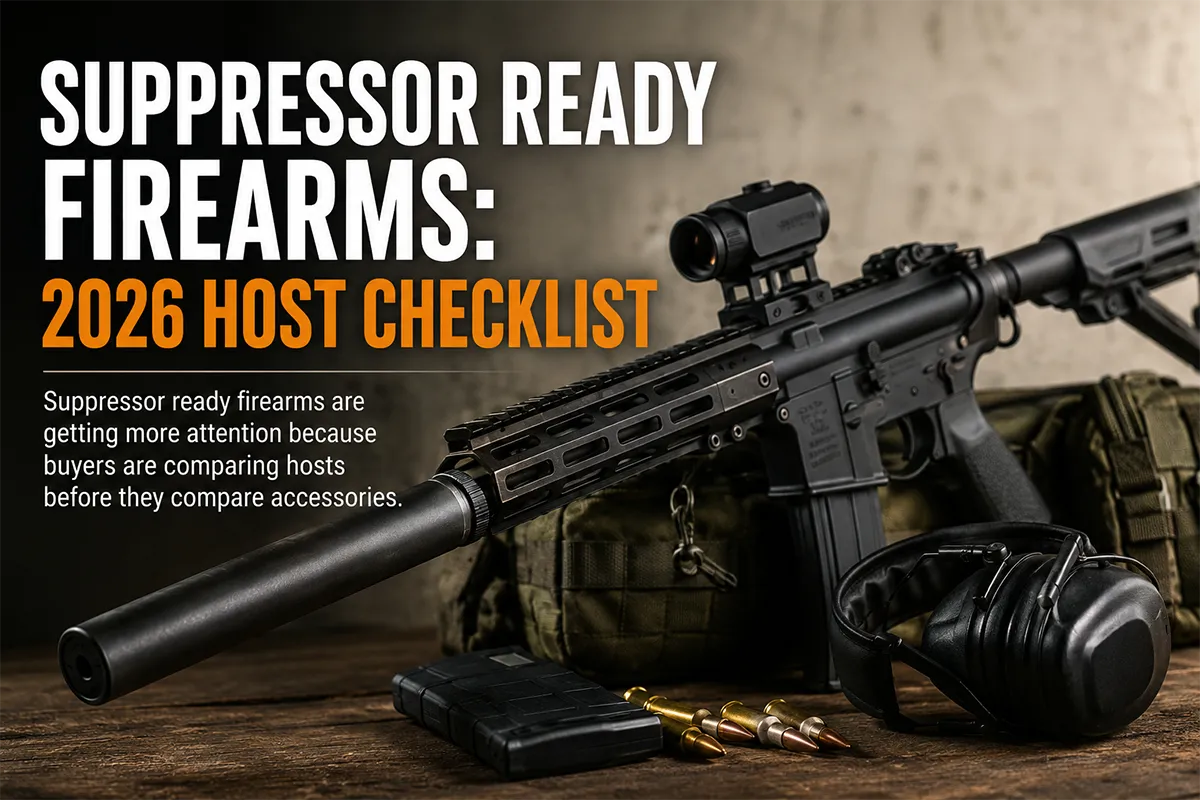
Suppressor ready firearms are getting more attention because buyers are comparing hosts before they compare accessories. The smart question is not just, “Does it have threads?” It is whether the pistol, PCC, or rifle will stay useful after a suppressor changes weight, length, sight picture, and ammunition behavior.
On January 6, 2026, NSSF reported a sharp early-year surge in NFA eForms activity. Treat that as market context, not legal guidance. Rules still vary by location, and buyers should verify requirements with qualified local sources before spending money.
How to Compare Suppressor Ready Firearms
A good suppressor host starts with a stable platform, a concentric threaded muzzle, reliable magazines, and controls that remain easy to reach. For many shoppers, semi-auto pistols are the first stop because threaded-barrel models are common. They are also the most sensitive to extra muzzle weight.
Rifles and pistol-caliber carbines often feel easier to tune because the firearm has more mass. A semi-auto rifle still needs the right gas behavior, handguard clearance, and muzzle thread pattern. Bolt guns remove cycling concerns, but the shooter still needs practical length and balance.
The best host is the firearm you can shoot well with the added length, weight, and maintenance demands included.
Start With the Job, Not the Thread Pitch
Thread pitch matters, but it should come after the use case. A range pistol, bedside research gun, compact PCC, rimfire trainer, and hunting rifle solve different problems. Start with distance, target size, carrying method, noise environment, and ammo availability. Then compare hosts inside that lane.
- Pistol hosts require recoil spring checks, sight height review, optic fit, and magazine testing.
- PCC hosts deserve a look at barrel length, magazine pattern, bolt speed, and handguard clearance.
- Centerfire rifles need gas adjustment research, barrel profile checks, total length planning, and heat awareness.
- Rimfire hosts should prioritize simple cleaning, good magazines, and a quiet ammunition match.
Brand fit also matters. If your research already points toward a known ecosystem, compare pages for SIG Sauer, Ruger, or Glock alongside the firearm category. That keeps the decision grounded in models you can actually compare.
Pistols Need Extra Scrutiny
Suppressor ready firearms in handgun form demand the most careful fit check. A threaded barrel is only the first piece. Slide timing has to work with the added mass. Sight systems or optics must clear the tube. Holster planning may change, even if the suppressor only goes on at the range.
Watch barrel length and shoulder design. Some compact pistols use short barrels that leave little room around the frame or recoil spring assembly. Others need a piston or booster in the suppressor to run correctly. That is normal, but it should be part of the budget before purchase.
Optics-ready pistols can help because the red dot often remains usable over the suppressor body. Tall iron sights can work too, but they may snag more during carry. If the pistol is mainly a range host, comfort and sight picture may matter more than the smallest profile.
Rifles and PCCs Change the Tradeoff
Rifles give the shooter more support points, so added front weight is often easier to manage. That does not make every rifle a good host. Short barrels can be loud and gassy. Long barrels can become awkward after adding several inches at the muzzle.
For rifles, check whether the gas system has adjustment options. A direct-thread hunting rifle may not need much beyond thread quality and barrel profile. A semi-auto may benefit from adjustable gas, heavier buffers, or a factory setup designed to run with a can. Do not assume every combination works the same.
PCCs sit in the middle. Many 9mm carbines use simple blowback actions. They can be reliable, but the action may feel sharper or dirtier with a suppressor. Delayed systems may feel smoother, but they cost more and add their own parts questions.
| Host Type | Main Benefit | Watch Item | Best Research Fit |
|---|---|---|---|
| Threaded 9mm pistol | Compact and common | Cycling and sight height | Range use and carry-platform practice |
| 9mm PCC | Stable and easy to aim | Bolt speed and gas to face | Training, home research, and low recoil |
| Rimfire rifle | Quiet and low cost | Cleaning and ammo sensitivity | New shooters and frequent practice |
| Centerfire rifle | Range and hunting utility | Heat, length, and gas tuning | Field use and precision practice |
Maintenance and Heat Matter More Than Expected
Suppressors push more fouling back into many firearms. That can make a clean host feel different after a few magazines. Before choosing one, check how easily the firearm strips, how expensive the small parts are, and whether the manufacturer gives clear cleaning intervals. A rimfire host can be especially dirty because unjacketed bullets and waxy loads leave residue quickly.
Heat is another practical issue. A suppressor can become too hot to touch after normal range use, and that heat can distort the sight picture through an optic. Gloves, covers, and cooling time are range-management topics, not shortcuts. A buyer who plans long strings of fire should compare barrel profile, handguard space, and spare magazine habits before settling on a compact host.
Budget should include more than the host and the suppressor. Thread protectors, compatible mounts, taller sights, extra magazines, cleaning tools, and test ammunition all add up. A firearm that appears cheaper on day one may cost more after it needs a sight change or reliability work. Build the full comparison around the finished setup.
Ammo Choice Changes the Experience
Ammunition can change how a host feels. Subsonic ammo stays below the speed of sound, which can reduce the sharp crack that supersonic bullets create. It may also change point of impact, cycling speed, and terminal expectations. Keep that in mind when comparing rimfire, 9mm, .300 Blackout, and larger centerfire choices.
Do not buy a host around one load unless that load is available and proven in your firearm. A pistol that only cycles one niche subsonic round is less useful than a pistol that runs several common loads. A rifle with a broad ammo window can be easier to own long term.
Suppressor Ready Firearms Research Checklist
- Confirm the threaded muzzle pattern and shoulder style from the manufacturer.
- Check whether sights or optics remain usable with a suppressor attached.
- Look for reports on cycling with common range and subsonic loads.
- Compare cleaning access, magazine cost, and spare part availability.
- Measure total length with the suppressor installed, not just barrel length.
- Verify state and local requirements before purchase or transfer.
Where This Leaves Buyers
Useful hosts make the whole system easier, not just quieter. They keep controls reachable, sights useful, magazines reliable, and maintenance reasonable. A bargain host can become expensive if it needs immediate parts changes to do the job.
If you are comparing your first host, choose a common caliber and a platform with broad support. Existing owners should research thread quality, sight clearance, and ammo behavior before buying accessories. That order saves money and prevents mismatched parts.
Suppressor ready firearms should be judged as systems. The firearm, ammunition, sights, magazines, and support gear all affect the result. Start with the use case, narrow the category, compare known brands, and then decide which host deserves a closer look.