
Bersa BP9 FS: Buyer Fit and Specs
June 12, 2026
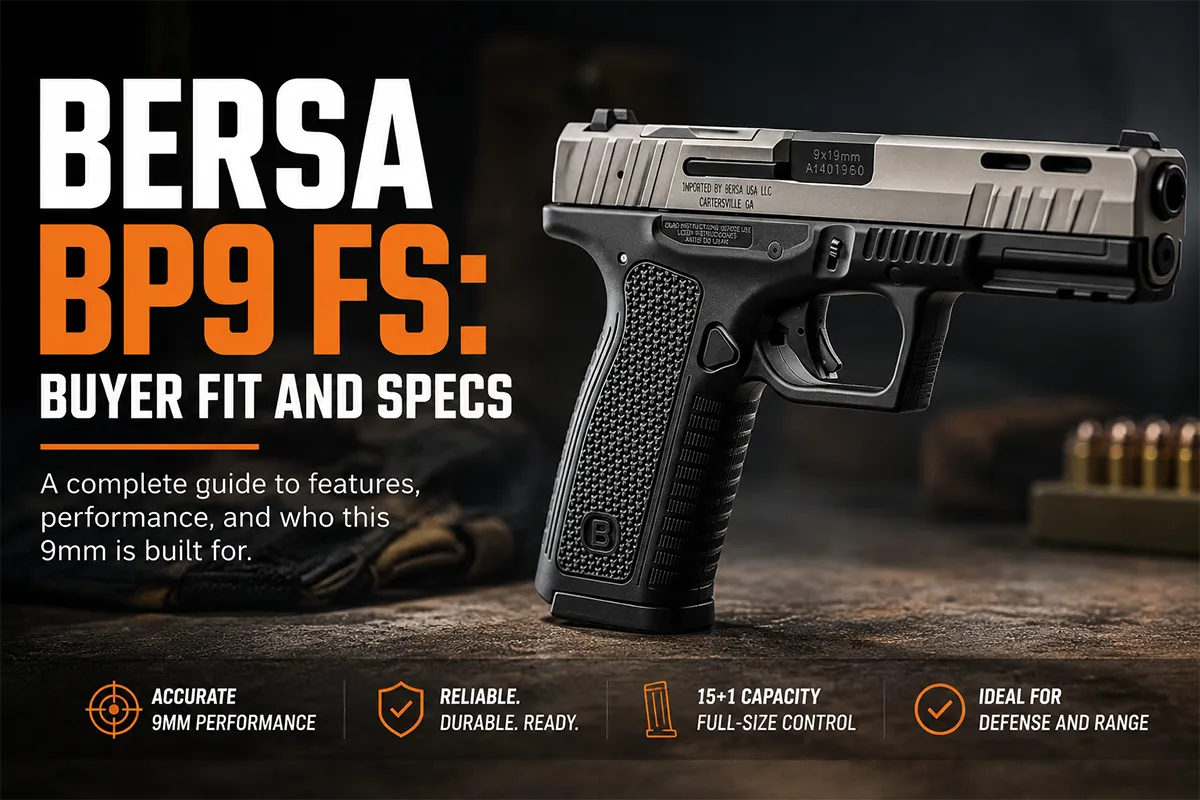
The Bersa BP9 FS gives budget-minded pistol researchers a new full-size 9mm option with modern controls, a red-dot-ready slide, and practical holster support. The short version is simple: this is not just a stretched BP9cc. It is a ground-up double-stack pistol aimed at range use, home-defense research, and entry-level competition.
The question is not whether the spec sheet looks busy. It does. The better question is whether its mix of price, capacity, trigger, optic cut, and Glock 17 holster fit solves real problems for buyers comparing the semi-auto pistol category.
Bersa BP9 FS Specs That Matter
Bersa lists the BP9 FS with a 4.25-inch barrel, 17+1 capacity, polymer frame, 26.1-ounce weight, and $450 MSRP on its official product page. Those numbers put it squarely in the full-size service-pistol lane, but at a price that overlaps many value-tier handguns.
| Platform | Action | Caliber | Barrel/Weight | Capacity | OAL | MSRP/Street |
|---|---|---|---|---|---|---|
| Full-size polymer pistol | Striker-fired | 9mm Luger | 4.25 in / 26.1 oz | 17+1 | Not listed by maker | $450 MSRP |
The slide is 4140 steel, and the frame uses a two-slot Picatinny accessory rail. The grip has Bersa’s Premium Hex Grip Texture. That texture matters because full-size pistols need enough purchase for fast follow-up shots without feeling abrasive during longer range sessions.
The BP9 FS also ships with two proprietary double-stack magazines. They are not Glock magazines, so buyers should plan around Bersa magazine availability. That is one of the key tradeoffs when comparing a value pistol against older, deeper aftermarket platforms.
What the Optic Cut and Controls Mean
The BP9 FS uses an RMSc-footprint optic cut. That footprint is common on slim and compact pistol optics, so it gives buyers a broad list of small enclosed and open-emitter dot options. It is not the same choice as an RMR footprint, which is more common on larger duty slides.
For many buyers, that is fine. A direct RMSc cut can keep the sight low and avoids stacking plates under the optic. The tradeoff is that some full-size-duty red dots will need another host pistol. Confirm the exact optic footprint before buying a sight.
Bersa specifies a 3.7-pound trigger pull with a tabbed trigger safety and short reset. That is light for a factory striker-fired pistol, so researchers should handle one before deciding whether it fits their training habits. A lighter trigger can feel crisp at the range, but it also demands disciplined handling.
The reversible magazine release is a practical win for left-handed shooters. The slide-stop setup is less central to the buyer decision, but the mag release matters every time a shooter reloads or clears the pistol.
Finishes, Magazines, and First-Batch Questions
Launch coverage lists black, two-tone, and flat dark earth finish choices. Finish color should not drive the decision, but finish type can matter if the pistol will see frequent holster work, outdoor range use, or humid storage.
Magazine planning deserves more attention. Two included magazines are enough to start, but they are not enough for serious classes or frequent practice. Before buying, check spare-magazine pricing and availability from more than one retailer. A budget pistol becomes less attractive if extra magazines are hard to find for months.
First-batch timing is another real factor. The Bersa BP9 FS has promising launch specs, but long-term reliability data will take time. If the pistol is mainly for range use, early adoption is easier to justify. If it is intended for a critical defensive role, wait for deeper testing and confirm support parts first.
Glock 17 Holster Fit Is the Big Practical Hook
The most useful surprise is Glock 17 holster compatibility. New pistol launches often stall because holsters, magazine pouches, and light-bearing options arrive slowly. If the BP9 FS works in most Glock 17 holsters, buyers can test carry positions and range rigs without waiting for a custom maker.
That does not mean every holster will work. Retention holsters can index on small slide, trigger-guard, or weapon-light details. Anyone planning duty-style retention should verify fit with the exact holster, light, and optic combination before relying on it.
The holster angle also gives the BP9 FS a different pitch than many budget pistols. A lower price can disappear quickly if the buyer cannot find a safe holster. Borrowing the Glock 17 ecosystem reduces that friction, especially for range use and everyday belt setups.
Who Should Research the Bersa BP9 FS?
The best-fit buyer is someone comparing a first full-size 9mm, a home-defense research pistol, or a range gun that can accept a light and red dot. The BP9 FS offers enough capacity and enough mounting support to fit those roles without moving into premium pricing.
- Consider it if you want a full-size 9mm with a red-dot cut under the $500 MSRP mark.
- Give it extra attention if Glock 17 holster fit matters more than brand prestige.
- Put it on the list if left-handed magazine-release setup is a real need.
- Compare carefully if you already own magazines or optics for another platform.
- Wait for longer reviews if you need a proven duty pistol with a deep parts bin.
That last point is important. The Bersa brand has a long history in affordable handguns, but the BP9 FS is new. Early buyers should watch magazine supply, parts availability, recoil-spring support, and independent round-count testing.
How It Compares With Familiar Full-Size 9mm Pistols
Against a Glock 17, the BP9 FS offers a lower MSRP and possible holster overlap, but it cannot match Glock’s magazine, parts, and sight ecosystem. Against Canik and Taurus options, the Bersa leans on trigger weight, RMSc optics support, and familiar holster fit as its main arguments.
Compared with compact carry pistols, the BP9 FS is easier to shoot well for many people because it has more grip, more sight radius, and more weight. The tradeoff is concealment. A full-size grip is useful on the range, but it is harder to hide under light clothing.
Compared with older budget pistols, the optic cut is the main modernization. Many older value guns work fine with iron sights, but red-dot adoption has changed what buyers expect. A pistol without a clean optic path now feels less flexible for long-term ownership.
Bersa BP9 FS Research Checklist
- Confirm the optic footprint matches the sight you plan to mount.
- Test the trigger before buying if possible, especially if 3.7 pounds sounds light for your use.
- Verify Glock 17 holster fit with your exact light and optic setup.
- Price spare magazines before judging the total cost.
- Compare warranty support and parts availability against Glock, Smith & Wesson, Taurus, and Canik.
- Track early reliability reports from multiple reviewers, not just launch coverage.
For many readers, the decision will come down to ecosystem versus features. The BP9 FS brings strong features for the money. Established competitors bring years of parts, magazines, holsters, and user data. Neither side wins every buyer.
Bottom Line
The Bersa BP9 FS is worth a serious look if you want a full-size 9mm pistol with modern features at a modest MSRP. Its strongest points are capacity, optic readiness, reversible magazine release, and Glock 17 holster compatibility. Its open questions are magazine ecosystem, long-term parts support, and independent reliability data.
If those tradeoffs fit your needs, add it to your research list. If you need maximum aftermarket support on day one, compare it against established full-size 9mm pistols before committing.