
Taurus TX9: Modular 9mm Pistol Deep Dive
June 16, 2026
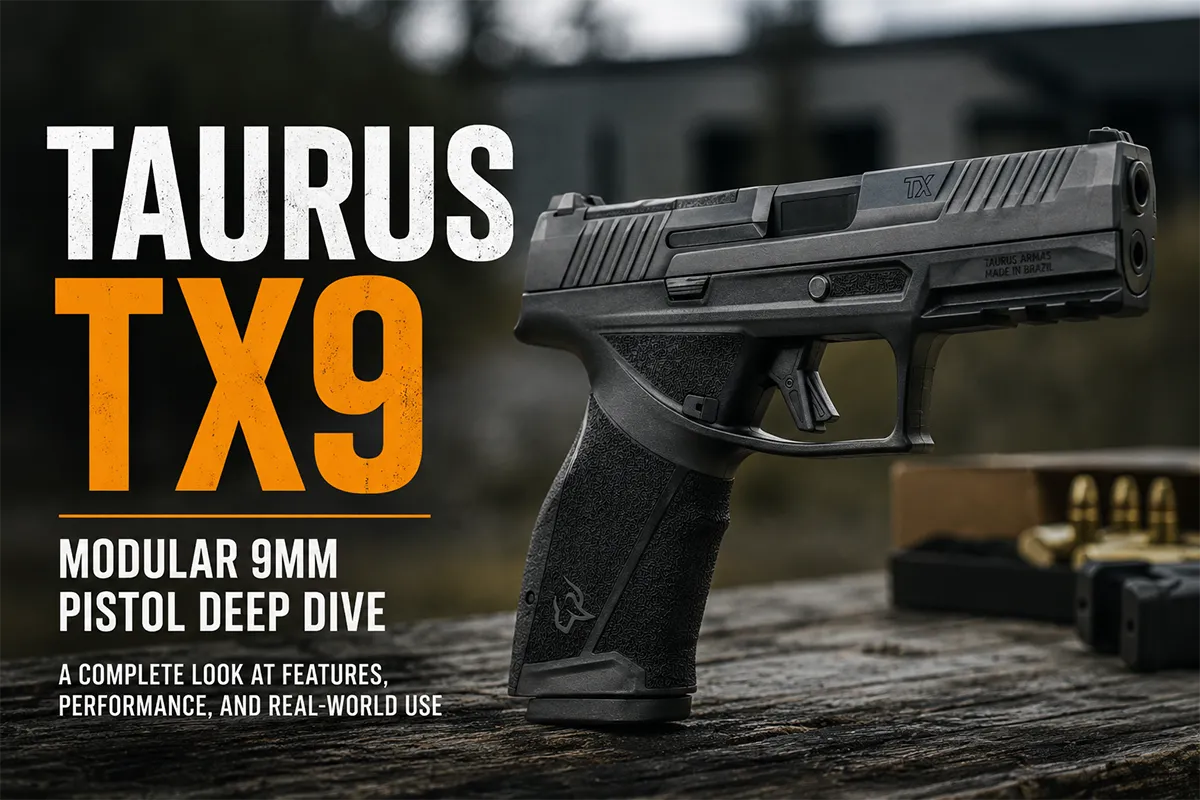
The Taurus TX9 is Taurus’s modular 9mm pistol family for readers comparing one platform across full-size, compact, and subcompact roles. It matters because the same core chassis can support different grip sizes, controls, and optics setups. For GunGenius readers, the practical question is simple: does this TX line help you research one pistol system instead of three unrelated handguns?
The short answer is yes, if you want a striker-fired 9mm with familiar controls, a factory optics cut, and several frame sizes. It is less compelling if you already know you want a hammer-fired pistol, a metal-frame range gun, or a micro pistol built only for deep concealment. This guide looks at fit, specs, and buying research questions, not carry tactics or legal advice.
What Is the Taurus TX9?
The Taurus TX9 is a striker-fired, polymer-frame 9mm handgun family built around a serialized chassis. Taurus offers it in full-size, compact, and subcompact versions. That design lets a buyer compare one control layout across range use, home-defense research, and carry-oriented research.
According to the official TaurusTX9 product page, the platform uses the Taurus Modular System, ambidextrous slide release, reversible magazine catch, interchangeable backstraps, and an optics-ready slide. Those are the features most shoppers now expect in modern semi-auto pistols.
That feature mix explains the SEO interest. Searchers are not only asking what Taurus announced. They want to know whether the TX9 can sit beside established duty-size and carry-size 9mm pistols without feeling like a budget compromise.
Taurus TX9 Specs and Size Options
The TX9 family is easiest to understand by size. For range and duty-style research, the full-size model comes first. Compact is the all-around size. Subcompact is the smallest option for readers comparing lighter 9mm pistols.
| Model | Action | Caliber | Barrel/Weight | Capacity | OAL | Research Fit |
|---|---|---|---|---|---|---|
| TX9 Full | Striker-fired | 9mm | 4.5 in. / about 25 oz. | 17+1 | 7.75 in. | Range, home-defense research, larger hands |
| TX9 Compact | Striker-fired | 9mm | 4.0 in. / about 23.7 oz. | 15+1 | 7.2 in. | General-purpose 9mm comparison |
| TX9 Subcompact | Striker-fired | 9mm | 3.4 in. / about 21.7 oz. | 13+1 | 6.6 in. | Smallest TX9 footprint |
Capacity and barrel length are the obvious differences. A less obvious difference is how each grip changes handling. Shorter grips are easier to conceal on paper, but they can be harder to manage during longer range sessions. Full-size grips give more control, but they ask more from storage, holster fit, and personal comfort.
Why the Modular Chassis Matters
Modularity is not new, but it changes how buyers compare pistols. Instead of treating the full-size, compact, and subcompact as separate products, the Taurus TX9 invites shoppers to think in systems. The serialized chassis is the controlled core. Grip modules and size choices shape how the pistol fits different roles.
That matters for households or collectors who prefer consistent controls. A familiar slide release, magazine release, trigger reach, and optic footprint can reduce the learning curve between sizes. It also makes accessory planning cleaner because the buyer can start with one platform family.
The tradeoff is availability. Modular designs become more useful when grip modules, magazines, holsters, and spare parts are easy to find. Before choosing any TX9 size, check current parts support through Taurus, dealers, and reputable accessory makers.
Optics, Controls, and Fit Details
The optics-ready slide is a major reason to research the TX9. Taurus uses its T.O.R.O. mounting approach, which helps shoppers compare red-dot compatibility without starting from a blank slide. Readers should still confirm the exact optic plate, screw length, and sight setup before buying accessories.
Controls also deserve attention. The ambidextrous slide release helps left-handed users and right-handed users who run support-hand checks at the range. A reversible magazine catch is useful, but it still needs a fit test. Some hands press a reversed catch cleanly. Others shift grip too much.
Backstraps are another practical point. Four backstraps give shoppers a real chance to tune trigger reach and palm fill. That is useful for readers comparing the TX9 against other Taurus pistols, especially the GX4 and G3 families.
Where It Fits Against Other 9mm Pistols
The TX9 competes in a crowded category. Glock, SIG Sauer, Smith & Wesson, Springfield Armory, Canik, and CZ all have strong 9mm options. Taurus is trying to stand out with price, modularity, optics readiness, and a complete size family from the start.
For a range-focused pistol, the full-size TX9 deserves the first look. If the goal is one pistol to research for several roles, the compact may make the most sense. Buyers who want the smallest TX9 format should start with the subcompact and compare grip comfort carefully.
The best TX9 size is not the one with the longest spec sheet. It is the one that fits your hand, sight plan, and actual use case.
Research Checklist Before You Compare Prices
- Confirm which TX9 size matches your hand and storage needs.
- Verify magazine capacity rules for your state and locality.
- Check optic plate compatibility before buying a red dot.
- Compare holster and magazine availability by model size.
- Handle the pistol, if possible, with each included backstrap.
- Compare the TX9 against two established 9mm alternatives.
This checklist keeps the search grounded. Many buyers get pulled toward capacity or price first. Those matter, but fit and support often decide whether a pistol remains useful after the first range trip.
Questions to Ask Before Shortlisting One
Ask three practical questions before you shortlist a TX9. Which frame size gives you a clean trigger reach with the backstrap you prefer? Which optic, if any, will you mount, and does the needed plate come with the pistol or from a separate kit? Finally, what local magazine limits apply where you live, travel, or store the firearm?
Those questions are not exciting, but they prevent bad comparisons. A compact pistol with the right grip can beat a full-size pistol that never fits your hand. An optic-ready slide is only useful when the optic system is understood before checkout.
Who Should Research the Taurus TX9 First?
Start with the Taurus TX9 if you want a value-priced 9mm family with modern controls and a modular path. It is especially relevant for readers who like the TX22 concept but want a centerfire pistol for broader 9mm comparison. Range-focused shoppers should begin with the full-size model. Balanced-use shoppers should compare the compact first. Small-frame shoppers should handle the subcompact before judging it by capacity alone.
Skip it, or at least slow down, if you need a long track record above all else. New platforms need time for holster makers, magazine supply, optic plate feedback, and owner reports to settle. That does not make the TX9 a poor choice. It only means early buyers should research support as carefully as specs.
Bottom Line
The Taurus TX9 is worth researching because it brings modularity, optics readiness, and three useful 9mm sizes into one pistol family. The compact model will likely be the broadest fit for many shoppers, while the full-size and subcompact serve clearer ends of the spectrum.
Use GunGenius to compare Taurus pages, semi-auto pistol categories, and nearby models before you chase a listing. Then verify fit, local rules, magazine availability, and optic support. That sequence gives the TX9 a fair evaluation without turning a spec sheet into a buying shortcut.