
Stoeger V7000: 12 vs 20 Gauge and Black vs Silver
November 10, 2026
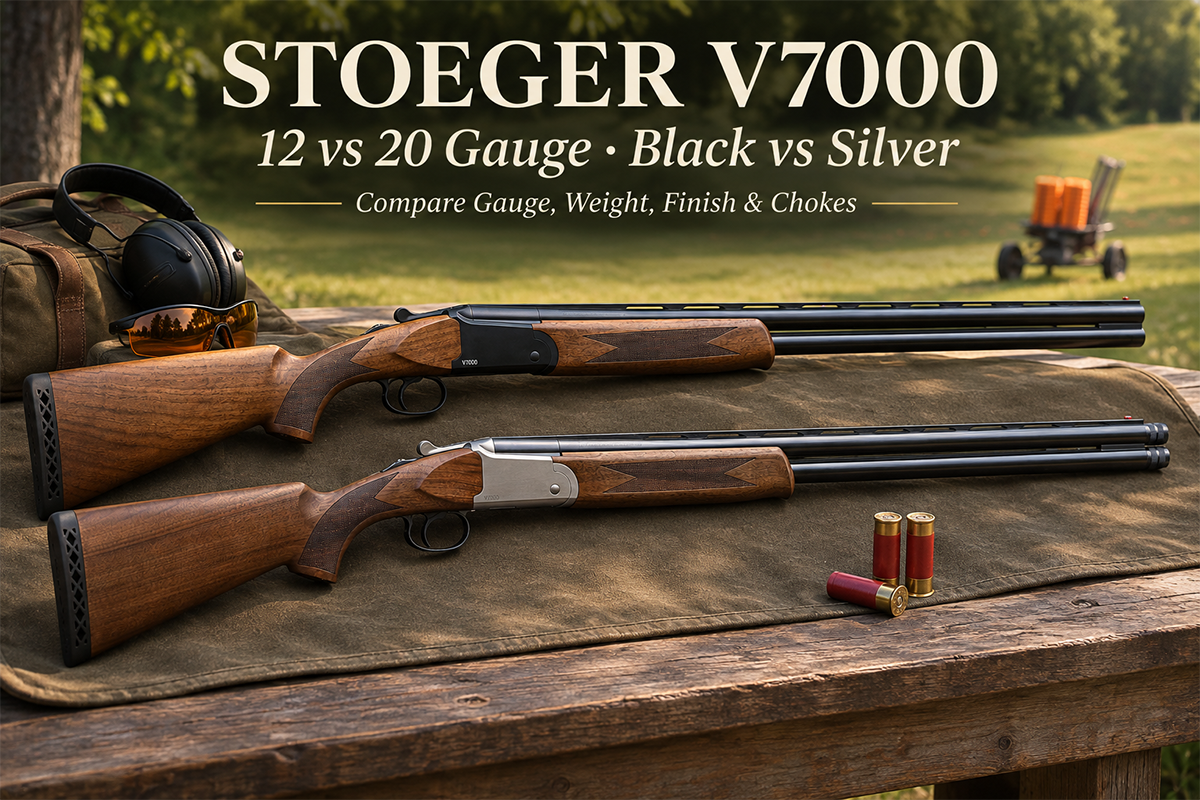
The Stoeger V7000 gives shoppers four versions of one lightweight over-under shotgun: 12 or 20 gauge, each with a black or silver receiver. The useful choice is less about appearance than fit, recoil tolerance, and how often you will carry or shoot it. Here is a practical way to compare the four factory listings before you decide which one deserves a closer look.
Stoeger markets the V7000 for upland hunting and clay games. Its 28-inch barrels, walnut furniture, two-shot break action, and selectable first barrel are shared across the line. Gauge changes the listed weight substantially. Receiver color changes the choke style and suggested price. Those differences deserve more attention than a broad claim that one version is best for everyone.
Stoeger V7000 models at a glance
| Model | Gauge | Receiver | Barrels | Listed weight | Included chokes | MSRP |
|---|---|---|---|---|---|---|
| 36100 | 12 | Black alloy | 28 in. | 6 lb. | IC, M, F; flush | $949 |
| 36101 | 12 | Silver alloy | 28 in. | 6 lb. | IC, M, F; extended | $999 |
| 36103 | 20 | Black alloy | 28 in. | 5.3 lb. | IC, M, F; verify style | $949 |
| 36104 | 20 | Silver alloy | 28 in. | 5.3 lb. | IC, M, F; verify style | $999 |
These figures come from Stoeger’s current V7000 model page. Stoeger’s announcement distinguishes flush chokes on black receivers from extended chokes on silver receivers. The model page also has a general feature line that describes extended chokes. Confirm the exact tubes and chamber marking for the item number you inspect. Product pages can change, and a listing photo is not a substitute for checking the actual box.
Should you choose the 12 or 20 gauge Stoeger V7000?
Start with your use, then shoulder both gauges if possible. The listed 12-gauge gun weighs six pounds. The 20-gauge version is listed at 5.3 pounds, a difference of about eleven ounces. That is meaningful during a long walk, especially when the gun is carried more than fired. It does not prove that the lighter gun will fit or swing better for every shooter.
A 12 gauge gives you a broad range of common target and hunting loads. That range can help one shotgun serve several roles. Yet a six-pound break-action 12 gauge can feel lively under repeated shooting. There is no gas system to soften the impression of recoil. Load choice, stock fit, and shooting volume will matter more than the gauge label alone.
The lighter 20 gauge may appeal to an upland hunter who crosses ground all day. It can also suit a shooter who prefers a slimmer feeling gun. Do not assume that every 20-gauge load feels softer. A light shotgun firing a heavy load can still be uncomfortable, while a well-fitted 12 gauge with a modest target load can be pleasant. Compare the loads you actually plan to use.
For frequent sporting clays, skeet, or trap, try a full round with a comparable lightweight over-under before committing. The V7000’s low carry weight is attractive in the field, but some clay shooters prefer more mass for a steady swing and less felt recoil across many stations. If most of your shooting happens on the course, fit and endurance should lead the decision.
Black vs silver: what does the extra $50 buy?
Stoeger lists black-receiver versions at $949 MSRP and silver versions at $999. The barrels, walnut stock, single trigger, and basic action layout appear the same within each gauge. On the manufacturer’s announcement, the black models receive flush improved-cylinder, modified, and full tubes. The silver models receive extended tubes in those same constrictions. Ask the seller to show the included set because the general product-page copy is inconsistent on tube style.
Extended tubes can be easier to identify and handle at a range. Flush tubes give a cleaner muzzle profile and fewer protrusions around brush or a case. Neither Stoeger V7000 finish automatically improves pattern quality. The actual tube, ammunition, and your pattern results are the useful measures. A $50 difference is small beside ammunition and travel costs, but it is still worth paying only for a feature you want.
Receiver color itself is mostly a preference. Inspect the finish in person, including how it looks under the lighting where you shoot. Check that the walnut stock is comfortable and the metalwork has no visible damage. A polished listing photograph can hide handling marks, while an honest used listing may show them clearly.
Fit matters more than a specification table
Both gauges list a 14.5-inch length of pull, the distance from trigger to butt. Stoeger lists the same stock dimensions for the four versions. Matching numbers do not guarantee a matching sight picture because your face shape, clothing, and mounting habit all matter. If possible, have a qualified shop employee help you check eye alignment with an unloaded gun.
Mount it naturally several times while following all safety rules. Your eye should meet the rib without a deliberate head lift or hard cheek pressure. Notice whether the butt settles consistently on your shoulder. Try the gun wearing the vest or outer layer you expect to use in the field. A reviewer who handled a 12-gauge V7000 reported that some shooters looked over the rib, a useful reminder that fit is personal rather than a verdict on the design.
The V7000 has a tang safety that resets when the action opens. Its color-coded selector chooses the first barrel. Check whether both controls are easy for you to use with the gun unloaded and under a shop employee’s direction. Familiarity matters because a field or clay gun should feel predictable during routine handling.
Chokes and field use: which setup makes sense?
The factory set includes improved cylinder, modified, and full constrictions. A choke changes the spread of a given shotshell at a given distance. It is not a universal range setting. Pattern a legal, appropriate load on a supervised range to learn what each tube actually does in your gun. Follow the manual’s ammunition and choke restrictions, especially if you plan to use steel shot or other hard shot.
The 28-inch barrels and ventilated rib suit a conventional over-under sight picture. Its red fiber-optic front sight is easy to find, although many clay shooters focus on the target rather than staring at the bead. Two-shot capacity and the break-open action are simple to inspect. A pair of automatic ejectors clears fired hulls when the action opens, which may help on a busy range but can be inconvenient if you collect hulls in the field.
Stoeger presents the V7000 as an upland and range crossover. That positioning is plausible from the dimensions, though it is not an independent durability test. A recent field review of the 12-gauge black model praised its carry weight while reporting a stiff new action and individual fit concerns. Treat that as one hands-on account, then check the exact gun yourself. Long-term reliability data for the series remains limited.
V7000 buyer checklist before comparing listings
- Match the seller’s item number to the gauge and finish you want. The four numbers are 36100, 36101, 36103, and 36104.
- Confirm the chamber marking on the actual barrels and follow the owner’s manual. Stoeger’s current web materials differ on one shell-length detail.
- Ask to see all three factory chokes, the wrench, and any included paperwork. Check whether the tubes are flush or extended.
- Shoulder the unloaded shotgun in your normal clothing and check eye alignment, grip reach, and control access.
- Inspect barrel, rib, stock, hinge, and finish condition. Have a qualified gunsmith assess any concern on a used gun.
- Compare the full cost of appropriate ammunition, range time, and a case, not just the advertised firearm price.
GunGenius lets you compare over-under shotguns across brands and browse the Stoeger catalog. Use those pages to build a shortlist, then verify specifications and local availability with the actual seller. GunGenius is a research catalog and does not sell the firearm directly.
The practical choice
Choose the 20 gauge if carry weight is the main concern and the gun fits well with the loads you plan to use. Choose the 12 gauge if you want the wider common-load selection and its added weight feels better on the range. Within either gauge, choose silver when you value the included extended-tube package and its appearance. Black keeps the listed price lower and may come with flush tubes. For all four, fit and the exact item-number package should decide the final comparison.
If the Stoeger V7000 is your first over-under, compare at least one heavier field or sporting model before deciding. A few minutes of careful handling can tell you more about stock fit than a long list of features. A range rental or supervised demo can add useful evidence about recoil and swing. Keep the decision tied to your real shooting schedule, and revisit the manufacturer’s current details before making a purchase decision.