
Gun Safe Humidity: Desiccant vs Electric Options for Rifles
November 6, 2026
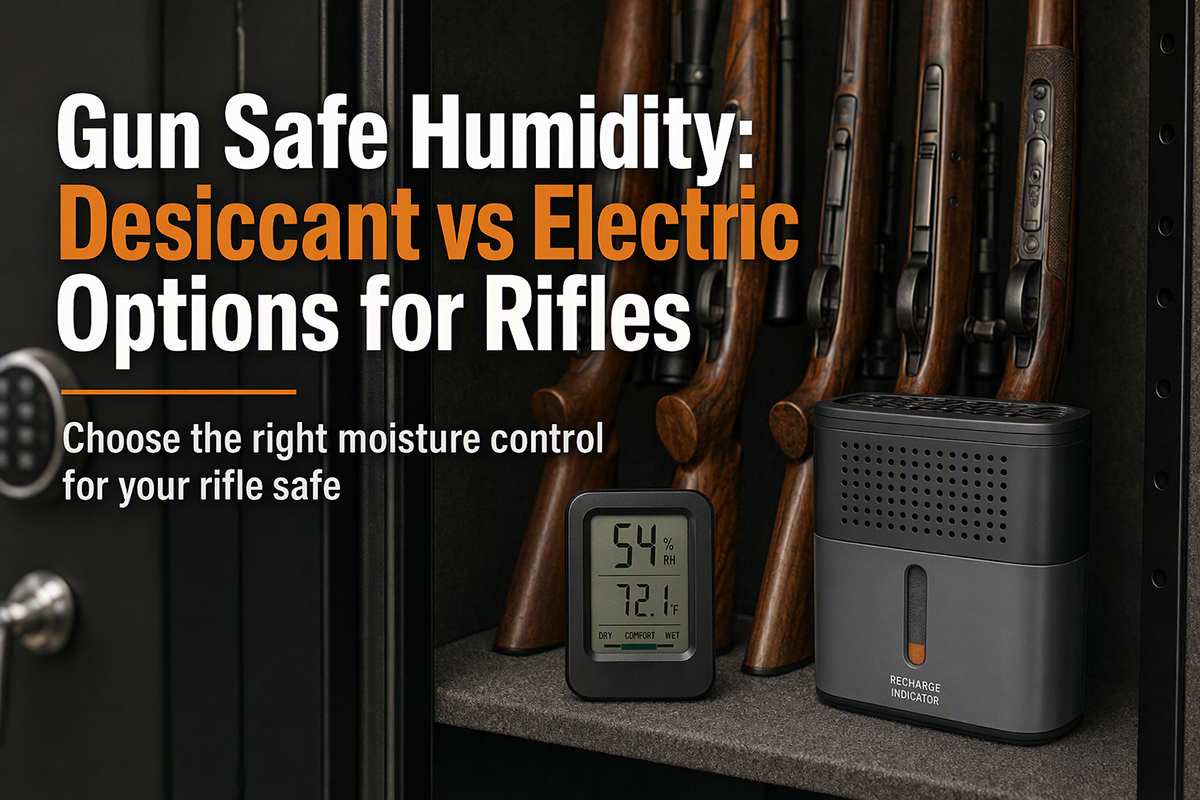
Gun safe humidity matters because a locked cabinet can still expose a stored rifle to moisture. A recent Remington mini dehumidifier release has renewed interest in rechargeable units, but the right choice depends on the room, the safe, and whether power is available. This guide compares moisture absorbing desiccant with electric options and explains how to check whether either one is working.
Start with secure storage. Keep firearms unloaded and locked away from unauthorized users, with ammunition locked separately. A dehumidifier protects against moisture; it does not replace a lock, safe, or safe handling. The Project ChildSafe home storage guidance covers these basic safeguards.
What changes gun safe humidity?
Relative humidity describes how much water vapor air holds compared with its capacity at that temperature. A safe in a damp basement, garage, or poorly ventilated room can inherit that room’s moisture. Temperature swings also matter. Warm, moist air meeting cooler metal can leave condensation on surfaces, even when the safe itself looks dry.
Do not assume the number on a room thermostat describes conditions inside the safe. A small digital hygrometer can show the temperature and relative humidity where the rifles actually sit. Check it at different times, especially after rain, seasonal changes, or a move to a new storage location. Record a few readings before buying a moisture control device.
There is no universal humidity target that fits every stock, finish, and room. Excess moisture can promote corrosion, while very dry conditions may be unkind to wood or leather. Look for stable readings, visible condensation, musty odors, or rust rather than treating a single percentage as a guarantee. Follow the storage advice in each firearm’s manual.
Rechargeable desiccant: where it fits
A rechargeable desiccant unit contains material that absorbs moisture from enclosed air. It works without a power cord while sitting in the safe. Once saturated, the unit must be recharged according to its instructions. Many designs include a color indicator, though the indicator only describes the unit’s condition, not the humidity everywhere in the safe.
Remington’s current mini dehumidifier is one example. The company describes a cord free unit with a recharge indicator, a claimed enclosure coverage of 333 cubic feet, and a stated run of up to 60 days before recharging. These are manufacturer claims, not a promise for every climate or cabinet. Compare the exact model’s instructions with your safe’s interior volume.
Desiccant is convenient when a safe has no electrical outlet or pass through. It also avoids leaving a powered device inside the cabinet. Its main cost is attention: a saturated unit stops absorbing useful amounts of water until recharged. If the surrounding room stays damp, a small unit may need service more often than a label suggests.
Electric options: what they actually do
Electric products use different methods, so read the product description carefully. A heating rod gently warms the interior air and nearby surfaces. That can reduce condensation risk and lower the relative humidity reading without physically removing water from the room. An active dehumidifier instead collects or expels moisture. The two should not be treated as identical tools.
A rod can be practical for a safe with a suitable power connection and steady household power. It needs placement that follows the maker’s clearance and electrical instructions. An active unit needs space for its collection or drainage system, and many are meant for the room around a safe rather than the safe’s small interior.
If a garage or basement stays wet, controlling that room’s moisture may matter more than adding another device inside the cabinet. Check for leaks, damp flooring, and large temperature changes first. A moisture control accessory cannot compensate for flooding, water intrusion, or a safe placed against a persistently wet wall.
Gun safe humidity: a simple decision table
| Option | How it works | Best fit | Main upkeep |
|---|---|---|---|
| Rechargeable desiccant | Absorbs moisture | Small cabinet without power | Check indicator and recharge |
| Electric heating rod | Warms air and surfaces | Powered safe with proper clearance | Check power and placement |
| Room dehumidifier | Removes water from surrounding air | Persistently damp room | Empty tank or maintain drain |
Use the table as a starting point, then measure the actual storage conditions. A small desiccant unit is simple, but it can be overwhelmed by a damp room. Heating rods may help with condensation, but they do not repair a leak. A room dehumidifier addresses the source of high humidity when the entire space needs attention.
Before you put a rifle away
Storage starts with the firearm, not the accessory. Confirm the rifle is unloaded using its owner’s manual and safe handling procedures. After a wet hunting trip or range visit, do not put a damp firearm into a closed case for weeks. Follow the manufacturer’s cleaning and preservation instructions, then store it in a locked location.
Browning cautions that moisture can condense in a tightly sealed case and cause rust. It also advises periodic inspection and a light protective treatment where appropriate. A soft case is useful for transport, but its padding can hold moisture after a wet day. Check both the rifle and any case before long term storage.
Owners comparing storage needs across rifle types should pay attention to wood, metal, and optics on each model. A wood stock and a synthetic stock may respond differently to an unusually dry room. If you own a Remington rifle, use the manual for that specific model rather than assuming general advice covers every finish.
A five point storage check
- Confirm the firearm is unloaded and locked; secure ammunition separately.
- Inspect the safe and room for leaks, condensation, or musty odor.
- Place a hygrometer where it reflects the stored items, then record readings.
- Choose a device suited to the safe’s size, power access, and room conditions.
- Recheck readings and stored items regularly; service the device as directed.
This check keeps the focus on evidence. A working moisture device should support stable conditions, and the rifle should remain free of new corrosion. If readings rise despite a freshly charged desiccant unit, look beyond the device. The room may be too damp, the safe may be taking on water, or the unit may be too small.
Common questions about rifle storage
Can I use a dehumidifier without measuring humidity?
You can, but you will not know whether it solves the problem. A hygrometer gives you a baseline and shows changes after the device is installed. It also helps reveal seasonal shifts that a recharge indicator cannot measure. Check the instrument’s accuracy and placement if its readings seem implausible.
Does a heating rod remove water?
No. A typical heating rod changes temperature and can reduce condensation inside a safe. It does not collect moisture the way a desiccant or active dehumidifier does. If water enters the safe or the room remains very damp, find and correct that condition.
Is a sealed rifle case enough for long term storage?
A sealed case can trap moisture, especially after a wet outing. Follow the firearm and case makers’ instructions, and inspect stored equipment periodically. The case also needs to be secured against unauthorized access. A moisture control product helps protect surfaces, but it does not make an unsecured case safe storage.
The practical choice
For a dry indoor cabinet without power, a rechargeable unit may be enough if you monitor it. For a powered safe with changing temperatures, an approved heating rod may help limit condensation. If the whole room stays damp, address the room first. In every case, treat gun safe humidity as a condition to measure, not a product claim to trust blindly.
Review your storage setup after major weather changes and before a rifle sits unused for months. Keep the firearm unloaded, locked, and separated from ammunition. Check for rust and follow the maker’s maintenance instructions. Those habits matter more than any one accessory.