
Smith & Wesson America 250 Model 1854: Collector Fit and Field Checks
July 15, 2026.
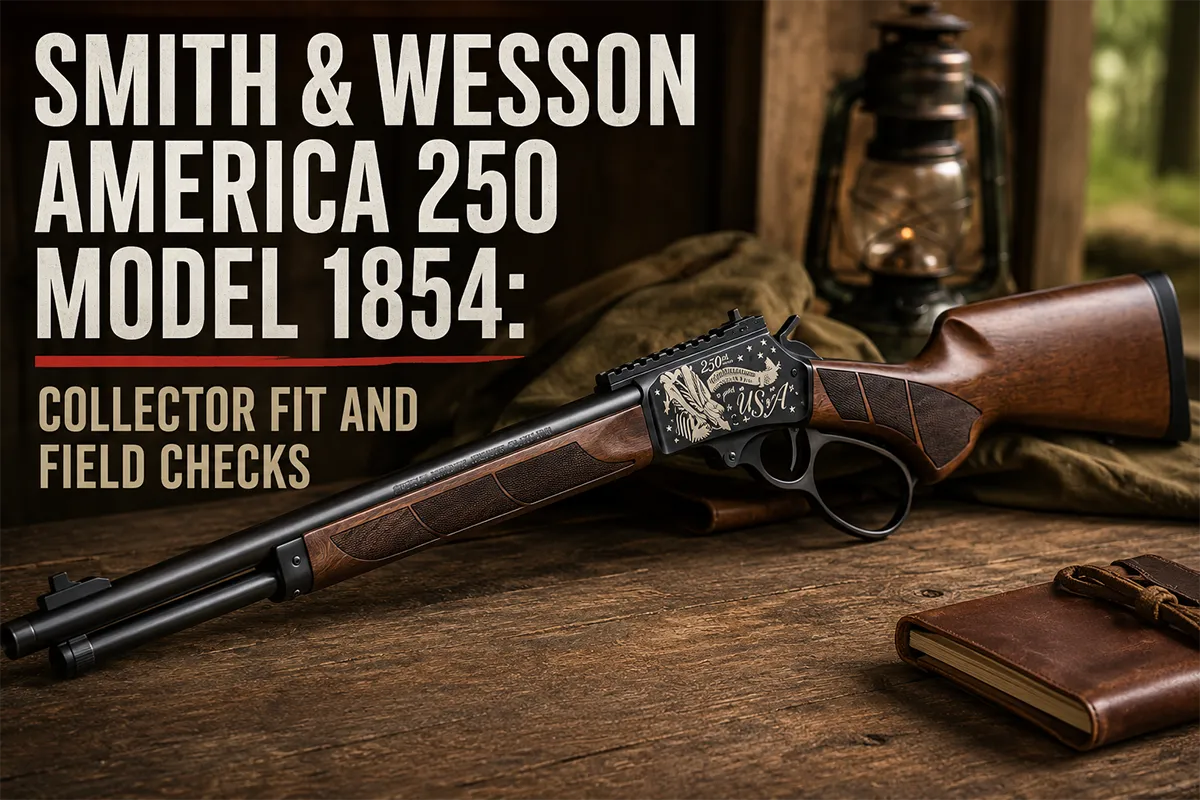
The Smith & Wesson America 250 Model 1854 gives lever-action fans a familiar question: is this a collector piece, a field rifle, or both? Announced on July 14, 2026, it adds America 250 engraving to the revived Model 1854 platform. It also keeps practical features such as walnut furniture, ghost-ring sights, an optics rail, a side loading gate, and a threaded muzzle. That mix is worth studying before you decide how the rifle should be used.
Short answer: treat it as a working commemorative. Engraving is the headline. Still, the rifle needs to be judged like any other lever-action rifle. Chambering, handling, sight setup, ammunition cost, local hunting rules, and long-term parts support matter more than the anniversary theme.
Smith & Wesson America 250 Model 1854 Specs and Fit.
Smith & Wesson built the America 250 edition around two Model 1854 chamberings. The .44 Magnum version is the lighter-recoiling carbine choice. It fits range work, woods carry, and owners who already stock revolver ammunition. For hunters and collectors who want the traditional thump of a large-frame lever gun, the .45-70 Government version is the bigger-bore option. Launch coverage lists the .44 Magnum at $1,399 MSRP and the .45-70 at $1,499 MSRP.
| Model | Action | Caliber | Barrel/Weight | Capacity | OAL | MSRP/Street |
|---|---|---|---|---|---|---|
| America 250 Model 1854. | Lever action. | .44 Magnum. | 19.25 in / Varies by SKU. | 9+1. | Varies by SKU. | $1,399 MSRP. |
| America 250 Model 1854. | Lever action. | .45-70 Government. | 20 in / Varies by SKU. | 6+1. | Varies by SKU. | $1,499 MSRP. |
Both versions use walnut stocks with laser-textured panels. Both include an adjustable XS Sights ghost-ring rear sight, a gold bead front sight, a Picatinny rail for optics, and an 11/16-24 threaded muzzle. The company?s current Model 1854 product page is the best place to confirm SKU-level details before a purchase. Availability and distributor listings can change quickly after a limited launch.
Who Should Consider This Commemorative Lever Action?
This rifle fits three likely buyers. First comes the Smith & Wesson collector who wants a modern lever gun tied to the company?s early lever-action history. Second comes the hunter or range shooter who likes the Model 1854 feature set and views the engraving as a bonus. Third comes the buyer comparing 250th-anniversary releases and trying to avoid a display-only purchase that lacks everyday utility.
The Smith & Wesson America 250 Model 1854 is less convincing for someone who wants the lowest-cost lever rifle in either chambering. It is also not the cleanest choice for a rough truck gun. A commemorative receiver finish adds emotional and resale stakes to normal dents and scratches. If you want a rifle you will never hesitate to drag through rain and brush, compare standard Model 1854 variants first.
Collector Value Depends on Original Condition.
Collectors should think beyond the first-week buzz. Keep the box, manual, hang tags, lock, and any distributor paperwork. Photograph the receiver engraving and serial number for your records. If you mount an optic, use correct tools and keep the original screws. If you hunt with it, accept that honest wear may lower collector interest while raising personal value. That tradeoff is fine, but it should be intentional.
.44 Magnum vs .45-70: Which Model 1854 Makes Sense?
The .44 Magnum version should appeal to shooters who want lower recoil, more capacity, and easier practice. It pairs naturally with revolver owners who already keep .44 Magnum or .44 Special on hand. It also makes sense for short-range hunting where allowed, informal range sessions, and compact woods carry. Before buying, confirm what bullet weights feed smoothly. Then check where your preferred hunting load prints with the factory sights.
The .45-70 version is more specialized. It delivers more frontal area, more recoil, and higher ammunition cost. That can be worthwhile for larger game at appropriate distances. It also makes casual practice more expensive. If this rifle will mostly sit in a collection, the .45-70 may feel more traditional. If it will be shot often by mixed-experience family members, the .44 Magnum may be easier to enjoy.
Pick the chambering for the job you will actually do, not the story you like most on the spec sheet.
What Should You Compare Against?
Compare this edition with a standard Model 1854 first. That tells you how much of the price is tied to function and how much is tied to the anniversary treatment. Then compare other current commemorative rifles. Look for real scarcity, unique engraving, useful chamberings, and parts commonality. A good limited edition should still make sense when the launch excitement fades.
Also compare ammunition plans. A .44 Magnum rifle can be fed with lower-cost practice loads in many markets. A .45-70 rifle asks for a bigger ammunition budget and more recoil tolerance. Neither choice is wrong. The better choice is the one you will train with, check zero on, and keep supplied.
Field Checks Before You Buy.
Use the same inspection habits you would use on any new lever gun. Cycle dummy rounds if the seller allows it. Check that the loading gate is comfortable and does not shave brass. Work the lever slowly and then briskly to feel for hitching. Inspect the crown, muzzle threads, rail screws, sight alignment, stock fit, and receiver finish. Look closely at the engraved areas. Small finish issues stand out more on a commemorative rifle.
- Confirm the exact chambering and SKU before transfer.
- Check that the sights are centered and the rail is tight.
- Ask whether the threaded muzzle includes a protector.
- Compare trigger feel with a standard Model 1854 if one is available.
- Verify local hunting rules for straight-wall or big-bore lever rifles.
Do not skip fit. Lever guns can feel shorter and faster than their listed dimensions suggest, but stock geometry still matters. Shoulder the rifle with the sights closed. Then open your eye line. If you must hunt for the ghost ring, plan on optic mounting or choose a different setup.
Research Checklist for GunGenius Readers.
Start with the Smith & Wesson brand page to compare related models. Then look at current lever-action rifle listings to understand pricing around non-commemorative alternatives. The Smith & Wesson America 250 Model 1854 should not be judged in isolation. Compare it with standard Model 1854 rifles, other engraved 250th-anniversary releases, and used big-bore lever guns in similar condition.
- Decide whether collector condition or field use matters more.
- Choose .44 Magnum for cheaper practice and softer recoil, or .45-70 for big-bore appeal.
- Confirm real-world availability before assuming MSRP reflects market price.
- Budget for optic rings, sling hardware, ammunition, and a case that protects the finish.
- Keep all original packaging if resale value is part of the plan.
Bottom Line.
The Smith & Wesson America 250 Model 1854 is most interesting because it does not ask buyers to choose between a display rifle and a useful lever action. Its commemorative receiver makes it timely. Sights, rail, side gate, walnut furniture, and a threaded muzzle keep it practical. That balance is also the main buying question. If you want a pristine anniversary piece, handle it carefully and document everything. If you want a field rifle with a story, choose the chambering around recoil, ammunition, and the work you actually plan to do.