
Ruger 10/22 Upgraded Models 2026: What’s New, What Matters, and Which One to Research
March 6, 2026
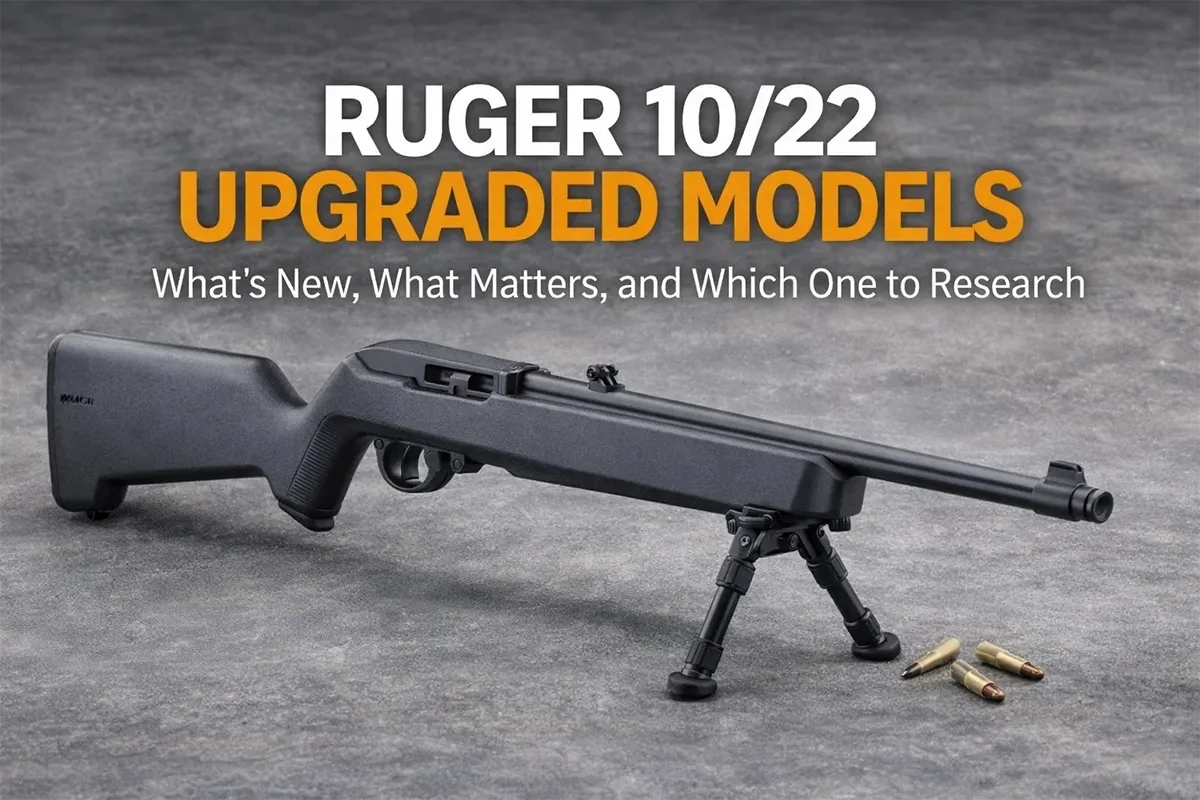
TL;DR: The Ruger 10/22 Upgraded Models 2026 refresh adds a bigger menu of factory configurations built around the same “easy to live with” .22 LR platform. If you’re shopping for a first rimfire, a trainer, or a build base, the new mix matters because it can save you from paying twice (buying a rifle, then replacing parts you wanted from day one).
On February 25, 2026, Ruger announced 10 new additions to its recently upgraded 10/22 lineup. The big story isn’t that the 10/22 suddenly became something else. It’s that Ruger is leaning into what people actually do with this rifle: buy it as a “forever .22,” then configure it for plinking, small game, training, steel, or suppressed range time.
If you’re researching a 10/22 now, your decision is less about “Is a 10/22 good?” and more about picking a starting configuration that matches your use case so you’re not immediately swapping the trigger, sights, stock, or controls.
Ruger 10/22 Upgraded Models 2026: Key Specs That Matter for Real Use
| Platform | Rimfire rifle |
| Action | Semi-auto (blowback) |
| Caliber | .22 LR |
| Barrel / Weight | Varies by SKU |
| Capacity | Rotary magazines (varies; common 10-round) |
| Overall Length | Varies by SKU |
| MSRP / Street | Varies by SKU |
Because Ruger released multiple variants at once, “specs” are a range. What’s consistent is the 10/22 ecosystem: magazines are widely available, the manual of arms is simple, and parts support is huge. The upgrade angle is about factory choices that usually required aftermarket shopping.
What’s Actually New in This Refresh
Ruger described these as new models of its recently upgraded 10/22 line. In plain terms, Ruger is bundling the “most commonly changed” features into more factory options—so you can start closer to your intended end state.
- More configuration variety: Different barrel lengths, stocks, and sight/rail setups help you match the rifle to your purpose (trainer vs. field gun vs. “range fun”).
- Controls and usability upgrades: Small quality-of-life improvements can matter more than people admit—especially if you’re teaching new shooters or running drills.
- “Build base” friendly options: Some SKUs are essentially optimized starting points for optics, lights (if applicable), or suppressor research.
The key is to research by use case first, not by “newest SKU.” A 10/22 that’s perfect for a 10-year-old learning fundamentals is not the same starting point as a suppressed range trainer for an experienced shooter.
How to Pick the Right New Model Without Overthinking It
Here’s a practical way to narrow the 2026 options:
- If you want a first rimfire or family trainer: prioritize simple sights, a comfortable stock, and controls that are easy to run. Reliability and ergonomics beat “tactical” features here.
- If you want a plinker with an optic: look for an out-of-the-box setup that makes mounting easy (factory rail or drilled/tapped receiver), and a stock comb height that doesn’t fight your cheek weld.
- If you want a suppressed research path: prioritize a threaded muzzle (when available on the SKU) and an overall setup that balances well with added front-end weight.
- If you want a build platform: buy the SKU that saves you the most expensive swaps (trigger/stock/barrel), not the one that saves $25 on accessories you’d never buy anyway.
Browse the broader category here: Semi-auto Rifles on GunGenius. Then cross-reference Ruger’s lineup here: Ruger on GunGenius.
Compatibility Notes: The 10/22 “Ecosystem Tax” (and How to Avoid It)
The 10/22 is famous because it’s easy to customize—but customization can become a trap where you spend more than you planned because you didn’t choose the right starting point.
- Optics: If your plan is an optic, pick a SKU that supports your intended mount style without adapters and without awkward head position.
- Stocks: If you know you want a modern, adjustable stock, buying a “classic wood” SKU just to replace it later is usually false economy (unless you specifically want wood).
- Triggers: A nicer trigger can be the single most noticeable upgrade in practical accuracy. If the upgraded models include a better factory trigger in certain trims, those trims may be the best long-term value.
- Magazines: Standard rotary mags are the baseline; keep an eye on how each SKU ships (capacity and number of mags), but don’t let that be the deciding factor.
One good rule: buy for your “most likely” use rather than an imaginary future project. If you later decide to build, you’ll still have a rifle you enjoy shooting in the meantime.
Alternatives to Consider (If You’re Not Set on a 10/22)
- Savage — Often strong value in rimfire lines; good to compare if you want different ergonomics or factory features.
- CZ-USA — If your priority is fit/finish and traditional accuracy focus, CZ rimfires are a common comparison point.
Research Checklist: What to Confirm Before You Click “Buy”
- Does the exact SKU include the sight/rail setup you want?
- Is the stock geometry comfortable with your planned optic height?
- If you’re researching suppressor-ready setups, is the muzzle threaded on that SKU?
- Does the rifle balance well for your typical shooting (bench vs. field carry)?
- Are you choosing a configuration that reduces your “immediate swap” list?