
Remington Core-Lokt 300 HAMR: Load Specs and Buyer Checks
September 29, 2026
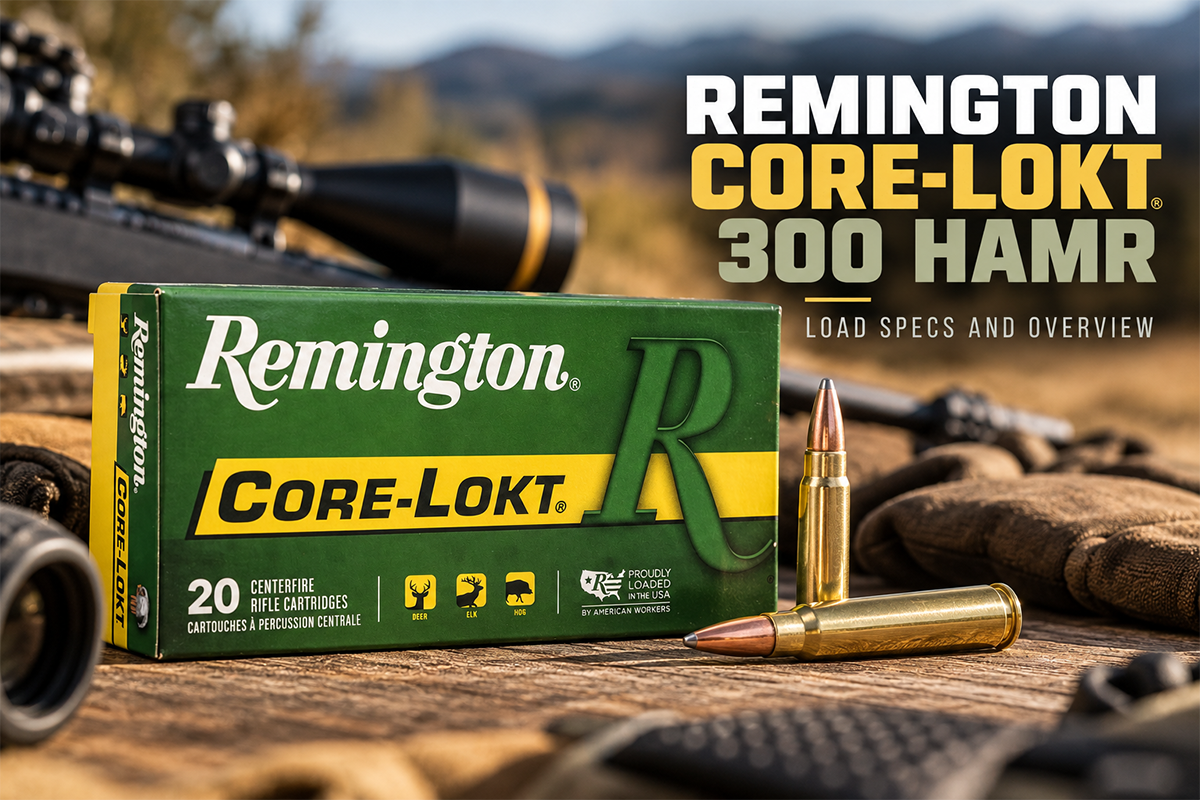
Remington Core-Lokt 300 HAMR gives hunters another factory-loaded option for a cartridge that has often been limited by ammunition selection. Announced as shipping to dealers on September 11, 2026, the load pairs a 130-grain Pointed Soft Point bullet with a listed muzzle velocity of 2,340 feet per second. This guide explains the numbers, the intended role, and the checks that matter before buying.
The short answer is simple: this is a supersonic hunting load for rifles chambered specifically in 300 HAMR. It is not 300 Blackout ammunition, and it should never be treated as interchangeable. Buyers should confirm the chamber marking, exact ammunition SKU, magazine setup, and point of impact before taking the load into the field.
Remington Core-Lokt 300 HAMR Specifications
| Caliber | Bullet | Grain | Velocity | Energy | Case | MSRP |
|---|---|---|---|---|---|---|
| 300 HAMR | Pointed Soft Point | 130 | 2,340 fps | About 1,581 ft-lb | 300 HAMR, verify headstamp | $37.99 per 20 |
Remington identifies the product as part number R21351 and packages it in 20-round boxes. The energy figure above is calculated from the listed bullet weight and muzzle velocity. Actual velocity and energy can change with barrel length, chamber, temperature, and normal manufacturing variation.
Core-Lokt uses a jacketed lead bullet with the jacket mechanically locked to the core. This traditional design is intended to balance expansion and penetration. Buyers researching other loads can also browse the Remington brand catalog, but bullet construction and impact velocity still need to match the intended game and distance.
Why This Factory Load Matters
The 300 HAMR was developed as a .30-caliber, supersonic hunting cartridge that fits the AR-15-size action. Its strongest use case is carrying more hunting-oriented velocity than 300 Blackout while retaining a compact, familiar rifle platform. That makes it relevant for whitetail deer, feral hogs, and similar game where lawful.
Ammunition choice has been one of the cartridge’s practical drawbacks. The 300 Blackout market offers many more factory loads, including both supersonic and subsonic choices. Adding a widely recognized hunting bullet does not erase that gap, but it gives 300 HAMR owners another clearly identified factory option during hunting season.
The new load matters less as a paper-ballistics contest and more as an availability improvement for hunters who already own, or are seriously considering, a 300 HAMR rifle.
Why the Listed Velocity Differs From SAAMI Data
The official SAAMI 300 HAMR standard lists a 130-grain instrumental velocity of 2,425 fps from a 16-inch test barrel. Remington lists 2,340 fps for this specific Core-Lokt load. Those figures do not conflict because the SAAMI value defines a standardized reference condition. It is not a promise that every 130-grain commercial load will produce the same speed.
Bullet shape, bearing surface, powder choice, pressure curve, and test method can all affect published velocity. Remington’s product figure is the relevant starting point for this load. A shooter’s actual rifle may still produce a different chronograph result.
SAAMI also specifies a maximum average pressure of 57,500 psi for the cartridge. That number is useful for understanding the standard, but it is not load-development guidance. Use only factory ammunition in a sound firearm marked for 300 HAMR, unless you are following reputable component data and already have the appropriate reloading knowledge.
The launch price also needs context. The stated $37.99 MSRP works out to about $1.90 per round before tax or shipping. Dealer prices can differ, and early inventory may be uneven. Compare the full delivered cost instead of judging a listing by box price alone. For many owners, the real value of Remington Core-Lokt 300 HAMR is a second sourcing option. It reduces dependence on one specialty supplier. It may also make it easier to buy matching boxes for zeroing, practice, and a hunt.
300 HAMR vs 300 Blackout: Pick by Role
The two cartridges fit similar rifle platforms, but they solve different problems. The 300 HAMR emphasizes supersonic hunting performance. The 300 Blackout has a much broader ammunition ecosystem and is especially well known for subsonic use in properly configured rifles.
| Question | 300 HAMR | 300 Blackout |
|---|---|---|
| Primary strength | Supersonic hunting performance | Load variety and subsonic options |
| Factory ammo selection | Limited but growing | Broad |
| Typical buyer priority | Medium-game hunting from a compact rifle | Versatility, short barrels, or suppressed use |
| Interchangeable? | No | No |
Never select ammunition by appearance alone. Read the barrel or receiver marking and match it to the box and cartridge headstamp. Similar dimensions can invite a dangerous mix-up at a crowded bench. Keep different calibers in separate, labeled containers and check every magazine before loading.
Rifle, Magazine, and Zero Checks
A 300 HAMR upper uses the AR-15-size platform, but that does not mean every existing setup will run the cartridge without attention. Start with a rifle or upper clearly chambered for 300 HAMR. When comparing semi-auto rifles, verify the barrel marking, twist rate, gas system, magazine recommendation, and manufacturer’s ammunition guidance.
- Confirm the chamber. The barrel must be marked 300 HAMR, not 300 BLK or another .30-caliber cartridge.
- Check the magazine. Use the rifle maker’s recommended magazine and test feeding with the exact load.
- Inspect the box. Match “300 HAMR,” 130 grains, Pointed Soft Point, and part number R21351.
- Establish a fresh zero. Do not assume this load shares the point of impact of another bullet weight or brand.
- Test function safely. Confirm feeding, extraction, and bolt lock at a controlled range before relying on it in the field.
A new load can group well yet land several inches from the old zero. Fire a careful group from a stable position, adjust the optic, and confirm again at the distance you expect to use. If you lack a suitable range or are uncertain about the rifle’s condition, work with a qualified gunsmith or range professional.
Hunting Fit and Practical Limits
The 130-grain Core-Lokt load is positioned for medium-game hunting. Its listed muzzle energy sits in the same broad conversation as traditional woods cartridges, but muzzle energy alone does not define an ethical distance. Bullet expansion, retained velocity, shot angle, accuracy, and local rules all matter.
Use the distance at which you can place shots consistently, not the farthest number found in a chart. Confirm the load’s trajectory from your barrel and know where it crosses the line of sight. Hunters should also verify caliber and ammunition rules for the exact state, season, and game animal. This article is general research information, not legal advice.
Recoil should be manageable in many AR-style rifles, but rifle weight, stock fit, muzzle device, and shooting position change the experience. A lighter rifle carries easily and moves quickly in thick cover. It can also feel sharper from the bench. Fit the complete system to the shooter rather than choosing from a cartridge claim alone.
Research Checklist Before Buying
- Verify that the firearm is chambered and marked for 300 HAMR.
- Confirm the listing shows the 130-grain Pointed Soft Point load and R21351 part number.
- Compare the delivered price, including shipping and any transfer or local costs.
- Check magazine guidance from the rifle or upper manufacturer.
- Buy enough of the same lot for function testing, zero confirmation, and the planned hunt.
- Keep 300 HAMR separate from 300 Blackout and other similar ammunition.
- Confirm current hunting regulations through the responsible state wildlife agency.
The final decision depends on platform commitment. Existing 300 HAMR owners gain another useful factory load from a familiar ammunition line. New buyers should first decide whether the cartridge’s supersonic hunting focus outweighs the wider selection and easier local availability of alternatives. The rifle and ammunition need to work as one system.
Keep the packaging after the first range session and record the lot number, velocity if measured, group size, and confirmed zero. Those notes help when buying a replacement lot or diagnosing a change in performance. Remington Core-Lokt 300 HAMR is a promising addition, but a familiar brand name does not replace testing in the individual rifle. A short, documented range check is the best final step before field use.