
Over Under Shotgun for Sporting Clays in 2026: How to Choose Balance, Fit, and Long-Term Value
April 16, 2026
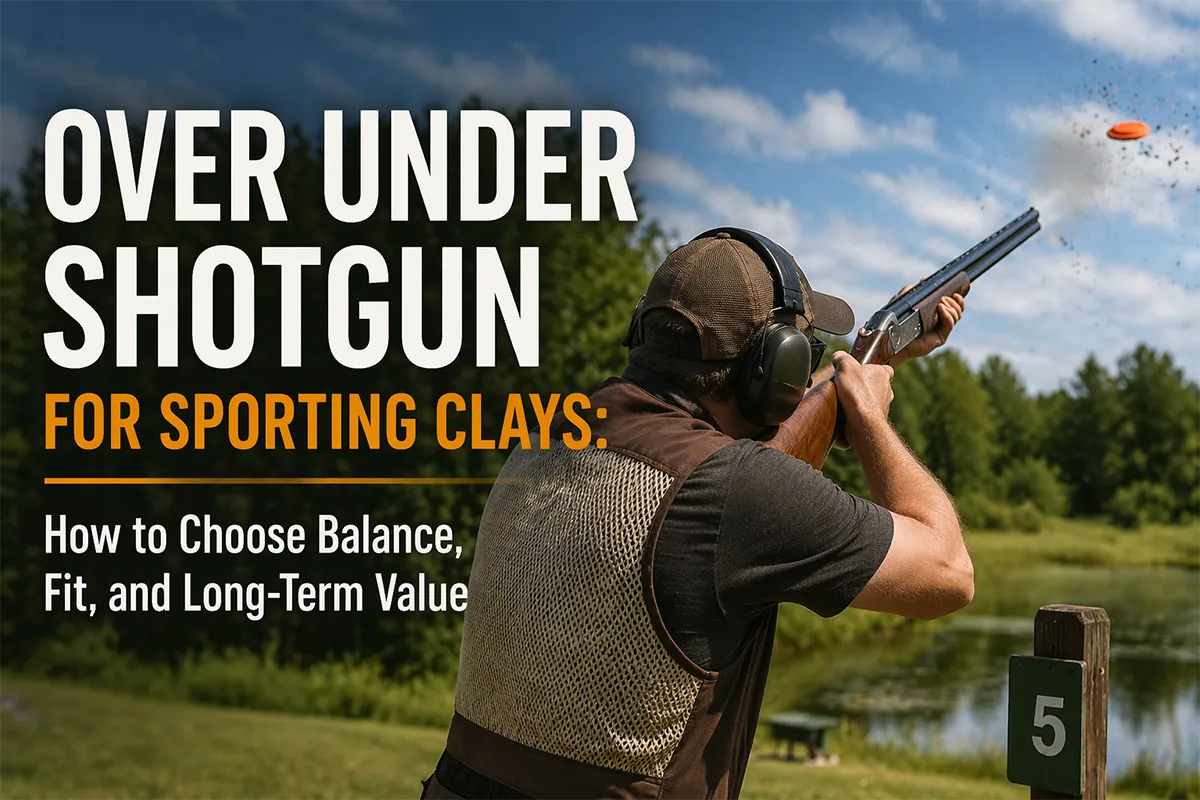
If you are researching an over under shotgun for sporting clays in 2026, you are probably trying to solve a practical problem rather than chase a trend. You want a shotgun that points naturally, fits your body, manages recoil well enough for long range sessions, and still makes sense as a long-term buy. The good news is that the best answer usually is not the most expensive gun on the rack. It is the one with the right balance, stock dimensions, barrel length, and feature set for the way you shoot.
This matters because sporting clays can expose every mismatch between shooter and shotgun. A field gun that feels lively in the woods can become whippy on crossing targets. A heavy target gun that feels stable on station 4 can start to feel like a boat anchor by the last stand. The smart way to shop this category is to treat fit and handling as the main event, then use price, finish, and brand reputation as tie-breakers. That may not sound glamorous, but it is how you avoid buying the wrong “perfect” shotgun.
Why an Over Under Shotgun for Sporting Clays Still Makes Sense
Sporting clays rewards consistency, and the over-under platform is built around that idea. An over-under shotgun has two vertically stacked barrels and usually a break-action design, meaning the barrels hinge open for loading and unloading. Compared with a pump or semi-auto, it gives you a clean sighting plane, simple manual operation, easy chamber inspection, and the option to use two different chokes right away. A choke is the constriction at the muzzle that affects shot spread, and in sporting clays that flexibility can matter from one presentation to the next.
That does not make an over-under automatically better for every shooter. Semi-auto shotguns often reduce felt recoil and can cost less at the entry level. But over-unders remain popular for sporting clays because they tend to balance well, cycle everything without drama, and keep the experience straightforward. There is less to fuss with between stations, which leaves more mental bandwidth for reading targets and making a clean move to the bird.
For category browsing, start with the over-under shotguns section, then narrow by brand families that have strong clay-target reputations such as Beretta, Browning, and CZ-USA.
What Matters Most in an Over Under Shotgun for Sporting Clays
The first big choice is weight and balance. A lighter shotgun comes to the shoulder quickly and can feel lively on close, fast targets. The downside is that it may be harder to keep moving smoothly through longer crossing shots, and it usually transmits more recoil over a long day. A heavier gun is often steadier and softer to shoot, but it can wear on smaller shooters or anyone walking a long course. For many shooters, the sweet spot is a target-oriented gun with enough weight to swing smoothly without feeling dead in the hands.
The second priority is stock fit. This is where many buying decisions go off the rails. Length of pull, comb height, drop, and cast all affect where the gun shoots relative to your eye. If the gun does not fit, you end up adapting your face and shoulders to the stock instead of mounting the gun the same way every time. Adjustable combs are especially helpful for shooters who want a more tailored setup without jumping straight into custom stock work.
Barrel length is next. For sporting clays, 30-inch and 32-inch barrels dominate the conversation for good reason. Longer barrels often provide a smoother swing and a more deliberate sight picture, especially on longer presentations. A 28-inch gun can still work well, especially for smaller-framed shooters or mixed field-and-clays use, but many dedicated sporting models lean longer because the handling tends to be calmer and more predictable.
Then there is trigger quality and control layout. You are not looking for a match-rifle trigger here, but you do want a crisp, repeatable pull and controls that feel obvious under pressure. A reliable barrel selector, a predictable safety, and solid ejectors all matter more in real use than fancy engraving ever will.
Quick Research Table
| Platform | Over-under shotgun |
| Best use | Sporting clays, skeet, trap, crossover field use |
| Common barrel lengths | 28, 30, or 32 inches |
| Common gauges | 12 gauge, 20 gauge |
| Typical weight | Varies by SKU; many target models run heavier than field guns |
| Key fit features | Length of pull, comb height, drop, cast, recoil pad |
| Useful extras | Interchangeable chokes, adjustable comb, mid-bead, wider rib |
| Price logic | Pay first for fit, durability, and handling; cosmetics come later |
How the Main Types Compare
Entry-level over-unders are often appealing because they get you on the course without a painful price jump. The tradeoff is that they may have simpler wood, fewer stock-adjustment options, and a less refined trigger or action feel. That does not make them bad choices. It just means they are best for shooters who are still learning their preferences and do not yet know whether they want a dedicated target gun or a general-purpose shotgun.
Mid-tier sporting models usually offer the strongest value. This is where you start seeing better balance, more durable finishes, improved choke packages, and dimensions aimed more directly at target shooting. If you plan to shoot regularly, this range often makes more sense than buying cheap and upgrading twice.
High-end target guns add refinement more than reinvention. You may see better stock wood, smoother actions, more tuning options, and reputations for very high round-count durability. Those things are real advantages, but they do not replace proper fit or good fundamentals. Buying a premium gun that does not suit you is still an expensive way to miss left.
Three Common Model Paths
A practical way to shop is to compare a few common “lanes” rather than every SKU on the market. The Beretta 686 Silver Pigeon I is a classic crossover choice for shooters who want a respected platform that can handle clays and field duty. The Browning Citori CXS often appeals to shooters who want a more target-friendly balance while keeping versatility. The CZ Redhead Premier tends to draw value-focused buyers who want over-under handling without diving into higher pricing tiers right away.
Those examples highlight the core tradeoff. The more you move toward dedicated sporting models, the more you usually gain in shootability over long sessions. The more you move toward crossover or field-oriented guns, the more you may save weight and cost, but you might give up some of the smoothness that makes sporting clays easier to repeat well.
Gauge, Recoil, and Session Length
For most sporting clays research, 12 gauge remains the default because it offers the broadest load availability and the most flexibility across target presentations. It is the easy answer, but not always the only smart one. A 20 gauge over-under can make sense for smaller-framed shooters, shooters managing recoil, or anyone who wants a lighter gun and understands the tradeoffs in pattern density and target margin.
Recoil should not be treated like a side note. In a game where you may shoot a substantial number of shells in a day, recoil affects not just comfort but consistency. A heavier gun, a good recoil pad, proper stock fit, and sensible loads all help. If a shotgun beats you up by station 6, your scores on station 10 will hear about it.
Research Checklist Before You Buy
- Mount the gun with eyes closed, then open them and check whether your eye sits naturally on the rib.
- Compare 30-inch and 32-inch barrels before assuming shorter is easier.
- Check whether the stock dimensions suit you now, not after a hypothetical future fitting.
- Look at choke support, included accessories, and replacement-part reputation.
- Think honestly about use: dedicated sporting clays, mixed clay games, or field crossover.
- Budget for shells, eye and ear protection, and possibly a fitting session, not just the shotgun.
What Most Buyers Get Wrong
The most common mistake is buying with the eyes instead of the shoulders. Beautiful walnut and polished metal can absolutely matter if ownership pride is part of the appeal, and that is fair. But for sporting clays, the gun that breaks more targets is usually the one that fits, swings evenly, and stays comfortable through volume. A less flashy shotgun that helps you mount consistently is often the better research result.
The second mistake is overcommitting too early. New shooters often assume they need a full competition-spec target gun from day one. Some do. Many do not. If you are still learning your preferences, a well-chosen crossover gun may tell you a lot before you invest deeper. The goal is not to buy forever on the first try. It is to buy intelligently enough that your next decision is based on actual experience.
Bottom Line
The best over-under shotgun for sporting clays in 2026 is usually the one that gives you repeatable mount, sensible weight, manageable recoil, and enough adjustability to grow with your skill. Start with fit, then look at balance, barrel length, and intended use. Brand matters, but not as much as how the gun moves for you. If you keep that order straight, the market gets a lot less confusing and a lot more useful.