
Bullpup Rifle in 2026: How to Choose the Right One for Compact Handling, Range Use, and Truck-to-Field Practicality
April 14, 2026
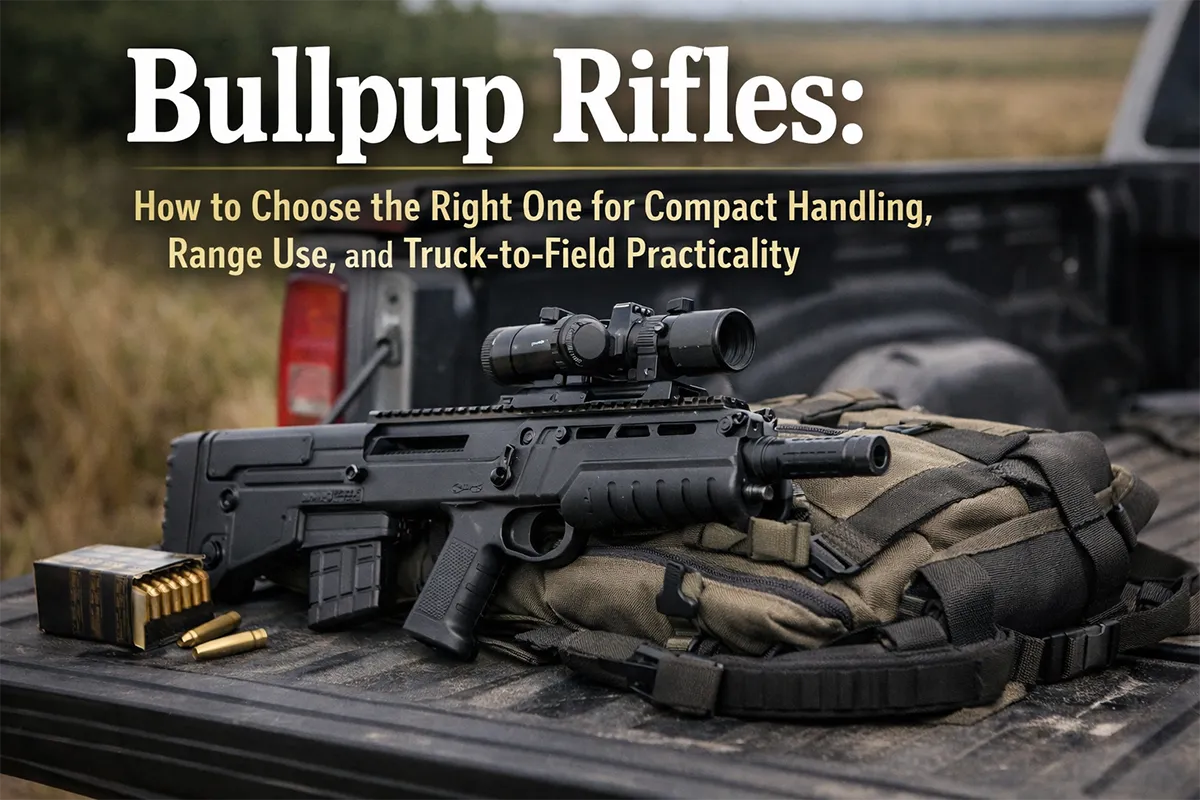
If you are researching a bullpup rifle in 2026, you are probably trying to answer one very practical question: do you want rifle-length barrel performance in a package that feels shorter and handier than a traditional carbine? This guide explains what a bullpup is, why it still matters, who it fits best, and how to compare handling, trigger feel, controls, and long-term ownership before you commit to a platform that solves some problems brilliantly and creates a few of its own.
A bullpup places the action and magazine behind the trigger group instead of in front of it. In plain English, that means the rifle can keep a longer barrel without stretching overall length the way a conventional rifle does. That is the core appeal. You get a compact footprint for storage, movement, and vehicle use, while still keeping the ballistic benefits of a real rifle barrel. Start with the broader semi auto rifles category and then narrow the field by design priorities, not just brand loyalty.
Why a Bullpup Rifle Still Has a Place
The biggest reason is efficiency. A conventional rifle usually gets shorter by giving up barrel length, which can change balance, blast, and velocity. A bullpup takes a different route. It moves the working parts rearward so the barrel can stay longer without turning the rifle into a hallway problem. That makes the format attractive for shooters who want compact storage, easier movement in and out of vehicles, or a rifle that handles tightly on the range without feeling like a stripped-down compromise.
The second reason is balance. Bullpups shift much of the rifle’s mass closer to the shoulder, which can make them feel easier to hold on target for some shooters, especially in tighter spaces. Not everyone loves that rear-biased feel, but many owners find it quicker to maneuver once they adjust to it. A rifle that feels shorter than its barrel length suggests can be very appealing for general-purpose use.
The third reason is simple: this category now has more mature options than it did a decade ago. Buyers are not limited to one quirky design with oddball parts support. There are serious platforms from brands like IWI, Springfield, KelTec, and FNH, each taking a slightly different approach to compact rifle design.
Bullpup Rifle vs. Conventional Carbine
This is the comparison that matters most. A conventional carbine usually wins on familiarity. Reloads are more intuitive for most American shooters, aftermarket support is often broader, and trigger feel tends to be better because the fire-control system is less mechanically stretched out. If you already know AR-style controls, a standard rifle will usually feel easier on day one.
A bullpup rifle wins when compact length is a major priority. It gives you a shorter overall package without stepping down to a much shorter barrel. That can be useful for storage, vehicle transport, range movement, and general handling in tighter spaces. The tradeoff is that the manual of arms often takes more practice. Magazine changes happen farther back, controls vary more by model, and trigger feel can be less crisp because the trigger is mechanically linked to parts located behind it.
So the real decision is not “which one is better?” It is “which compromise do you want?” If you want maximum familiarity and easier upgrades, conventional carbines still make the most sense. If you want compactness without sacrificing barrel length, the bullpup remains one of the smartest niche solutions on the market.
| Platform | Action | Caliber | Barrel/Weight | Capacity | OAL | MSRP/Street |
| 5.56 bullpup carbine | Semi-auto, gas-operated | 5.56 NATO | Usually 16–18.5 in; weight varies by SKU | Commonly detachable 20–30 round magazines | Shorter than most conventional carbines with similar barrel length | Varies by SKU |
| 7.62 NATO bullpup rifle | Semi-auto | 7.62 NATO / .308 Win | Longer barrel potential with higher overall weight | Commonly detachable box magazines | Compact for a full-power rifle | Varies by SKU |
| Compact sporting/defensive bullpup variant | Semi-auto | Varies by model family | Varies by SKU | Varies by magazine pattern | Main advantage is compact overall footprint | Varies by SKU |
What Changes the Experience Most
Trigger feel is the first big divider. Because the trigger sits farther forward than the action, many bullpups rely on transfer bars or linkages. That can make the trigger feel less direct than on a conventional rifle. Some platforms manage this better than others, but it is one of the first things you should research carefully. A good bullpup trigger does not need to feel identical to a match AR trigger. It just needs to be predictable and usable for the role you care about.
Ejection and handedness matter next. Bullpups place the action closer to the shooter’s face, so the way brass exits the rifle matters more than on a conventional design. Some rifles are friendlier to left-handed use than others. Some require a parts change to swap ejection direction. Some use forward or downward ejection systems that reduce the issue. If you are left-handed or share rifles across shooters, this should be near the top of your checklist.
Reloading speed and control layout also matter more than many buyers expect. On a conventional rifle, most shooters already know roughly where the magazine, mag release, and charging handle will be. Bullpups can vary a lot. A platform with good handling can still feel awkward if the reload process does not click with your hands or your habits. This is why “cool and compact” is not enough by itself.
Suppressor use and gas behavior deserve attention too. A suppressed bullpup can be very practical, but the shorter overall package puts gas and noise perception closer to the shooter. That does not automatically make it a bad suppressor host. It just means tuning, muzzle device choice, and how the rifle vents gas become more noticeable than they might on a longer conventional setup.
How the Main Brand Approaches Differ
IWI is often the starting point for buyers who want a duty-style, established bullpup platform. The Tavor family built its reputation on compact handling, robust design, and broad recognition in the category. It tends to appeal to shooters who want a serious, proven layout and are willing to accept a little extra weight or a different manual of arms in exchange for a very purpose-built rifle.
Springfield enters the conversation through the Hellion, which appeals to buyers who want an updated bullpup with ambidextrous thinking and a modern feature set. This lane makes sense for shooters who like the idea of a compact rifle but do not want something that feels locked into older ergonomics or limited adjustability.
KelTec often attracts the value-conscious or curiosity-driven buyer who wants something lighter, different, or mechanically distinctive. That does not mean these rifles are automatically the best choice for everyone. It means they often live in the part of the market where portability, unusual layouts, and clever engineering matter as much as brand prestige.
FNH is relevant for buyers looking at more specialized compact rifle concepts. Depending on the exact model family, the appeal may be caliber choice, extremely compact packaging, or a platform that simply does not feel like another conventional carbine in a different stock. That can be a good thing, as long as you are buying for a real use case rather than just for novelty value.
Who a Bullpup Rifle Fits Best
This category fits shooters who place a premium on compact overall size but still want rifle-length performance. It makes sense for buyers who move rifles in and out of vehicles often, want a range gun that handles tightly, or simply prefer the balance of a rear-weighted design. It can also make sense for owners who already have a conventional rifle and want something complementary rather than redundant.
Where it fits less well is as a default recommendation for every first-time rifle buyer. If you are brand new to rifle ownership and want the easiest path for parts, accessories, and familiar controls, a conventional semi-auto rifle is usually the smoother entry point. Bullpups reward deliberate buying. They are best for people who know why they want one.
Research Checklist Before You Buy
- Check trigger feel honestly. “Better than expected” is not the same as “good for you.”
- Research ejection setup. This matters even more if you are left-handed or share rifles.
- Study the reload process. A compact rifle that slows you down too much may not fit your use case.
- Look at magazine ecosystem and parts support. Compact design is nice; long-term support is nicer.
- Think about suppressor use early. Bullpups can behave differently once gas and blast are added to the equation.
- Decide whether this is a primary rifle or a second-system rifle. That answer changes what compromises are acceptable.
The practical takeaway is simple: a bullpup rifle is not a gimmick, but it is also not an automatic upgrade over a conventional carbine. It is a specific answer to a specific question. If your question is about keeping a real barrel length in the shortest useful package possible, the category still makes a lot of sense in 2026. If that is not your priority, a standard rifle may still be the easier and smarter buy. For more comparisons, keep browsing the semi auto rifles category and narrow the field through makers like IWI, Springfield, KelTec, and FNH.