
HK VP9A1 X: What’s New in 2026, Who It’s For, and How to Pick the Right Variant
February 19, 2026
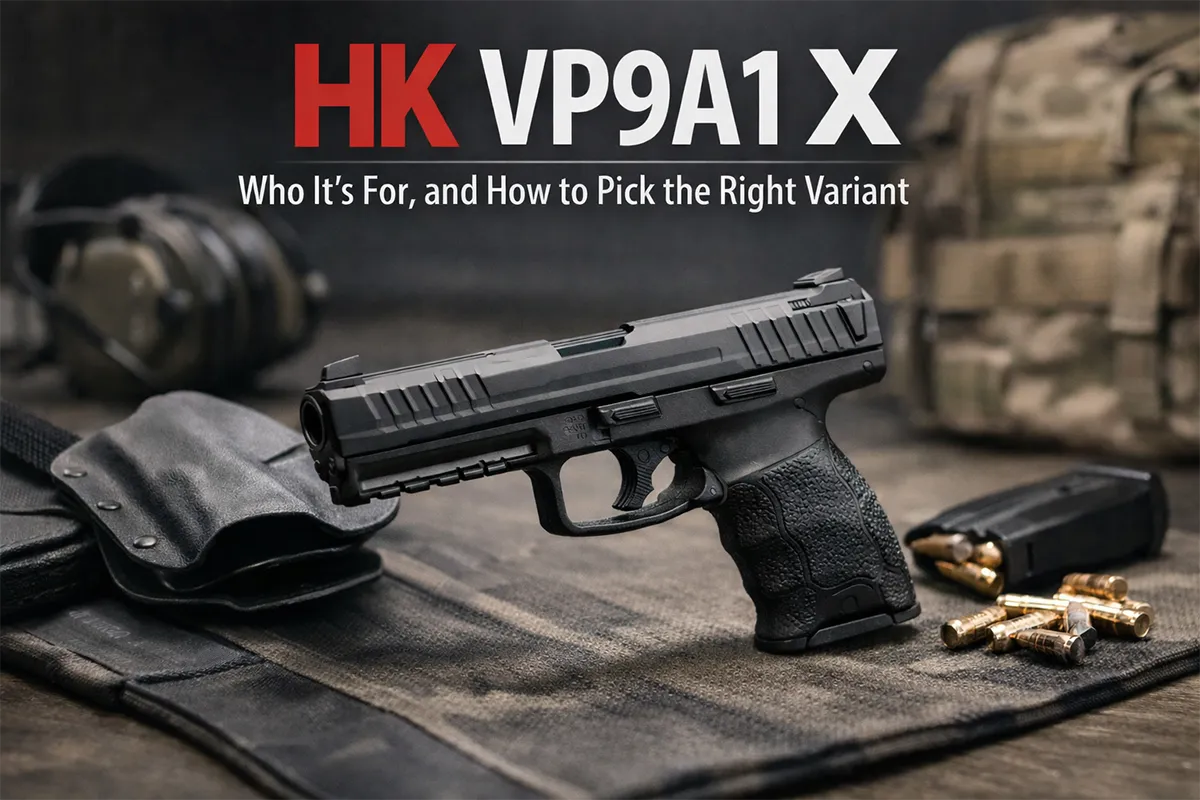
TL;DR: The HK VP9A1 X is a “crossover” VP9A1 that pairs a compact-length top end with a full-size grip, and it’s aimed at shooters who want better control, more capacity, and faster dot shooting without jumping to a full-size slide. If you want a suppressor-ready setup, the VP9A1 X Tactical adds a threaded barrel and taller sights; if you want “ready out of the box,” optics-equipped packages can save you research time.
If your feeds have been full of SHOT-season announcements lately, the VP9A1 X is one of the more practical “real world” releases—because it’s not trying to reinvent the handgun. It’s trying to make the most common jobs (carry, training, home defense, duty-style use) easier with a cleaner optics path, refined controls, and a size that fits more hands and more use cases.
To compare it against other pistols quickly, start in Semi Auto Pistols and keep a brand tab open for Heckler & Koch.
What’s Actually New With the HK VP9A1 X
The VP9 line has been popular for a long time, so “new” here doesn’t mean “completely different.” The VP9A1 refresh is about refinements, and the HK VP9A1 X is about sizing and configuration.
- The “X” format: Think compact slide length with a full-size grip. That usually means easier concealment than a full-size slide, but better purchase and control than a compact grip—especially with faster strings and one-handed work.
- Optics-first setup: VP9A1 variants are built to be optics-ready (and some are optics-equipped). That matters because the dot is now a normal research requirement, not a niche accessory.
- Package choices that matter: Many buyers don’t realize how much of the “value” is in what comes in the case—magazines, capacity, and whether the optic is included.
In plain terms: HK is making it easier to buy a VP9 configured the way most people actually want to run it in 2026—dot-friendly, high-capacity options available, and a size that doesn’t force you into “tiny grip compromises” to get a shorter slide.
VP9A1 X vs VP9A1 X Tactical: The Decision That Changes Everything
If you only make one decision up front, make it this one: standard vs Tactical. Everything else is secondary.
Choose the VP9A1 X (standard) if: you want the crossover size for carry/training/home defense, you don’t need a threaded barrel, and you want a slightly simpler, usually-lighter setup. It’s the “most people” choice.
Choose the VP9A1 X Tactical if: you specifically want a threaded barrel and suppressor-height sights from the factory. Even if you never run a suppressor, taller sights can be helpful as a backup sighting system with many red-dot setups. The tradeoff is length and bulk at the muzzle, which can matter for carry comfort and holster compatibility.
One small, practical note: “Tactical” pistols can be awesome range guns, but they can also be a pain if you’re trying to match a common concealed-carry holster footprint. Before you commit, check whether your preferred holster maker supports the exact slide length and muzzle setup you’re buying.
Specs That Matter (and the Ones That Don’t)
Internet arguments often revolve around tiny spec differences that won’t change your real performance. For VP9A1 X research, focus on the specs that actually change handling: barrel length (especially for holsters), grip length (printing and control), and magazine capacity (spares and availability).
| Platform | Action | Caliber | Barrel/Weight | Capacity | OAL | MSRP/Street |
|---|---|---|---|---|---|---|
| HK VP9A1 X | Striker-fired | 9mm | ~4.09″ barrel / Varies by SKU | Varies by SKU (common packages include 17- & 20-rd or compliant mags) | Varies by SKU | MSRP varies by package |
| HK VP9A1 X Tactical | Striker-fired | 9mm | 4.7″ threaded barrel / Varies by SKU | Varies by SKU (common packages include 17- & 20-rd or compliant mags) | Varies by SKU | MSRP varies by package |
Why the “Varies by SKU” language? Because it’s not a dodge—it’s reality. With VP9A1 X releases, the package can change the included magazines, capacity, and whether the pistol arrives optics-ready or optics-equipped. Two pistols that look identical online can land very differently in your hands (and your budget) once you account for mags and optics.
Optics-Ready vs Optics-Equipped: Don’t Pay Twice
In 2026, “optics-ready” usually means the slide is cut to accept a red dot, often using a plate system or a direct-mount pattern. “Optics-equipped” means the pistol ships with an optic already installed.
Optics-ready is better if you already know what optic you want, you’re standardizing across multiple pistols, or you’re picky about window size, brightness behavior, or enclosed vs open emitter.
Optics-equipped is better if you want a single-SKU, “arrives ready” path and you don’t want to spend your weekend comparing footprints, plates, screws, and co-witness heights. It can also reduce the risk of buying the wrong parts—because yes, that happens constantly.
The smart move is to decide your optic plan before you order the pistol. If you’re going optics-equipped, price it as a system: pistol + included optic + any spare batteries + two extra mags. If you’re going optics-ready, price it as pistol + optic + mounting solution (if needed) + two extra mags. That’s the “real cost,” not the base sticker.
Ergonomics: Why the “X” Size Exists
Crossover pistols exist because a lot of shooters don’t shoot their best with short grips. A full-size grip gives you more leverage and a more consistent support-hand index—two things that matter when you’re trying to run a dot quickly without “searching” for it after recoil.
For concealment, the grip is usually the harder part to hide. So why pick the bigger grip at all? Because many people carry a compact pistol, then train with full-size mags, extended basepads, or “pinkie help” anyway. The VP9A1 X just makes that reality more honest: it prioritizes shootability and capacity while keeping the upper assembly closer to compact length.
If you’re deciding whether the “X” is too big to carry, evaluate your real wardrobe and your real carry position. Appendix carry has different grip-printing behavior than strong-side hip. What vanishes under a hoodie can print under a fitted T-shirt. No amount of spec-sheet reading replaces trying a similar-sized pistol in a good holster.
Magazine Choices: Capacity Is Easy—Spare Mags Are the Real Issue
It’s easy to get fixated on “17 vs 20.” The more important question is: how easy is it to stock the mags you’ll actually use?
- Training reality: If you shoot classes or higher round counts, you’ll want multiple spare mags. Your platform is only as convenient as your ability to keep fed.
- Carry reality: Many people carry with a flush magazine and keep a higher-capacity spare. If your chosen SKU includes both, that’s a practical advantage.
- Compliance reality: Some SKUs ship with capacity-limited mags. If you live in a restricted state, confirm the exact compliant package instead of assuming you can “swap later.”
If you’re shopping the VP9A1 X specifically because of the included 17- and 20-round setup, make sure the listing you’re reading actually includes that configuration. Don’t let a stock photo make the decision for you.
How the VP9A1 X Stacks Up Against the Usual Alternatives
The VP9A1 X lives in a crowded “serious 9mm striker pistol” space. Most buyers cross-shop it against the mainstream standards: Glock’s compact family, SIG’s P320 variants, and the M&P line. If you want to compare across families, use brand hubs like Glock and Sig Sauer to keep the research apples-to-apples.
Here’s a simple way to frame the comparison:
- If you want maximum ecosystem standardization: Glock-style footprints tend to win on ubiquity—holsters, mags, parts availability, and sheer market saturation.
- If you want modularity across sizes: P320-style families often appeal to people who want to mix grip modules and slide lengths as their needs change.
- If you want a refined “shoots easy” feel with crossover sizing: The VP9A1 X is positioned as a strong middle option—especially for shooters who care about grip fit and dot tracking more than “most common platform on earth.”
No matter which direction you lean, the best approach is to compare your likely use case: carry comfort, the way the gun returns to the dot after recoil, and how naturally the controls work for your hands. The rest is background noise (yes, even if it’s very loud noise online).
Research Checklist Before You Buy
- Confirm the exact SKU package: optics-ready vs optics-equipped, and which magazines are included.
- Decide standard vs Tactical: threaded barrel and taller sights are either a must-have or a holster headache—rarely “neutral.”
- Plan your optic path: pick the optic first (or commit to optics-equipped) so you don’t buy mounting parts twice.
- Holster compatibility: verify slide length and muzzle configuration support from your preferred holster maker.
- Spare mags early: budget for at least two extra magazines if you plan to train seriously.
- Grip fit: if possible, handle one in person—crossover grip length is the point of the model.
Where This Release Fits in the 2026 Pistol Trend
Across the industry right now, the “direction of travel” is clear: optics-ready by default, more factory configurations that reflect how people actually run pistols, and fewer buyers willing to do a long aftermarket shopping list just to reach a modern baseline.
The VP9A1 X fits that trend by tightening the gap between a compact carry gun and a full-size shooter—without forcing you into a micro-compact grip. It’s not the loudest announcement of the year. It’s the kind of release that quietly becomes a staple because it solves common problems with fewer compromises.