
.357 Magnum Lever Action Rifle: A Practical Deep Dive for Home, Range, and Woods in 2026
February 17, 2026
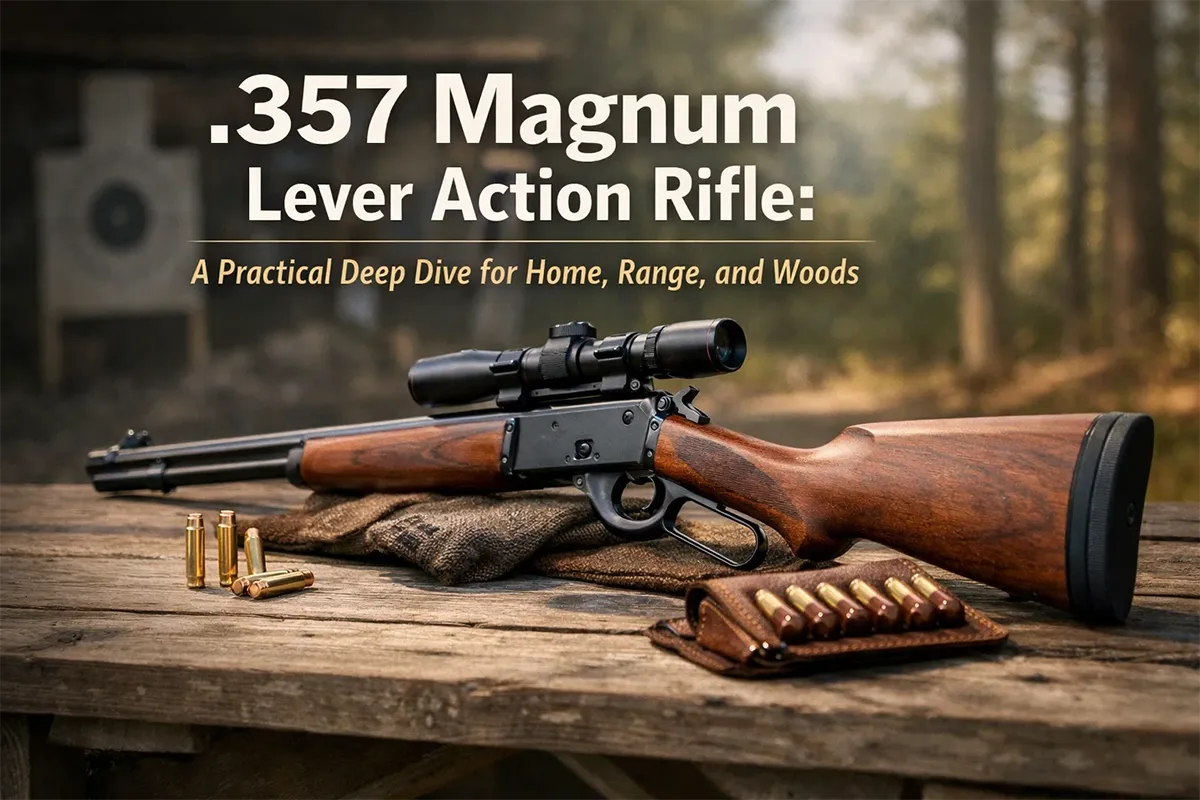
If you’ve been researching a .357 Magnum lever action rifle, you’re probably trying to solve one (or more) of these problems: you want a rifle that’s easy to shoot well, doesn’t punish your shoulder, can share ammo with a revolver, and still hits hard enough for realistic tasks. The good news is that this niche is one of the most “practically fun” corners of the gun world. The bad news is that the details matter—especially barrel length, feeding reliability, and how (or whether) you plan to mount an optic.
This deep dive will help you decide what type of .357 lever gun fits your life: home and property use, range practice, or close-to-moderate distance hunting. We’ll also cover tradeoffs that don’t show up in spec sheets—like loading systems, sight pictures, and why some rifles love certain bullet shapes while others act picky.
Why a .357 Magnum lever action rifle still makes sense
A lever action is a manually operated rifle that cycles using a lever—simple, fast with practice, and typically very reliable when set up correctly. Pair that action with .357 Magnum and you get a combination that’s easy to live with:
- Manageable recoil: Most .357 rifles are comfortable for long range sessions, especially compared to typical centerfire hunting rounds.
- Ammo flexibility: Many .357 rifles also run .38 Special, which is often softer-shooting and great for practice. (Always confirm your specific rifle’s manual and feeding preferences.)
- Capacity and handling: Tube magazines often hold a useful number of rounds without bulky external magazines.
- Real-world performance: Out of a rifle barrel, .357 Magnum can gain velocity compared to a handgun, which can improve practical effectiveness—within responsible distances.
- Low barrier to skill: The recoil and report are generally approachable for newer shooters, which means more practice actually happens.
Start your browsing on the GunGenius category page for lever action rifles, then filter by caliber and barrel length once you know your use case.
.357 Magnum lever action rifle use cases: what it’s great at (and what it’s not)
Let’s be blunt: a .357 lever gun isn’t a “do everything at any distance” solution. It shines in a few specific lanes.
Home and property
For home/property tasks, people like .357 lever guns because they’re compact (especially in shorter barrels), easy to control, and can be run accurately under stress with a little repetition. The manual action also appeals to folks who want simplicity and clear mechanical feedback. The big question is how you’ll aim it: traditional irons, a receiver-mounted optic, or a forward “scout” setup. That choice can steer you toward certain models or variants.
Range practice and training
This is where .357 lever guns quietly win hearts. With .38 Special, they can be mild and affordable to shoot (depending on market pricing), and with .357 Magnum they still feel like “real rifle” training—trigger control, follow-through, and positional work. If you want to do high-rep drills, pay attention to loading method (side gate vs tube loading) and how easy it is to keep the gun topped off.
Hunting and woods carry
In the woods, a .357 lever action can be a handy option for close-to-moderate distances on appropriately sized game where legal and ethical. Your limiting factors are usually distance and bullet choice. If you’re thinking “long open fields,” you may be happier with a rifle cartridge built for that job. If you’re thinking “thick timber, short shots, fast handling,” .357 lever guns can fit well.
Safety note: This is informational only. Always follow your local regulations for hunting, and choose distances and ammunition you can place accurately and consistently.
The decisions that matter most before you buy
Most disappointment comes from buying the “wrong configuration,” not the wrong caliber. Here’s what to decide up front.
1) Barrel length: compact handling vs smoother shooting
Shorter barrels handle quickly and store easily. Longer barrels can feel steadier and may add a bit of velocity. For most people, the best choice is the one you’ll actually carry and practice with. If your lever gun lives in a safe and gets carried around the property, don’t accidentally buy a long, heavy configuration you’ll resent.
2) Loading system: side gate, tube, or both
Lever guns often use a tube magazine under the barrel. Traditionally, many were loaded from the front of the tube; many modern options offer a side loading gate so you can top off without pulling the tube. Some rifles offer both. This matters more than it sounds:
- Range convenience: A side gate can make it easier to “shoot a few, load a few” without breaking your rhythm.
- Ammo shape sensitivity: Some rifles feed a wide variety of bullet profiles; others can be picky with certain flat points, hollow points, or very short .38 Special loads.
- Maintenance and feel: Loading gates have spring tension; some are smooth, some feel stiff until broken in.
3) Sights and optics: don’t assume it’s easy
Lever actions come in a few common sighting setups:
- Traditional irons: simple, durable, and fast once you’re used to them.
- Receiver-mounted optics: depends on the receiver being drilled/tapped or factory rail options. This is often the cleanest modern setup.
- Scout/forward mounting: sometimes used to keep the receiver clear or to preserve a certain handling feel.
- Receiver peep sights: a great middle ground—faster than buckhorn sights for many shooters, and still rugged.
Before you buy, confirm the exact variant supports your intended mounting method. Two rifles with the same model name can ship with very different receivers and sight setups depending on the SKU.
4) Weight and balance: the “you’ll notice it every time” factor
Lever guns can be surprisingly different in feel even when the specs look similar. Heavier rifles tend to sit steadier and soak up recoil; lighter rifles carry better but can feel whippy. If you’ll mostly shoot from the bench, a bit of weight is nice. If you’ll carry all day, you’ll feel every ounce.
Common models to research: what usually separates them
Below are three brand lanes that show up constantly in .357 lever gun research. This isn’t a “best of” list—think of it as a map of the market so you can compare apples to apples on GunGenius.
Henry: smooth actions and “shoot it a lot” appeal
Henry .357 lever guns are popular with people who value a slick action and an easy ownership experience. Depending on the specific model, pay attention to whether you’re getting a side gate, tube loading, or both, and whether your preferred optic mounting is straightforward. Many buyers in this lane want a rifle that’s simply enjoyable to shoot with .38 Special and still capable with .357 Magnum.
Marlin: modern takes on a classic pattern
Marlin is often discussed in terms of ergonomics and practical features—especially if you’re thinking about optics, slings, and “use it hard” setups. If you want a lever gun that leans modern while staying lever-gun familiar, this lane is worth your time. As always: confirm the exact variant, because small feature differences change the whole user experience.
Rossi: value-focused and widely available
Rossi .357 lever guns are often researched by buyers who want to get into the category at a lower entry point. The upside is obvious: more budget left for ammo and practice. The tradeoff is that you should be extra careful about feeding preferences, out-of-the-box fit/finish expectations, and making sure the sights/optic solution matches your plan.
Ammunition notes: .38 Special vs .357 Magnum (and feeding realities)
One reason the .357 lever gun category stays popular is the ability to practice with .38 Special and “turn it up” with .357 Magnum. But there are practical wrinkles:
- .38 Special for practice: softer recoil and often a gentler learning curve. Some very short .38 loads can behave differently in certain actions—test what you plan to use.
- .357 Magnum for “work”: typically louder, more recoil, and more velocity—especially from longer barrels. Choose a load designed for your intended purpose.
- Bullet shape matters: Lever guns often feed best with round nose flat point or flat point profiles. Some hollow points work great; others may be less consistent depending on the rifle.
- Point of impact shifts: Different loads can hit different points on target. Confirm your zero with the load you’ll actually rely on.
If your plan is “mostly .38 Special,” make sure the rifle you choose has a track record of feeding it smoothly. If your plan is “mostly .357 Magnum,” consider a slightly heavier rifle or better buttpad if you’ll shoot long sessions.
Practical setup tips (no gunsmithing required)
You don’t need to modify anything to make a .357 lever gun effective, but a few setup choices can dramatically improve usability:
- Sling: If you carry it, add a comfortable sling and confirm your attachment points don’t interfere with cycling or loading.
- Simple sight upgrade: If your rifle supports a receiver peep sight, many shooters find it faster and clearer than traditional buckhorn sights.
- Optic restraint: Avoid the temptation to add a huge scope “because it fits.” A lever gun handles best when you keep it trim and balanced.
- Ammo test pack: Buy a small variety of bullet profiles and see what your rifle feeds and groups best before committing to bulk.
One light quip, then back to work: a lever gun with a skyscraper optic is like a pickup truck with race tires—possible, but you’re probably missing the point.
Research checklist: confirm these before you click “buy”
- Exact variant/SKU: barrel length, weight, sights, and whether it’s drilled/tapped or rail-ready.
- Loading style: side gate, tube, or both—pick what matches how you’ll actually shoot.
- Feeding reputation: look for consistent reports with the bullet shapes you plan to use (especially .38 Special).
- Ergonomics: length of pull and stock shape—important if you’re tall, short, or shoot with heavy clothing.
- Intended role: home/property, range, hunting—choose your “primary” role and accept the compromise for the others.
- Support items: spare parts availability, sight options, and whether your preferred sling/optic setup is straightforward.
Where to start on GunGenius
Browse lever action rifles first, then compare across a few brands to see which feature set matches your plan. For a faster jump, explore brand pages like Henry, Marlin, and Rossi, then drill down into specific models and variants.