
Compensated Carry Pistols 2026: Why Factory Comps and Enclosed Optics Are Taking Over
March 9, 2026
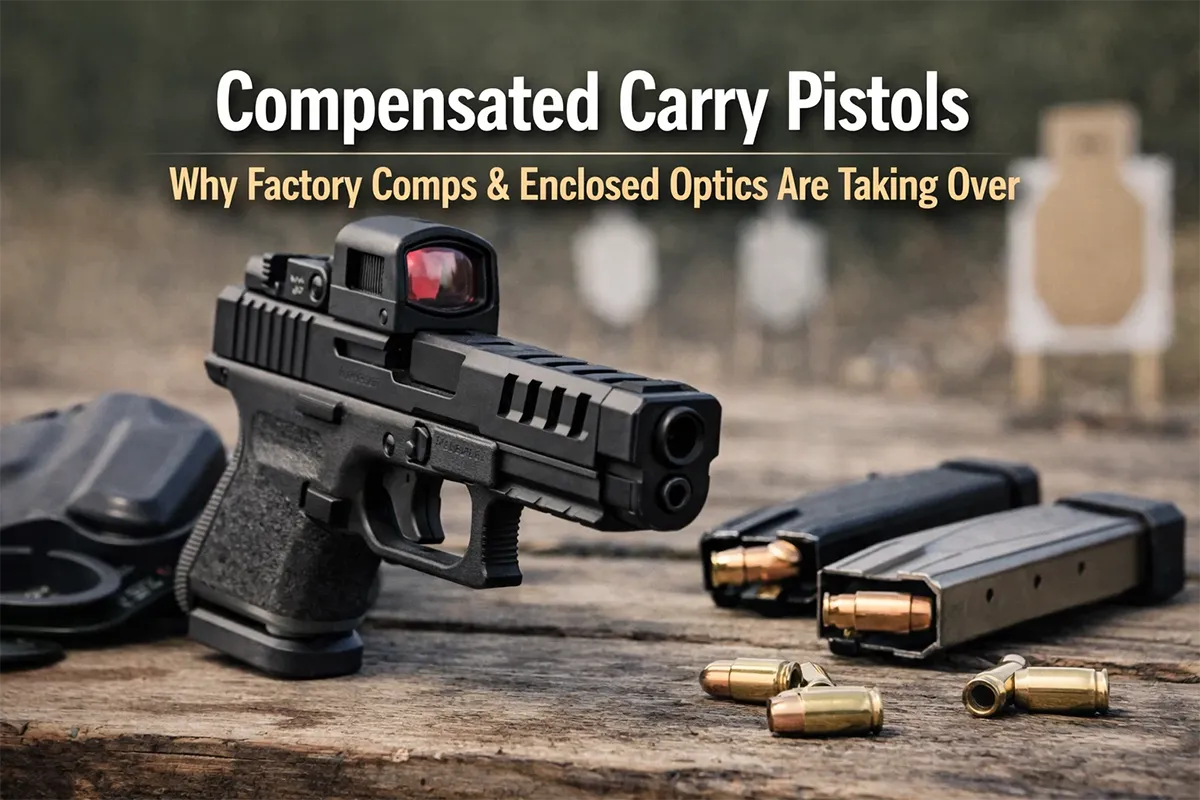
TL;DR: Compensated Carry Pistols 2026 aren’t a niche anymore. The industry is moving toward factory-integrated compensation and optics-ready slides as the default, not the upgrade. If you’re researching a new carry gun this year, you’ll likely decide between “simple and proven” vs. “flatter and faster” more than you’ll decide between brands.
On January 24, 2026, SHOT Show coverage made something obvious: the “iron sights only, no rail, no optic cut” carry pistol is fading fast. Whether you like that shift or not, it changes what’s worth researching. More guns now ship with some form of compensation (ports or integrated gas management) and increasingly with enclosed emitter optics options. One light quip allowed, so here it is: irons aren’t dead, but they’re definitely no longer the main character.
Compensated Carry Pistols 2026: The Trend in Plain English
A factory compensated carry pistol tries to reduce muzzle rise so you can keep sights (or a red dot) closer to the target through recoil. In practical terms, it can help you shoot faster strings with less effort—especially in smaller pistols where recoil feels “snappy.”
An enclosed emitter optic is a red dot where the emitter is sealed inside the housing. For concealed carry, that can mean fewer issues from lint, sweat, rain, or general daily grime—conditions that don’t show up in clean range photos.
Why This Is Happening Now
- More people carry micro-compacts: Smaller pistols are easier to conceal, but many shooters dislike the recoil impulse. Factory comps are an answer.
- Optics have matured: Better durability, better mounting solutions, and more training content have made pistol dots less intimidating for mainstream buyers.
- Manufacturers want complete packages: Instead of selling a base model and watching you buy third-party upgrades, brands now ship “nearly finished” setups.
- Competition and duty crossover: Techniques from competition and professional use keep flowing into consumer carry designs.
Spec Highlights & Standouts (What to Look For When Comparing Models)
- How the comp is done: Integrated/slide comps, barrel comps, or porting can feel different. Integrated designs often preserve more “carry-friendly” dimensions.
- Optic mounting approach: Direct mount vs. plates, footprint options, and whether suppressor-height sights are included or easily added.
- Holster support: A “new hot” variant can be annoying if holster makers lag behind.
- Reliability with your loads: Comped systems can behave differently across bullet weights and pressures—plan to test.
Comparisons: Three Research Lanes (Not Just Three Products)
Rather than obsess over a single model, pick a lane—then compare within it:
Lane 1: “Factory Comp + Factory Optic Package”
This lane is for shooters who want a coherent setup out of the box. The SIG Sauer ecosystem is a prime example with models like the SIG P365-FUSE COMP, where the pistol and optic story are designed together. The upside is convenience and cohesion. The downside is you may have fewer “mix and match” options without extra parts.
Lane 2: “Comped Slide, Bring Your Own Optic”
This lane fits buyers who want factory compensation but prefer choosing their own dot. A strong comparison point is Springfield’s comped carry direction—start at Springfield and research current comp-ready options within that ecosystem. The upside is choice. The downside is you’ll spend more time verifying footprints, screws, and backup sight height.
Lane 3: “Proven Micro-Compact + Comped Variant Options”
Some ecosystems have multiple variants, including compensated versions, while keeping magazine and holster compatibility largely intact. Shadow Systems is frequently researched in this lane; start at Shadow Systems and compare options based on size, recoil feel, and optic setup. The upside is staying within one ecosystem. The downside is you must confirm which specific trims are supported by your preferred accessories.
To browse broadly across carry guns, start here: Semi-auto Pistols on GunGenius.
Tradeoffs: The Honest Downsides of the 2026 Carry Trend
- More maintenance: Comps and ports can increase carbon buildup. Not a dealbreaker—just a reality.
- More variables: Optics, mounting screws, battery changes, and re-zeroing add steps compared to irons-only carry.
- Potential ammo sensitivity: Many are fine across loads, but your job is to confirm with testing, not assumptions.
- Carry comfort: Small changes in length, slide geometry, or optic bulk can affect concealment and comfort.
What to Watch Next (Next 30–60 Days)
Expect more “package” variants: comped models with enclosed emitter optics, improved mounting systems, and trims that target specific buyer profiles (deep concealment vs. “carry plus training”). Also watch for accessory makers to catch up—especially holsters and low-profile enclosed dots designed specifically for micro-compacts.
Research Checklist: The Five Questions That Save You Time
- Do you want compensation primarily for speed, comfort, or both?
- Are you committed to carrying a red dot, or are you still deciding?
- Is holster availability strong for the exact variant you want?
- Will you test your preferred defensive load and confirm function?
- Do you prefer a complete factory package or picking components yourself?