
Beretta B22 Jaguar: Tac Metal vs Competition Buyer Fit
September 1, 2026
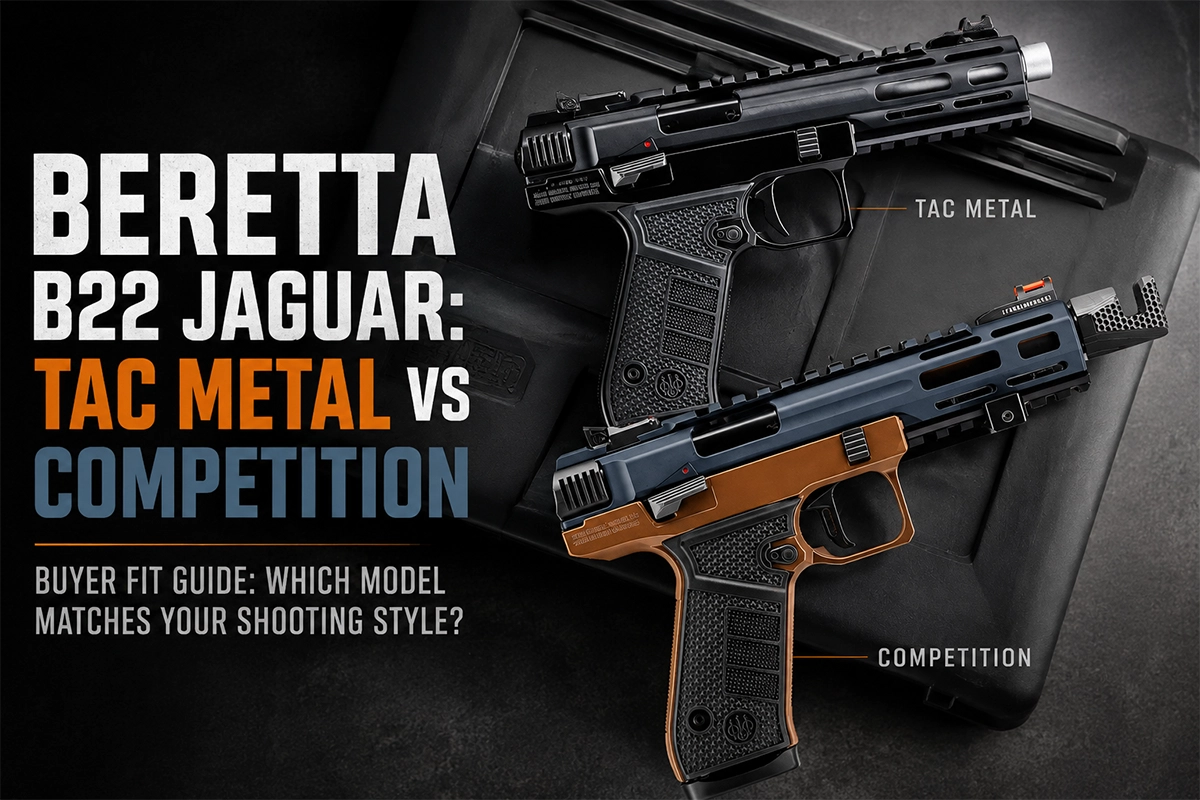
The Beretta B22 Jaguar is a full-size .22 LR target pistol for buyers who want a fixed barrel, a light single-action trigger, generous optic space, and modern controls. The practical choice is between the $749 Tac Metal and the $969 Metal Competition. Both share the same basic platform. The Competition model mainly adds factory-installed Tandemkross parts, alternate grips, and an adjustable trigger. Before paying the difference, decide whether those parts match how you plan to use the pistol.
This is a range and training pistol, not a compact centerfire substitute. Its 5.25-inch barrel and roughly 33.6-ounce weight favor stability over easy carry. Researchers can compare it with other semi-auto pistols and review the broader Beretta catalog before narrowing the field.
What Is the Beretta B22 Jaguar?
The Beretta B22 Jaguar is a blowback-operated .22 LR pistol with a fixed barrel, an internal single-action hammer, and a bolt that moves inside the upper receiver. This layout keeps the sighting system and barrel stationary while the action cycles. It is intended for target shooting, training, plinking, and rimfire competition research.
Unlike many rimfire pistols that imitate a centerfire slide, the Jaguar uses a purpose-built target-pistol arrangement. It feeds from a single-stack magazine with a published 15-round capacity, although 10-round versions are offered for restricted markets. The magazine has a follower button to ease loading.
| Model | Action | Caliber | Barrel/Weight | Capacity | Key Equipment | MSRP |
|---|---|---|---|---|---|---|
| Tac Metal | Blowback, internal SA hammer | .22 LR | 5.25 in. / 33.6 oz. | 15 rounds; 10-round option | Thread protector, adjustable sights, rails | $749 |
| Metal Competition | Blowback, internal SA hammer | .22 LR | 5.25 in. / varies with accessories | 15 rounds; 10-round option | Compensator, thumb ledge, adjustable trigger, three grip sets | $969 |
Published specifications can vary by SKU, especially for threaded and capacity-limited versions. Confirm the exact model number in a listing rather than relying on a photo or shortened title.
Beretta B22 Jaguar Tac Metal vs Metal Competition
The Tac Metal is the cleaner starting point. It has the core action, adjustable rear sight, fiber-optic front sight, full-length M1913 top rail, forward M-LOK slots, and an accessory rail beneath the barrel. Its threaded version uses 1/2×28 muzzle threads and ships with a thread protector. An unthreaded Tac Metal also exists, so buyers interested in a muzzle device should verify the barrel before ordering.
The Metal Competition adds a Tandemkross Steam Demon compensator, Accelerator thumb ledge, replacement front sight, and adjustable semi-flat trigger. It also includes three grip-panel sets. Those additions target competitors who want to tune hand fit and controls without assembling a parts package later.
The MSRP gap is $220. Choose the Competition model when the installed parts are already on your list and the rules for your intended shooting discipline allow them. The Tac Metal offers better flexibility when you prefer a simpler pistol, plan to choose different accessories, or want to spend the difference on magazines, ammunition, and an optic.
Choose the Competition package for its specific installed parts, not because the base Jaguar action is different.
How the Fixed-Barrel Design Affects Buyer Fit
A fixed barrel gives an optic or iron sight a stable relationship to the bore. The moving bolt is smaller than a full reciprocating slide, which can help a rimfire action cycle while preserving the balance expected from a target pistol. The tradeoff is that the Jaguar does not closely copy the movement and feel of a typical striker-fired centerfire handgun.
That distinction matters for training. The Jaguar can support sight alignment, trigger control, safe handling, and low-recoil practice. It will not duplicate the recoil impulse, trigger, holster fit, or slide manipulation of a centerfire carry pistol. Buyers seeking a direct trainer should compare controls and grip geometry, not caliber alone.
Controls and Left-Hand Setup
The safety is bilateral, and the magazine release is reversible. The ejection direction can also be changed, though that conversion requires an additional part. This gives left-handed researchers more options than a simple reversible magazine button, but the cost and availability of the conversion part belong in the total setup budget.
Tool-free disassembly separates the upper and barrel assembly from the frame for cleaning. The fire-control components sit in a removable chassis, while the under-barrel rail and grip panels can also be removed. Modularity is promising, but buyers should not assume the same mature aftermarket that supports long-established Ruger Mark IV or Browning Buck Mark families.
Optic, Muzzle, and Accessory Compatibility
The machined M1913 rail provides more mounting freedom than a pistol-specific optic cut. It can accept many rail-compatible red-dot mounts, but added height and weight affect balance. Confirm that the chosen optic mount clamps to a true Picatinny rail and leaves access to the action and controls.
The forward M-LOK slots and lower accessory rail create room for specialized supports, lights, or other lawful range equipment. More attachment points do not mean every accessory works together. Check screw length, clearance, sight picture, and balance before treating a proposed setup as compatible.
For a threaded Tac Metal, verify the published 1/2×28 thread specification and follow the barrel-device maker’s instructions. The Competition model arrives with a compensator. Rules, maintenance needs, and the desired balance can matter more than the presence of threads by itself.
What Fresh Range Testing Tells Buyers
An August 2026 documented range review tested a Tac Metal with four .22 LR loads, open sights, a rail-mounted optic, and a rimfire suppressor. The best reported five-shot group measured 0.40 inch at 12 yards from a rest. Two additional five-shot groups stayed below 0.75 inch, and a 10-shot group with another load measured 0.85 inch.
Those results show useful potential, not a guarantee for every pistol, shooter, or load. Rimfire ammunition can vary in velocity, priming, and fouling. A buyer should test several loads for function and grouping before purchasing a large case. The same review measured a light trigger and noted reliable cycling across its four documented loads, but longer-term durability evidence remains limited for this new platform.
Where the Jaguar Fits Against Established .22 Pistols
The B22 Jaguar enters a category with mature choices. Ruger Mark IV models are widely known for simple takedown and extensive parts support. Browning Buck Mark models offer many barrel, grip, and sight configurations. Smith & Wesson Victory pistols also compete for buyers who want a fixed-barrel target format.
The Jaguar’s case rests on its 15-round magazine option, ambidextrous features, long top rail, removable chassis, and competition-oriented factory package. Its main objections are price, full-size weight, and an aftermarket that is still developing. A less expensive pistol may leave more budget for practice, while the Jaguar may reduce the need for immediate control and mounting upgrades.
Beretta B22 Jaguar Research Checklist
- Confirm Tac Metal or Metal Competition, including the exact SKU and finish.
- Verify 15-round or 10-round magazine configuration.
- Check whether the Tac Metal barrel is threaded and confirm included muzzle hardware.
- Compare the Competition accessories with the parts you would actually use.
- Handle the full-size grip and 33.6-ounce base pistol if possible.
- Confirm optic mount height, rail fit, control clearance, and total weight.
- Price spare magazines and any left-ejection conversion parts.
- Test multiple .22 LR loads for reliable cycling and consistent groups.
- Review current competition rules before selecting a compensator or thumb ledge.
Who Should Research the Beretta B22 Jaguar?
The Tac Metal fits a buyer who wants the Jaguar action and controls with freedom to choose an optic and later accessories. It is also the more sensible starting point when factory competition parts are not central to the plan. The Metal Competition fits a shooter who values its exact Tandemkross package, adjustable trigger, and grip choices enough to justify the added cost.
Neither model is automatically the best first .22 pistol. Buyers who prioritize the lowest entry price or a mature parts market should compare established alternatives. Buyers who prioritize a modern fixed-barrel design, 15-round capacity, bilateral safety, rail space, and a competition-ready option have a clear reason to place the Jaguar on the shortlist.