
Ruger Varmint Target: 6mm vs 6.5mm Creedmoor vs .308
November 18, 2026
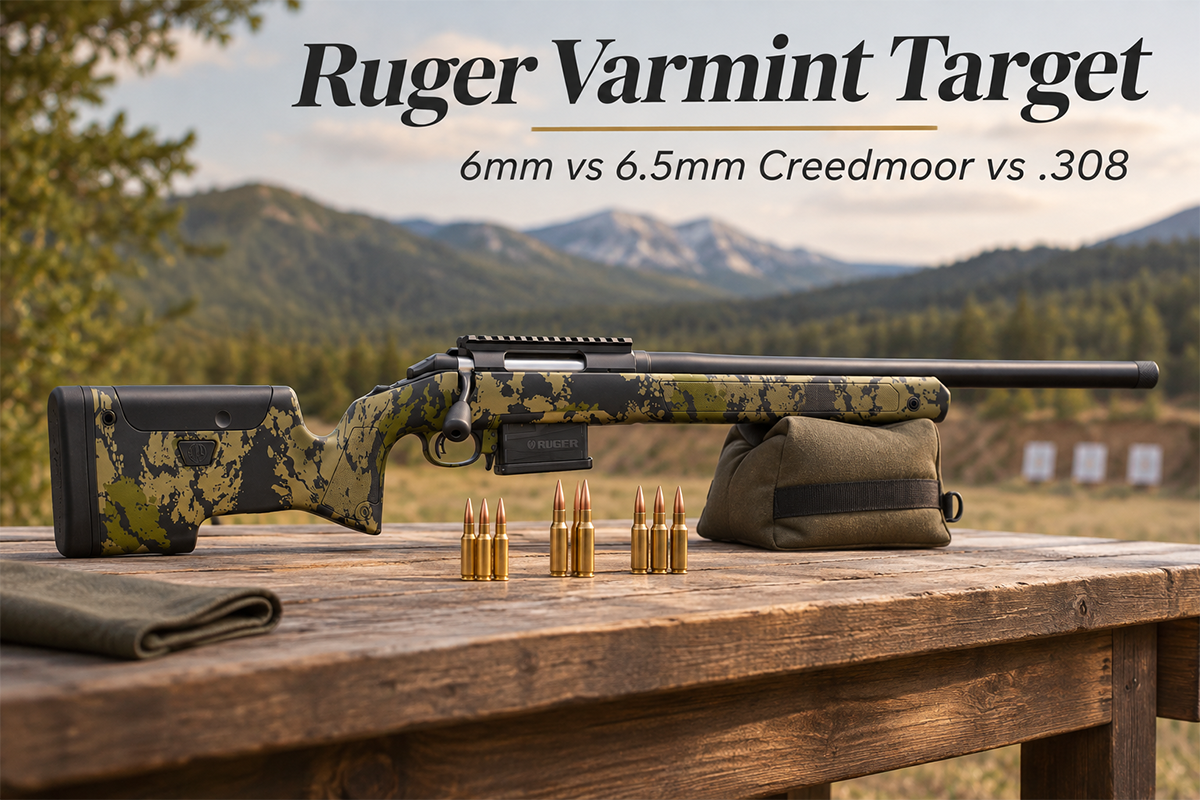
The Ruger Varmint Target adds a heavier, range-focused option to the American Rifle Generation II family. Announced on November 11, it comes in 6mm Creedmoor, 6.5 Creedmoor, and .308 Winchester. The central question is simple: do you want a rifle that spends most of its time on a bench, or one you will carry for miles? Its adjustable stock and 20-inch heavy barrel favor supported shooting. Its listed weight, before an optic, matters just as much as its cartridge choice.
All three versions share the same $899 suggested retail price, five-round AI-style magazine, and 40.5-inch overall length. Ruger lists them as available, though that does not confirm stock at a particular dealer. This comparison separates the documented differences from judgments a buyer should make in person. It also explains when a lighter bolt-action rifle could be a better fit.
Ruger Varmint Target models at a glance
Ruger lists three model numbers. The chambering, barrel twist, and a tenth of a pound of listed weight are the main differences in its published specifications. Twist describes how far a bullet travels through the barrel during one full rotation. It is a specification to match with suitable factory ammunition, not an accuracy guarantee.
| Model | Action | Caliber | Barrel / weight | Capacity | Overall length | MSRP |
|---|---|---|---|---|---|---|
| 56921 | Bolt | 6mm Creedmoor | 20 in. / 9.7 lb. | 5 | 40.5 in. | $899 |
| 56920 | Bolt | 6.5 Creedmoor | 20 in. / 9.7 lb. | 5 | 40.5 in. | $899 |
| 56924 | Bolt | .308 Win. | 20 in. / 9.6 lb. | 5 | 40.5 in. | $899 |
The published twist rates are 1:7.7 inches for 6mm Creedmoor, 1:8 for 6.5 Creedmoor, and 1:10 for .308. Each has a threaded muzzle, a factory thread protector, and a one-piece Picatinny scope base. No iron sights are listed. Check the exact model number before comparing listings, since other American Gen II versions have different stocks and barrel profiles.
What does the new stock change?
The fully adjustable target stock is the clearest reason to consider this version. A push-button cheek riser helps place the eye behind a mounted scope. Included buttpad spacers set the length of pull from 13 to 14.5 inches. Length of pull is the distance from the trigger to the rear of the buttpad. A useful adjustment range can help different shooters or accommodate heavy winter clothing.
The squared forend offers a broad surface for supported shooting. Ruger also includes a removable aluminum insert with M-LOK-compatible slots and a bag rider at the rear of the stock. A bag rider provides a smoother contact surface against a rear support bag. These features make sense for range work, yet their practical value depends on the rest, position, and optic you actually use.
Ruger’s three-position tang safety, stainless bolt, and 70-degree bolt throw carry over from the broader Generation II design. The trigger is listed as adjustable from three to five pounds. The heavy target-contour barrel is 20 inches long. Ruger says its mass can help consistency during longer shooting sessions. It does not publish a group-size promise for these new models, so test results should wait for independent range work.
Which chambering fits your use?
6mm Creedmoor: a dedicated range question
Start with the 6mm version if your main interest is target shooting and you already know where to obtain suitable ammunition. Its model number is 56921. The listed stock, magazine capacity, barrel length, and price do not change from the other two versions. That means a decision based solely on accessories or handling will not separate the chamberings much. Compare the factory loads you can actually find and the cost of a normal practice day.
Do not assume a published twist rate predicts performance with every load. Rifles may prefer different factory ammunition even when their specifications match. Also ask whether a 20-inch barrel suits the kind of shooting you expect to do. A new model’s real-world precision and reliability need range testing before anyone can rank it above the alternatives.
6.5 Creedmoor: a familiar middle ground
The 6.5 Creedmoor model, 56920, gives buyers another common centerfire choice in this stock. It weighs a listed 9.7 pounds without a scope. That figure helps distinguish this rifle from a lighter hunting setup more than a tiny difference in cartridge performance would. Think about how often you will shoot from a bench, a supported field position, or while standing. The balance you prefer may emerge quickly when you handle it.
Readers comparing this rifle with a general-purpose American Gen II should focus on the heavy barrel and target stock first. Those parts shape the carrying experience. If the goal is frequent range sessions with occasional short walks, the extra mass may feel useful. If the goal is long hikes, weigh the complete rifle with the scope and sling you plan to use.
.308 Winchester: evaluate your existing setup
Model 56924 is the .308 Winchester version. Ruger lists it at 9.6 pounds, just one tenth of a pound less than the Creedmoor models. That difference is too small to drive the purchase by itself. Existing ammunition, the ranges where you shoot, and the rifle’s feel should count more. Buyers who already own .308 rifles may appreciate sharing ammunition, but should still check each firearm’s manual and use only the correct factory load.
Like the other versions, it has a five-round AI-style detachable magazine. “AI-style” describes a magazine pattern, not a promise that every magazine of that shape works flawlessly. Confirm fit with the exact magazine and rifle before buying extras. The same caution applies to scope rings and other accessories: a listed mounting standard narrows the search, but it does not settle every fit question.
Is it a good hunting rifle?
It can serve lawful hunting uses where the chambering and local rules fit, but its weight changes the answer. The bare rifle is close to ten pounds. Add glass, mounts, and a sling, and the carried package becomes heavier. A short walk to a stand is different from a day on steep ground. The rifle’s name includes “Varmint,” yet the three listed chamberings do not by themselves define a single hunting role.
Ruger’s launch describes use on the range, in competition, and in the field. Treat that as a statement of intended versatility, not evidence that every buyer will like the same balance. If carrying comfort is central, handle a lighter model beside the Varmint Target. If supported shooting dominates, notice the stock’s cheek adjustment, forend, and rear bag contact. The right answer comes from your use, not the model name.
A practical pre-purchase checklist
- Confirm the model number and chambering on the listing and at the dealer. The three Varmint Target versions are 56920, 56921, and 56924.
- Lift the rifle with the kind of optic you expect to mount. Judge the complete weight, not just the bare specification.
- Check whether the cheek riser and 13-to-14.5-inch length of pull suit your position and clothing.
- Review your local ammunition selection and practice costs for the chosen chambering.
- Inspect magazine fit and accessory compatibility using the exact rifle and manufacturer guidance.
- Compare the $899 suggested retail price with a current dealer quote. Taxes, transfer costs, and inventory vary.
The Ruger catalog and GunGenius rifle categories can help you compare other models before deciding. For the Varmint Target’s current factory specifications, consult Ruger’s model page. It lists all three chamberings and their model numbers. Specifications and availability can change, so review the listing again when you are ready to visit a dealer.
The bottom line on Ruger Varmint Target
The Ruger Varmint Target offers an adjustable stock and heavy 20-inch barrel at the same listed price across three chamberings. Pick the cartridge that matches your actual ammunition access and range plans. Then decide whether the rifle’s near-ten-pound bare weight suits your walking distance. Those two checks matter more than a brochure comparison of nearly identical dimensions. Independent shooting results are still needed to judge accuracy and long-term performance.