
Browning BAR MK 4 DBM: Speed vs Hunter Buyer Checks
November 17, 2026
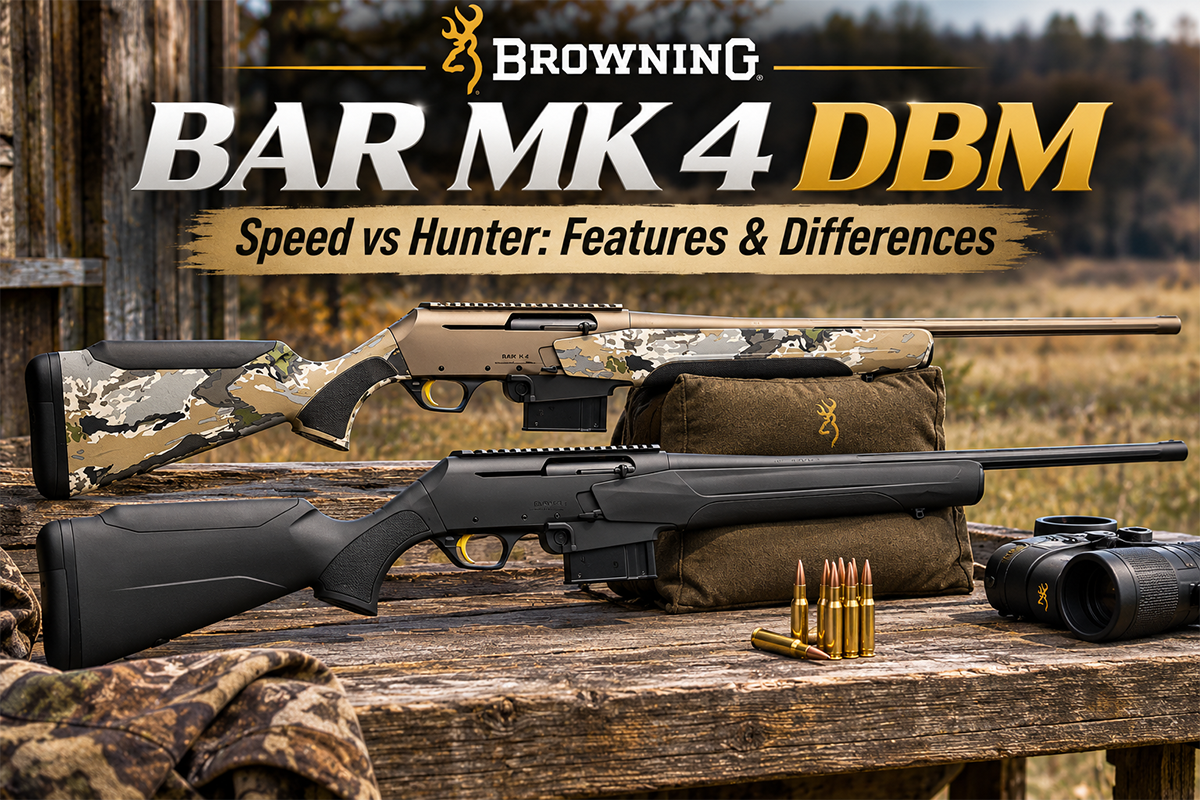
The Browning BAR MK 4 DBM Speed and Hunter give researchers two distinct versions of the same semi-automatic hunting rifle. Both listed .308 Winchester models use a 10-round detachable magazine. The Speed has a longer barrel, camouflage stock, and weather-resistant finish. The Hunter is shorter, lighter, and has an integrated optics rail. Those differences matter more than the shared BAR name when you compare how each rifle will carry and fit.
This comparison uses the .308 Winchester item numbers Browning currently lists: Speed 039037218 and Hunter 039010218. Other catalog variants may have different dimensions or features. Confirm the exact item number before treating any specification as universal.
Browning BAR MK 4 DBM Speed vs Hunter at a glance
| Model | Action | Caliber | Barrel / Weight | Capacity | Overall Length | MSRP |
|---|---|---|---|---|---|---|
| BAR MK 4 DBM Speed, 039037218 | Gas-piston semi-auto | .308 Win. | 22 in. / 7 lb. 13 oz. | 10 rounds | 44 1/8 in. | $1,999.99 |
| BAR MK 4 DBM Hunter, 039010218 | Gas-piston semi-auto | .308 Win. | 18 1/2 in. / 7 lb. 6 oz. | 10 rounds | 40 1/8 in. | $1,879.99 |
These figures come from Browning’s listed specifications, not a hands-on test. The Speed is four inches longer overall and seven ounces heavier. Its MSRP is $120 higher. Those numbers offer a useful starting point, but stock fit and intended use deserve equal attention.
What do the two rifles share?
Both are sporting BAR MK 4 rifles with a short-stroke gas-piston action and a seven-lug rotating bolt. The DBM name refers to the detachable box magazine configuration. Browning lists 10-round capacity for both .308 models. Neither should be confused with the historical military BAR simply because they share a name.
Each rifle has a composite stock with overmolded grip panels, a raised SoftFlex cheekpad, and shims for adjusting stock cast and comb drop. Cast describes the stock’s side-to-side fit. Comb drop affects where your cheek rests behind an optic. Both list a 14 3/8-inch length of pull, the distance from trigger to the rear of the stock.
The shared platform means the decision is largely about configuration. Researchers can browse the semi-auto rifle category for broader context, then narrow the search to Browning models. Always compare item numbers rather than assuming every BAR listing has the same magazine, barrel, or optics setup.
Barrel length and carry dimensions
The Speed’s 22-inch barrel and 44 1/8-inch overall length make it the larger package. The Hunter pairs an 18 1/2-inch barrel with a 40 1/8-inch overall length. In a vehicle case, on a shoulder sling, or among thick branches, four inches can be noticeable. The Hunter also saves seven ounces before an optic or sling is added.
A longer barrel does not automatically make one rifle more accurate. Accuracy depends on the whole rifle, ammunition, optic, and shooter. Barrel length can affect handling and ammunition performance, but Browning’s catalog data alone cannot predict the difference for a given load. If your choice hinges on that question, seek a controlled comparison with the same ammunition.
For a buyer who prizes a compact field package, the Hunter has the clearer dimensional advantage. Someone who prefers the longer 22-inch configuration may accept the Speed’s extra length and weight. Shoulder both if possible. A seven-ounce catalog difference may feel smaller than a difference in stock balance or optic placement.
Finish, stock, and field conditions
The Speed wears Browning OVIX camouflage on its composite stock. Browning lists Smoked Bronze Cerakote on its receiver and fluted barrel. The Hunter uses a matte black stock and a nonreflective matte blued barrel. These are visible and practical differences, especially for owners who spend time in wet or abrasive conditions.
Cerakote is a protective coating, but it is not a substitute for sensible care. Neither finish makes a rifle maintenance-free. If you hunt in persistent rain or salt air, ask how you will clean, dry, and store the entire rifle after each outing. The Hunter’s matte bluing may fit a simpler look, while the Speed’s coating and camouflage suit buyers who want that package from the factory.
Both models include a raised cheekpad and stock shims. Their catalog length of pull matches, so neither has an obvious advantage on that single measurement. Check how the butt contacts your shoulder and whether the optic view feels natural with your normal clothing. Catalog dimensions are useful filters; fit is personal.
Optics mounting: a detail worth checking
The Hunter’s alloy receiver includes an integrated Picatinny rail for mounting an optic. Browning’s Hunter specification says the receiver is not drilled and tapped for a separate scope base. The Speed listing instead says it is drilled and tapped for a scope, and its feature list does not promise an integrated rail. Read those descriptions carefully when planning an optic purchase.
Neither product page says a scope, rings, or base comes in the box. Browning specifically cautions that pictured accessories may be separate. The Hunter may simplify rail-based mounting because the rail is built in. With the Speed, confirm the appropriate base and ring combination for its exact receiver. Do not assume that parts fitted to a different BAR generation will transfer.
Optic height affects cheek fit and the final weight of either setup. Decide what optic you expect to use before comparing the rifles’ complete cost. A low catalog price difference can change once rings, bases, and other needed accessories enter the picture.
Magazine details and listing accuracy
The two DBM versions are advertised with detachable 10-round magazines, but listing language deserves a second look. Browning’s Speed overview describes a detachable magazine and dedicated magazine well. Its specification table also contains a “hinged floorplate with detachable box” label. That mixed wording is a reason to verify the actual rifle, included magazine, and item number with the seller.
The Hunter page identifies an alloy magazine well with ambidextrous magazine release. Do not infer that every BAR MK 4 has the same control layout. Ask for photos of both sides of a used or dealer-listed rifle. Also confirm the magazine included with the listing and whether replacement magazines match the exact DBM model.
Magazine capacity may be restricted by local rules or hunting regulations. The catalog’s 10-round figure describes the listed configuration, not what every buyer may use in every setting. Check the rules that apply to your location and intended hunt before making a decision.
Which BAR MK 4 DBM is the better fit?
Choose the Hunter as your starting point if shorter overall length, lower weight, an integrated optics rail, and a lower listed MSRP rank highest. Its 18 1/2-inch barrel and matte finish make the configuration easy to distinguish from the Speed. Check whether the rail positions your intended optic where you need it.
Put the Speed first if you want Browning’s OVIX stock, Smoked Bronze Cerakote finish, and 22-inch barrel in one factory configuration. It costs more on the manufacturer’s price sheet and carries more weight. Those tradeoffs may be acceptable if the finish and longer format match your planned use.
Neither label establishes field accuracy, reliability with a specific load, or how the stock will fit you. A published review of a Hunter cannot prove how a Speed example will perform. For any Browning BAR MK 4 DBM comparison, start with the exact SKU and finish with hands-on fit and careful inspection.
Research checklist before choosing
- Match the item number to Browning’s current product page and confirm the chambering.
- Check barrel length, overall length, weight, and how the stock fits you.
- Verify the receiver’s optics mounting arrangement and budget for missing accessories.
- Confirm the included magazine and inspect the magazine controls on the actual rifle.
- Compare the complete setup cost, not only the listed rifle price.
- Review applicable local rules and hunting regulations for your intended use.
Browning’s Speed specification page and corresponding Hunter page are the best starting points for current catalog details. Manufacturer pages can change, so save the exact item number when comparing listings. If a seller’s description conflicts with Browning’s page, ask for clear photos or documentation before relying on the claim.
The Browning BAR MK 4 DBM decision comes down to a shorter rail-equipped Hunter or a longer, coated Speed. Start with what you will actually carry and mount. Then compare the exact rifle in front of you with the catalog description. That method is more useful than treating either model name as a shortcut for fit.