
45-70 Lever Action Rifle: Henry vs Marlin vs Winchester
August 21, 2026
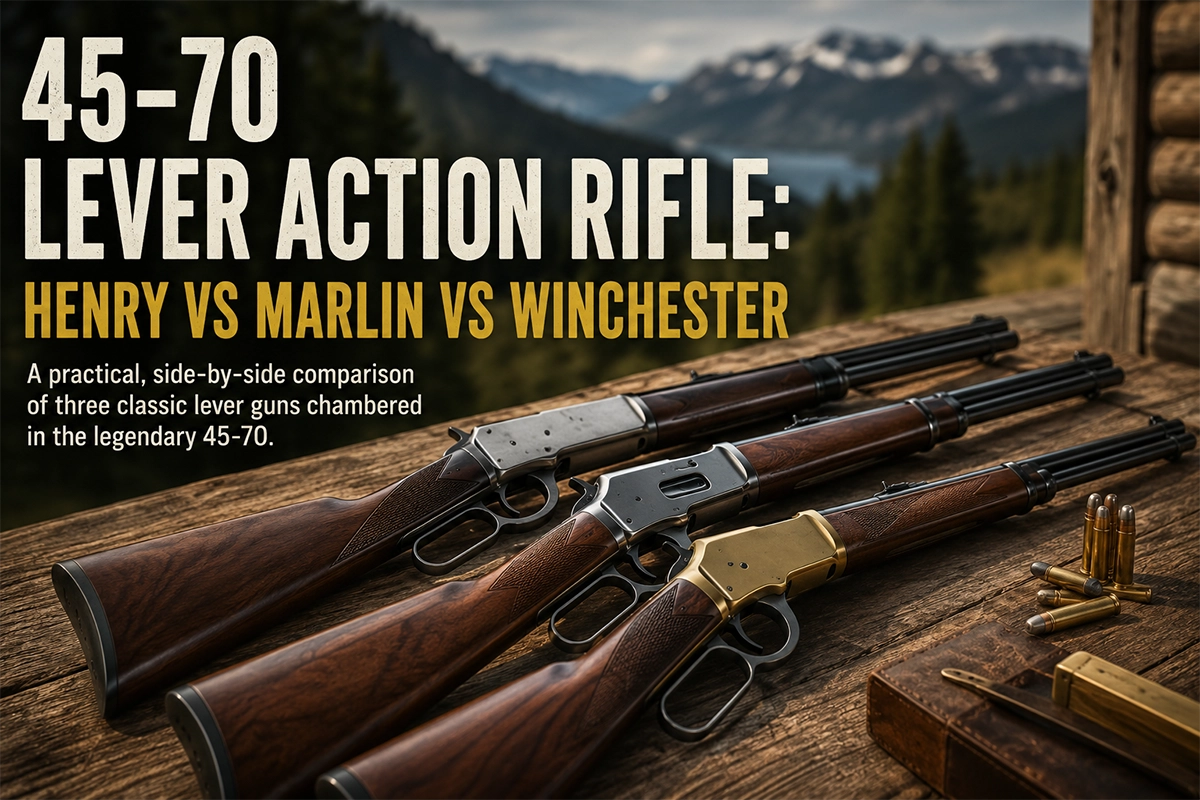
A 45-70 lever action rifle can be a compact hunting tool, a traditional range rifle, or a collectible with real field utility. Henry, Marlin, and Winchester all serve that market, but they approach it differently. The right choice depends less on the logo and more on handling, sight setup, loading method, weight, and the exact model listed for sale.
The short answer is simple. Start with Henry if you want broad configuration choice and straightforward scope options. Marlin deserves the first look if you prefer the familiar 1895 pattern and a wide aftermarket. Consider Winchester when traditional Model 1886 proportions and history matter more than low weight or easy optic mounting. Then verify the individual stock-keeping unit, because one brand may offer several rifles with very different dimensions.
45-70 Lever Action Rifle Comparison at a Glance
| Platform | Action | Caliber | Barrel/Weight | Capacity | OAL | MSRP/Street |
|---|---|---|---|---|---|---|
| Henry Side Gate | Lever | 45-70 Gov’t | 19.8 in. / about 7.1 lb. | 4 | 38.1 in. | Varies by SKU and market |
| Marlin 1895 family | Lever | 45-70 Gov’t | Varies by SKU | Varies by SKU | Varies by SKU | Varies by SKU and market |
| Winchester 1886 family | Lever | 45-70 Gov’t | Varies by SKU | Varies by SKU | Varies by SKU | Varies by SKU and market |
Those broad families include steel, stainless, brass, compact, and longer traditional configurations. Treat the table as an orientation tool, not a substitute for the maker’s model page or the markings on the rifle. Sellers sometimes shorten a listing to “1895” or “Side Gate,” which can hide useful differences.
Why the 45-70 Choice Is Mostly About Configuration
The 45-70 Government cartridge dates to the black-powder era, yet modern rifles and factory loads cover a wide performance range. That history creates an unusual shopping problem. Ammunition can be labeled for different strength classes, and rifles with the same chambering may have different handling goals. Follow the rifle and ammunition manufacturers’ guidance instead of assuming every load fits every firearm.
Barrel length changes balance more than it changes the basic identity of the rifle. A shorter barrel carries easily in thick cover and vehicles. A longer barrel gives a steadier sighting plane and a more traditional feel. Weight can soften felt recoil, while a lighter rifle is more pleasant to carry. Neither answer is automatically better.
Stock shape also deserves attention. Check length of pull, comb height, recoil pad, wrist shape, and whether the lever loop leaves enough room for gloved hands. A rifle that looks perfect online can feel awkward if the stock pushes your eye above or below the sights.
Henry: Configuration Choice and Flexible Loading
Henry rifles are the logical first stop for shoppers who want several materials, finishes, and furniture styles under one brand. Henry’s side-gate designs combine a receiver loading gate with a removable magazine tube. The company explains that arrangement in its official Side Gate announcement. It allows topping off through the gate and unloading through the tube without cycling every cartridge through the action.
Scope planning is usually direct on drilled-and-tapped models, but confirm the correct base before ordering. Brass, steel, all-weather, and tactical-style furniture can change weight and balance. A polished receiver may suit a collection, while a weather-resistant finish may make more sense for frequent field use.
Marlin: Familiar 1895 Layout and Aftermarket Depth
Marlin rifles appeal to buyers who want the established 1895 pattern, conventional side loading, and many sight, rail, stock, and handguard choices. Current production includes configurations aimed at traditional hunting as well as weather-resistant or modernized setups. Used rifles add more variation because production era and condition can matter.
Ask for the full model name, serial-number range when appropriate, and clear photos of the receiver, muzzle, stock, sights, screws, and loading gate. On a used example, check whether modifications are reversible and whether the seller retained the factory parts. An expensive accessory package is only valuable when it matches your intended setup.
Winchester: Traditional Model 1886 Character
Winchester rifles in the Model 1886 family emphasize a classic, large-frame design. They can be longer and heavier than compact hunting carbines, depending on the version. That extra mass may feel steady from field positions and can make recoil more manageable, but it is noticeable on a long walk.
The 1886 is often the choice for a buyer who values historic form, walnut and steel, and traditional handling. Optic mounting may be less convenient than on a receiver prepared for a conventional scope base. If you plan to use an aperture sight, scout-style optic, or no optic, confirm the required mounting hardware before purchase.
Compare Sights, Mounting, and Practical Handling
Iron sights keep the rifle compact and preserve traditional lines. An aperture sight can offer a cleaner sight picture than a buckhorn sight. A low-power scope helps with precise aiming and target identification, but the mount, rings, hammer clearance, cheek weld, and added weight all affect the result.
Handle the rifle from realistic positions if possible. Work the lever without changing your firing-hand grip. Check access to the hammer and safety. Mount the rifle with your eyes closed, then open them. Your eye should align naturally with the sight rather than forcing your head into position.
A useful comparison starts with fit and the intended sight system. Finish and nostalgia come after those two checks.
Ammunition and Tubular Magazine Checks
Most rifles in this comparison use tubular magazines, where cartridges sit nose to primer. Use ammunition that the rifle and ammunition manufacturers approve for that system. Traditional flat or soft points and purpose-built flexible tips are common choices. Do not treat a cartridge’s chambering label as the only compatibility test.
Confirm cartridge overall length, bullet profile, and pressure guidance in the owner’s manual. Keep the article’s purpose in mind: this is a research checklist, not load data. If a used rifle lacks its manual, download the correct manual from the manufacturer before choosing ammunition.
45-70 Lever Action Rifle Research Checklist
- Record the exact maker, model, SKU, chamber marking, and production era.
- Compare barrel length, unloaded weight, overall length, capacity, and length of pull.
- Decide between iron sights, an aperture sight, a red dot, or a magnified optic before choosing the rifle.
- Verify receiver drilling, rail type, ring height, hammer clearance, and cheek weld.
- Inspect used rifles for bore condition, crown damage, stock cracks, altered screws, rust, and smooth feeding.
- Confirm the owner’s manual and approved ammunition guidance for that exact model.
- Price the complete setup, including sights, mount, sling, case, and suitable factory ammunition.
Use the lever action rifles catalog to compare listings across brands. Photos should show both sides, the markings, and any modifications. Request details when a listing uses a generic family name but omits the SKU.
Which Brand Should You Research First?
Choose Henry first when you want many current configurations, flexible loading, and an easy path to common optics. Marlin leads when the 1895 layout, aftermarket support, and a mix of traditional and modern options fit your priorities. Winchester makes the strongest case when Model 1886 history, proportions, and old-school handling are central to the purchase.
A 45-70 lever action rifle should ultimately fit your body, sight plan, carrying needs, and ammunition budget. Compare exact models rather than brand reputations alone. That approach turns a broad category into a short list you can evaluate with confidence.