
20 Gauge Semi-Auto Shotgun in 2026: How to Choose the Right One for Turkey, Upland, and All-Around Use
April 27, 2026
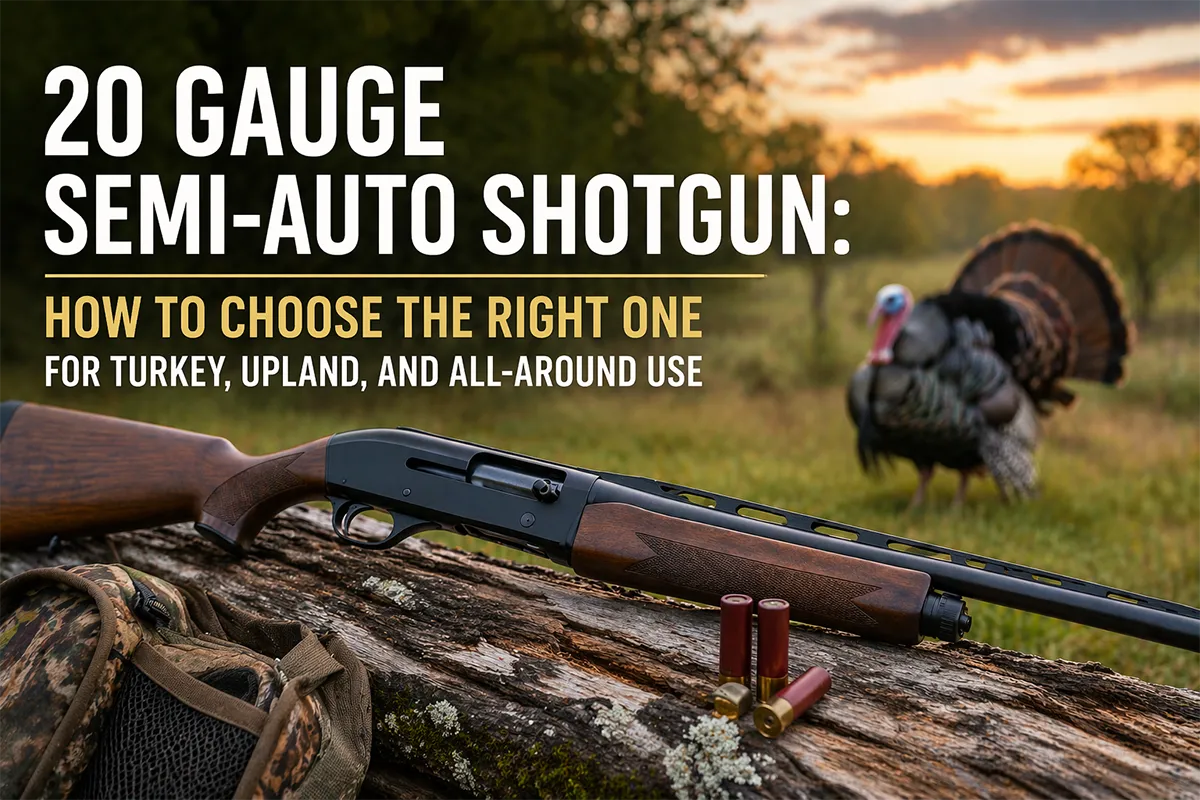
If you are researching a 20 gauge semi-auto shotgun in 2026, you are probably trying to answer a practical question, not just admire catalog photos. You want a shotgun that keeps recoil manageable, carries well in the field, and still feels versatile enough for turkey hunting, upland birds, clays, or general all-around use. That makes this category especially interesting because a lot of 20 gauge semi-autos look similar at first glance, but they can feel very different once you factor in action type, weight, barrel length, stock fit, and how the gun balances in your hands.
TL;DR: The best 20 gauge semi-auto shotgun is usually the one that fits your real shooting style, not the one with the longest feature list. For most buyers, the smartest choice comes down to three things first: action type, carry weight, and whether the gun will spend more time in the turkey woods, on upland walks, or doing a little of everything.
The reason this category stays relevant is simple. A 20 gauge gives many shooters an easier-shooting alternative to 12 gauge while still offering enough capability for a wide range of field use. Pair that with a semi-auto action, and you often get lower felt recoil, quick follow-up shots, and a platform that feels more forgiving over a long day of shooting. That does not make it the answer for everyone, but it does explain why so many hunters and general-purpose shotgun buyers keep circling back to it.
Why a 20 Gauge Semi-Auto Shotgun in 2026 Still Makes Sense
A 20 gauge semi-auto works because it solves several common problems at once. For newer shooters or smaller-framed shooters, it can be easier to manage than a 12 gauge. For experienced shooters, it can be a lighter, faster-handling field gun that still offers real utility. And for anyone who wants one shotgun that can reasonably cross over between hunting and recreational shooting, it often lands in a very practical middle ground.
This is especially true when you compare actual use cases. A heavy 12 gauge built for waterfowl or high-volume clay shooting can be excellent at its job, but it may feel like more gun than you want for long upland walks. On the other hand, an ultralight shotgun can be a joy to carry and a little less joyful to shoot for extended sessions. A good 20 gauge semi-auto often splits that difference well. It carries easier than many 12 gauge setups, but it still feels like a serious field tool instead of a compromise piece.
That balance is why this category is so easy to buy well and just as easy to buy badly. If you choose based on the job first, you will usually end up happy. If you choose based on hype, finish color, or one tiny spec advantage, you may end up with a shotgun that looks great in photos and feels slightly wrong everywhere else. Shotguns are honest like that.
Gas vs. Inertia: The Biggest Choice Most Buyers Should Make First
Before you compare brands, decide whether you want a gas-operated or inertia-driven semi-auto. A gas system uses some of the shell’s gas pressure to cycle the action. An inertia system uses recoil energy and the movement of internal parts to do the same job. That sounds technical, but the practical difference is fairly simple.
Gas guns are often favored for softer felt recoil and a smoother shooting character. They can make a 20 gauge feel especially comfortable for long practice sessions or repeat shots on the range. Inertia guns are often appreciated for simpler operation, lighter front-end feel, and easier maintenance in rough field conditions. Neither system is automatically better. The better system is the one that lines up with how you actually shoot and maintain your gear.
If your priority is comfort and a more relaxed shooting feel, gas deserves a hard look. If your priority is a lighter, lively field gun with straightforward internals, inertia may be the more attractive route. That one decision narrows the field faster than almost anything else.
How the Main Platform Styles Compare
A Benelli-style option like the intended M2 20 Gauge usually appeals to the buyer who wants a field-first shotgun. The draw is a relatively lively feel, a reputation for simple operation, and a setup that often makes sense for hunters who care as much about how a gun carries as how it shoots from a stationary position. These guns tend to make sense for the person who spends more time walking than sitting and wants a shotgun that feels quick rather than planted.
A Beretta-style gas gun like the intended A300 Ultima 20 Gauge usually appeals to the buyer who values shooting comfort and all-around friendliness. Gas-operated shotguns are often easier to recommend for mixed use because they can be pleasant on the range, sensible in the field, and more forgiving for shooters who notice recoil quickly. That does not make them “beginner only” guns. It just means they tend to feel accommodating in a way many shooters appreciate.
A Franchi route, especially around the intended Affinity 3 20 Gauge, often lands in an appealing middle zone for buyers who want an inertia gun without immediately shopping at the very top end of the category. This kind of platform can make a lot of sense for hunters who want light carry weight and straightforward operation but still care about modern ergonomics and practical versatility.
A Mossberg option like the intended SA-20 tends to catch the attention of value-minded buyers who still want the semi-auto experience. That can be a smart path for someone entering the category carefully, especially if the goal is a practical field shotgun instead of a feature-showcase purchase. The trick is to stay focused on fit and role, because “best value” only stays valuable if the shotgun actually matches how you plan to use it.
Turkey, Upland, or All-Around Use? Start There
For turkey hunting research, many buyers lean toward a setup with a shorter or more maneuverable feel, a practical sighting system, and a stock that remains comfortable during careful, deliberate shooting from awkward positions. This does not always mean the shortest possible barrel or the most specialized configuration. It means choosing a shotgun that feels controlled, points naturally, and supports the sighting setup you actually want to use.
For upland use, carry weight and balance often become more important than almost anything else. A gun that mounts quickly and feels lively between the hands can be more useful than one that seems more impressive on paper. Upland hunters often notice ounces the way rifle shooters notice trigger creep: maybe not at first, but definitely by the end of the day.
For all-around use, the smartest choice is usually the least extreme one. A moderate barrel length, practical stock dimensions, and a configuration that does not overcommit to one niche will often serve best. If your shotgun needs to cover casual clays, small-game or bird work, and occasional turkey duty, versatility should beat specialization every time.
Research Checklist Before You Buy
- Choose your primary role first: turkey, upland, or all-around use.
- Decide whether you prefer the softer feel of gas operation or the simpler feel of inertia operation.
- Pay close attention to stock fit, especially length of pull and how the gun meets your cheek.
- Think honestly about carry weight if you expect to walk a lot.
- Check whether the exact model is better suited to field use, range use, or a mix.
- Compare your shortlist inside the broader Semi Auto Shotguns category before locking in on one brand.
- Do not ignore balance. Two shotguns with similar specs can feel completely different once mounted.
That last point matters more than many spec sheets admit. Balance rarely looks exciting in a description, but it is one of the biggest reasons one shotgun feels “right” and another feels like work. In this category, right-feeling guns tend to get used more, shot more, and appreciated more.
Final Take
A 20 gauge semi-auto shotgun remains one of the most sensible crossover choices in 2026 because it offers a useful blend of lower felt recoil, good field handling, and wide real-world versatility. The key is not to ask which model is best in the abstract. Ask which platform best fits the way you shoot. Once you decide whether you want gas or inertia, and whether your priority is turkey hunting, upland carry, or a broad do-it-all role, the category gets much easier to navigate. Buy for fit and purpose first, and the rest of the decision usually gets a lot cleaner.