
.17 HMR Rifle in 2026: How to Choose the Right One for Varmints, Rimfire Precision, and Low-Recoil Field Use
April 24, 2026
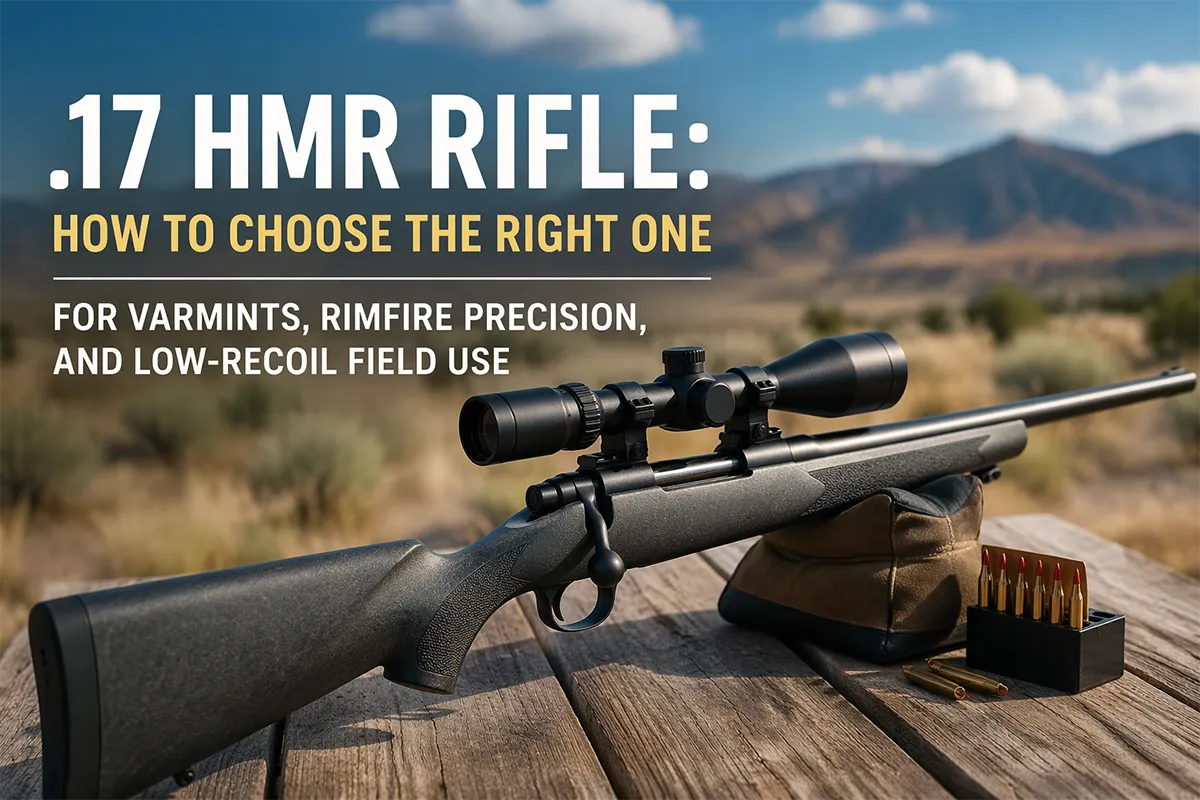
If you are researching a .17 HMR rifle in 2026, you are probably trying to solve a fairly specific problem. You want a rimfire rifle that shoots flatter than .22 LR, feels lighter and easier to manage than a centerfire varmint rig, and still gives you enough precision for small targets at realistic field distances. That makes this category especially appealing for varmint control, small-game research, and range shooters who want a rifle that is crisp, low-recoil, and a little more specialized than the average plinker.
TL;DR: The best .17 HMR rifle is usually the one that matches your real use case, not the one with the fanciest stock or heaviest barrel. For most buyers, the smartest choice comes down to one decision first: do you want a handy field rifle, a precision-leaning bolt gun, or a semi-auto rimfire that trades a little simplicity for faster follow-up shots?
As of April, 2026, the .17 HMR still fills a useful gap in rimfire research. It is not trying to replace .22 LR as the cheapest practice option, and it is not pretending to be a centerfire. Its value is in the middle ground: fast, flat, low-recoil shooting for people who want more reach and a bit more precision-oriented feel from a rimfire platform. That makes it especially attractive for varmint-focused shooters, property owners managing pests, and anyone who enjoys stretching a rimfire a little farther without stepping into a heavier or louder setup.
Why a .17 HMR Rifle in 2026 Still Makes Sense
The main reason this category remains relevant is simple: it solves a real problem. A lot of shooters want a rifle that is easier to shoot precisely at small targets than a basic .22 LR, but they do not need the recoil, cost, or range footprint of a centerfire rifle. A good .17 HMR rifle lets you stay in that lighter, more approachable rimfire lane while still getting a flatter trajectory and a more “purpose-built” feel for varmints and precision-style practice.
That matters because not every rimfire buyer is looking for the same experience. Some want a walking varmint rifle that is quick to shoulder and easy to carry along a fence line. Others want a bench-friendly bolt gun with a heavier profile and more stable shooting characteristics. Others still want a semi-auto that keeps the recoil light and the follow-up shots quick. The category works because it offers room for all three, but that flexibility also means buyers can overbuy or buy sideways if they focus on features before purpose.
What Actually Matters When You Compare .17 HMR Rifles
Start with action type. A bolt-action .17 HMR is usually the cleanest answer for shooters who care most about precision, simplicity, and consistency. It is also the easier format to understand from a buying perspective because the tradeoffs are straightforward: weight, barrel profile, stock shape, magazine system, and optics setup. A semi-auto .17 HMR can be very appealing if you want faster follow-up shots or just prefer the feel of a self-loading rifle, but it adds another layer of decision-making because platform tuning and intended role matter more.
Next, think about rifle weight and barrel profile. A lighter sporter-style rifle is easier to carry in the field, but a heavier barrel and a bit more overall mass usually help from a rest or bench. That is a recurring theme in this category: the features that make a rifle nicer to carry are not always the same features that make it nicer to shoot for extended strings. There is no free lunch here, only better tradeoffs for the job you actually have.
Magazine capacity, stock geometry, and optic mounting also matter more than many first-time buyers expect. A trim field stock may feel excellent offhand but less settled from bags. A wider forend or varmint-style stock may be more stable, but less pleasant to haul around all morning. Likewise, a rifle that comes optics-ready or already drilled and railed can save time and frustration when you are building out a realistic rimfire precision setup.
Representative Spec Snapshot
| Platform | Action | Caliber | Barrel/Weight | Capacity | OAL | MSRP/Street |
| Savage A17 family | Semi-auto | .17 HMR | Typically 22 in; weight varies by SKU | 10+1 typical | Varies by SKU | Varies by SKU |
| Ruger American Rimfire family | Bolt action | .17 HMR | Typically 18 in class; roughly mid-5 lb range on some SKUs | 9+1 on listed examples | Varies by SKU | Varies by SKU |
| CZ 457 family | Bolt action | .17 HMR | About 20.5-24.8 in depending trim; weight varies | 5+1 typical | Varies by SKU | Varies by SKU |
On GunGenius, current .17 HMR examples span semi-auto and bolt-action formats. The Savage A17 family is listed as a semi-auto .17 HMR, while Ruger American Rimfire examples and several CZ-USA 457 variants show the more traditional bolt-action route. Barrel lengths, capacity, and weight vary by SKU, which is exactly why this category is best researched as a role-based decision instead of a one-line caliber choice.
How the Main Types Compare
A semi-auto like the intended Savage A17 path makes sense for shooters who want quick follow-up shots on small moving targets or simply prefer a more modern self-loading feel. That does not automatically make it the best choice for everyone. The appeal is speed and convenience, but the tradeoff is that some buyers still prefer the cleaner manual control and slower, more deliberate rhythm of a bolt gun when precision is the priority. In other words, semi-auto is often about handling style as much as performance.
A bolt-action option like the intended Ruger American Rimfire .17 HMR usually lands in the sweet spot for buyers who want a practical field rifle that is still easy to shoot well. This type of setup often balances portability, reasonable weight, and straightforward controls. It is the kind of rifle that makes sense for someone who wants one rimfire that can cover small-game use, property work, and range sessions without leaning too hard into either ultralight simplicity or benchrest-style heft.
A more precision-oriented bolt gun like the intended CZ 457 .17 HMR route often appeals to the shooter who values refinement, stock stability, and a more accuracy-focused layout. These rifles are often the easiest recommendation for the buyer who already knows the rifle will spend most of its time on paper, from a rest, or on deliberate varmint work where steadiness matters more than shaving ounces. They can be less lively in the hands than a trim sporter, but they often feel more “settled” once the shooting starts.
Who Each Style Is Actually For
If your main goal is walking varmint control, lean toward a lighter bolt-action sporter unless you already know you want semi-auto follow-up speed. The biggest reason is not theory; it is fatigue. A rifle that is pleasant to carry tends to get carried more, and a rifle that gets carried more tends to be the one that is actually on hand when needed.
If your main goal is rimfire precision practice, lean toward a heavier bolt gun with a more stable stock and a barrel profile that favors consistency over portability. A .17 HMR does not kick much, so the benefit here is not recoil management so much as steadiness and repeatability. That may sound subtle, but subtle differences matter more when you are trying to hit small targets with regularity.
If your main goal is general-purpose field use, the middle ground often wins. A practical bolt-action rifle with enough stock adjustability or scope-mounting flexibility usually gives the broadest usefulness. That is not the most exciting answer, but it is often the most correct one for a buyer who wants one rimfire to cover several realistic jobs.
Research Checklist Before You Buy
- Decide whether your rifle will be used mostly from the bench, in the field, or as a hybrid.
- Choose action type first: bolt action for simplicity and precision emphasis, semi-auto for faster follow-up shots.
- Think honestly about carry weight before choosing a heavy-barrel model.
- Check whether the stock shape fits your likely optic height and shooting position.
- Look at magazine design and real-world ease of loading, not just capacity.
- Confirm whether the rifle is already set up well for optics mounting.
- Compare intended rifles inside the broader Rifles category before locking onto one brand or one trim.
The biggest mistake in this category is buying a rifle that looks perfect for one theoretical use case while ignoring the way you will actually carry and shoot it. A very light rifle can be delightful until you want more stability. A heavy varmint rifle can be wonderfully steady until you carry it farther than the parking area. The right answer usually comes from being a little boring and very honest.
Final Take
A .17 HMR rifle still earns its place in 2026 because it offers a distinct blend of light recoil, flat-shooting rimfire performance, and specialized utility for small targets. The question is not whether the cartridge still makes sense. The better question is what kind of rifle lets that cartridge make the most sense for you. If you start with role, then move to action type, then evaluate weight, barrel profile, and stock design, you will end up with a better result than someone who shops by buzzwords or cosmetics alone.