
Springfield Echelon 4.0FC: What’s New in 2026, Who It’s For, and Where It Fits in the Echelon Line
March 17, 2026
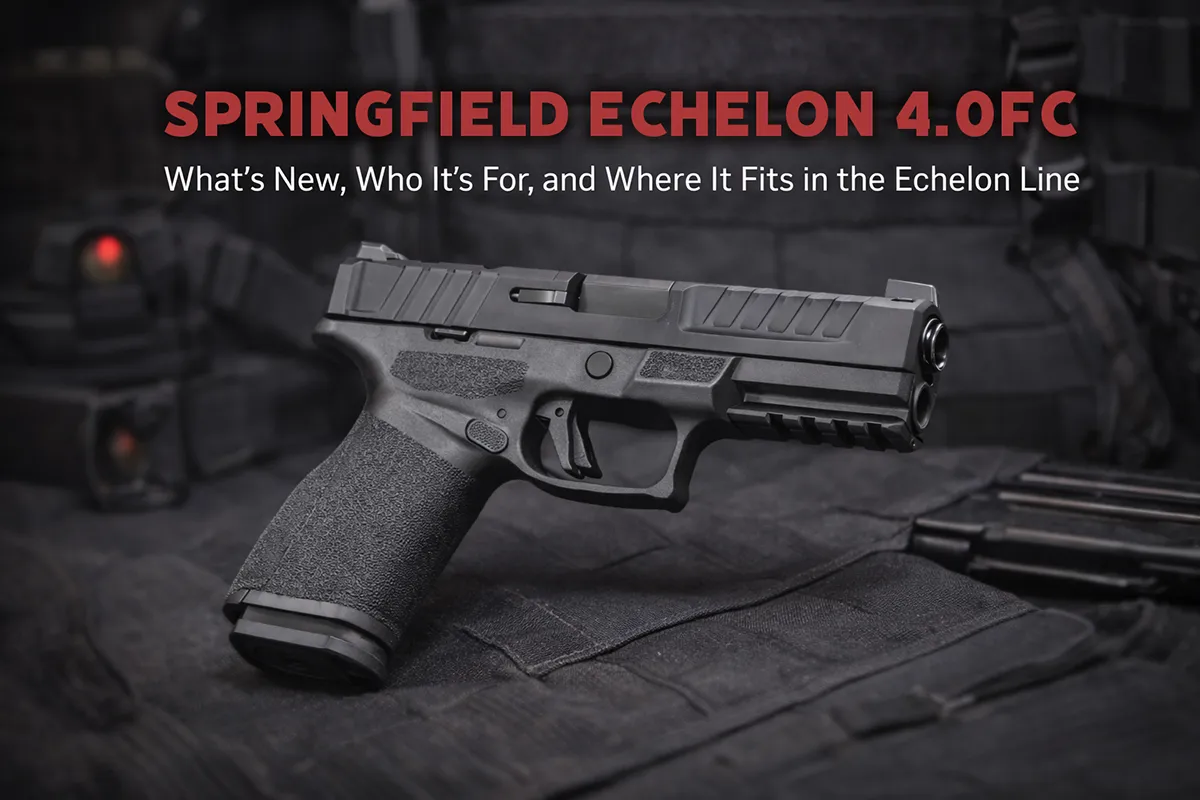
The Springfield Echelon 4.0FC is one of the more practical handgun releases of 2026 because it is not trying to reinvent the striker-fired pistol. Instead, it solves a familiar problem. On January 20, 2026, Springfield Armory introduced the Echelon 4.0FC as a crossover model that pairs a 4-inch slide and barrel with a full-length grip. That puts it squarely in the “compact top, duty-size control” lane, which is exactly where many shooters end up after realizing they want shorter slide length without giving up capacity or a full firing grip.
That makes this pistol worth more than a quick “new release” glance. Buyers looking at a modern 9mm often end up torn between compact carry comfort and full-size shootability. The Echelon 4.0FC tries to split that difference cleanly. It is aimed at shooters who want a pistol that can serve as a range gun, home-defense pistol, duty-style setup, or even a carry option for those comfortable with a larger grip. In other words, this is not a gimmick release. It is Springfield filling a very recognizable slot in the lineup.
If you want to compare it against the broader market first, start with Semi Auto Pistols. If you already know you want Springfield’s ecosystem, browse the wider Springfield catalog before narrowing down to one Echelon variant.
Springfield Echelon 4.0FC: What It Actually Is
The easiest way to understand the 4.0FC is to think of it as a hybrid of Springfield’s existing Echelon sizes. It takes the shorter 4.0-inch upper assembly and mates it to a full-length grip module. That means you get easier handling up front, with less slide and barrel to manage, while keeping the control benefits of a larger frame. For a lot of shooters, that is the sweet spot. Shorter slides are easier to live with in holsters and during movement, while full-size grips usually shoot better under speed because they give the support hand more to work with.
This is why crossover pistols keep showing up across the handgun market. Shooters want pistols that feel fast and compact without becoming cramped or giving away too much capacity. Springfield’s version of that formula feels especially logical because the Echelon family was already built around a modular serialized chassis, called the Central Operating Group. That means the 4.0FC is not a random mashup. It fits the platform’s broader design logic.
Key Specs That Matter
| Platform | Action | Caliber | Barrel/Weight | Capacity | OAL | MSRP/Street |
|---|---|---|---|---|---|---|
| Springfield Echelon 4.0FC | Striker-fired, modular chassis | 9mm Luger | 4 in. barrel / weight varies by configuration | 17+1 or 20+1; low-capacity variants also offered | Varies by SKU | Varies by SKU |
The headline specs tell the basic story, but the more important detail is how those specs work together. A 4-inch barrel keeps the gun in a size class that many shooters already understand from compact-duty pistols. The full grip preserves magazine capacity and gives the pistol a more planted feel than a smaller carry frame. Springfield also continues to lean on the Echelon’s strong points: a serialized internal chassis, the company’s optics mounting approach, and a grip texture/layout that is clearly intended for serious use rather than pure range-toy styling.
Why This Release Matters in 2026
The Echelon 4.0FC matters because the handgun market is still pushing toward “do more with one pistol” designs. Many buyers do not want three separate 9mms for carry, range work, and home defense. They want one that covers most of it without obvious compromise. The 4.0FC is Springfield’s answer to that demand. It is compact enough to feel quicker and less bulky than a full-size pistol, but large enough to avoid the small-gun penalties that show up in recoil control, reload speed, and support-hand space.
It also shows that the Echelon line is becoming a real family rather than a one-model concept. That matters for research-minded buyers because platform depth usually improves long-term confidence. When a company expands a line intelligently, it suggests continuing support, more holster fitment, more user familiarity, and a clearer upgrade path. The 4.0FC is not just a new SKU. It is a sign that Springfield sees the Echelon as a long-term architecture.
Who the Echelon 4.0FC Is For
This pistol makes the most sense for four types of buyers.
First, the “one pistol that does a lot” buyer. If you want a single 9mm that can cover range sessions, home defense, training classes, and occasional carry with the right setup, the 4.0FC makes more sense than a very small micro-compact or a long full-size duty pistol.
Second, the shooter who hates short grips. Many people can tolerate a compact slide, but they shoot noticeably better with a full grip. That is where crossover pistols earn their keep. The 4.0FC gives those shooters the shorter top end they want without forcing their pinky into exile.
Third, the optics-ready buyer. The Echelon family’s optics approach is one of the main reasons people look at the platform in the first place. If you already plan to run a dot, the 4.0FC is easier to justify than a gun that would need workarounds or aftermarket plate drama.
Fourth, the buyer who finds full-size pistols slightly more gun than necessary. Some shooters want the confidence of a bigger handgun but do not need the extra slide length. The 4.0FC trims that excess without turning into a compact that feels compromised.
Where It Sits Against the Rest of the Echelon Line
The cleanest comparison is this: the 4.0C is more carry-oriented, the 4.5F is more full-size oriented, and the 4.0FC sits in the middle with a very deliberate bias toward control. If your priority is maximum concealment, the full grip of the 4.0FC may still feel large. If your priority is pure duty-size stability, the 4.5F still gives you the longer slide and sight radius. The 4.0FC exists for the buyer who wants most of the control benefits of the full-size gun with a slightly handier top end.
That positioning also makes it a smarter comparison point against other crossover pistols on the market than against tiny carry guns. The real question is not whether it hides like a micro-compact. It does not. The better question is whether it gives you a more balanced all-purpose package than the other “short slide, long grip” options in the same broad class. For many shooters, that answer could easily be yes.
Tradeoffs to Understand Before You Buy
The biggest tradeoff is the same one every crossover pistol faces: the shorter slide helps, but the full grip still prints more than a true compact when carried concealed. That does not make the gun a bad carry option. It just means buyers should be honest about what part of the pistol is hardest to conceal. Usually, it is the grip, not the barrel.
The second tradeoff is role clarity. The 4.0FC is appealing precisely because it does several jobs well, but that can tempt buyers to imagine it will replace every other handgun need. It probably will not. A dedicated small carry pistol is still easier to hide. A long-slide or competition-oriented pistol may still be better for certain range roles. The 4.0FC is best understood as a highly practical center lane, not a magic wand.
Research Checklist Before You Commit
- Decide whether your real priority is carry convenience, range control, or a true middle-ground setup.
- Check whether a full-length grip helps or hurts your concealment needs more than slide length does.
- Compare the 4.0FC directly against the Echelon 4.0C and 4.5F rather than against unrelated pistol sizes.
- Think through optic plans early, since the Echelon’s mounting system is a major part of the value proposition.
- Be realistic about whether you want a do-most-things pistol or a dedicated role gun.
The smartest way to view the Springfield Echelon 4.0FC is as a carefully aimed addition, not a flashy one. It gives Springfield a more complete Echelon lineup, and it gives buyers a credible option in one of the most useful handgun formats on the market. That may not be the loudest kind of release, but it is usually the type that ages the best.