
Smith & Wesson Spec Series VI M&P9 M2.0 Metal Compact: What’s Actually New (and Who It’s For) in 2026
February 26, 2026
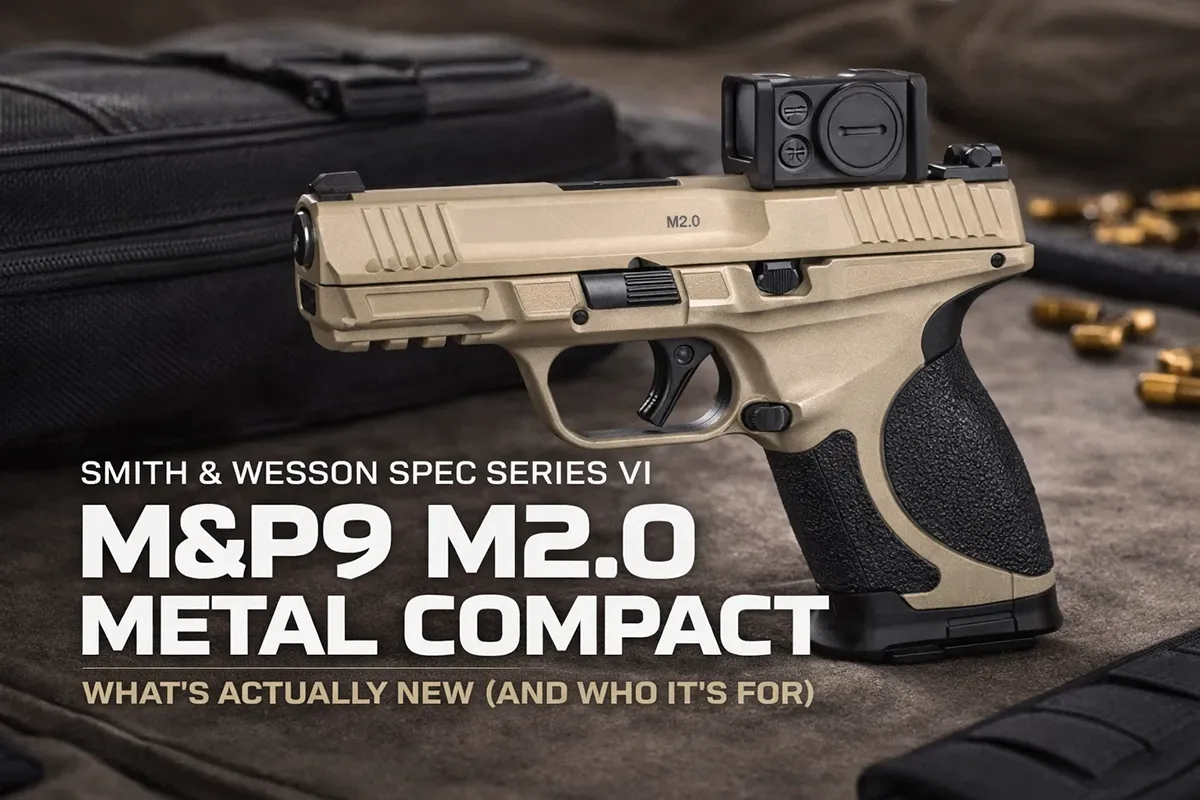
If you’ve been watching handgun releases lately, a lot of “new” feels like cosmetic reshuffles. The Smith & Wesson Spec Series VI M&P9 M2.0 Metal Compact is different in a useful way: it’s a compact 9mm package that’s already been spec’d out the way many shooters end up building their pistols after purchase—metal frame, barrel porting for flatter shooting, direct-mounted enclosed-emitter optic, and a reload-friendly magwell/baseplate setup. The result is less “choose your own adventure” and more “ready to evaluate” right out of the box.
This deep dive is aimed at research-minded buyers: what’s actually new here, what parts are meaningful versus flashy, and who this pistol makes sense for (and who should keep shopping). We’ll also cover the “system” questions that matter most—optics footprint, holster and carry realities, magazine setup, and what you’re really paying for with a Spec Series bundle.
What the Spec Series VI Is
The Spec Series VI is a compact M&P9 M2.0 Metal-pattern pistol—so you’re in familiar territory if you already understand modern striker-fired 9mm carry guns. Where it separates itself is the factory “performance kit” approach. Instead of starting with a basic pistol and adding components one by one, it arrives as a bundled configuration built around:
- Metal frame (7075 T6 aluminum)
- 4-inch barrel with inline porting at 12 o’clock to help manage muzzle rise
- 15+1 capacity
- Factory-mounted Aimpoint ACRO P-2 (an enclosed-emitter optic) that mounts directly to the slide
- Floyds Custom Shop EDC magwell plus matching baseplates on the included magazines
In plain terms: it’s trying to be a compact pistol that shoots “bigger than it is,” with an optic setup designed for real-world carry and training durability.
Spec Table
| Platform | Action | Caliber | Barrel/Weight | Capacity | OAL | MSRP/Street |
|---|---|---|---|---|---|---|
| M&P9 M2.0 Metal Compact (Spec Series VI configuration) | Striker-fired | 9mm | 4″ / Not listed | 15+1 | Not listed | MSRP: ~$1,899 (street varies) |
Why the “Not listed” fields matter: If you’re comparing this to a standard polymer compact, weight is one of the biggest practical differences with a metal-frame gun. For research, don’t guess—confirm actual weight once retailer listings and model pages consistently publish it, because it affects carry comfort, recoil feel, and holster stability.
The Real Upgrades: What You’ll Feel on the Range
1) Metal frame: stability and “settle” between shots
Metal-frame striker pistols have become popular because many shooters find they track more predictably during recoil. That doesn’t mean “no recoil,” it means the gun can feel less springy and a little more planted. In a compact size, that can translate into better sight tracking and more confidence during faster strings—especially if your baseline is a lighter polymer carry gun.
The tradeoff is obvious: metal typically adds weight. If your primary goal is all-day concealed carry, you have to be honest about whether you’ll actually carry a heavier compact, or whether you’ll “mean to” and leave it home more often.
2) Inline barrel porting: flatter shooting, with real-world caveats
The 4-inch barrel uses inline porting at the top to vent gas upward and reduce muzzle rise. Done well, porting can make a compact gun feel calmer during rapid fire—less front sight lift, faster return to your aiming point, and a more forgiving cadence when you’re pushing speed.
Caveats you should factor into your research:
- Blast and noise: Ported pistols can feel sharper, especially indoors.
- Low-light considerations: Any muzzle gas venting can affect flash; the exact effect depends on ammo.
- Maintenance: Expect extra soot around ports and on the slide; it’s not hard, just part of the deal.
If you’re buying this mainly as a range/training pistol, porting is often a net positive. If you’re buying it as a strict concealed-carry tool, the porting question becomes more personal: some shooters love it, some prefer the simplicity of an unported barrel.
3) Direct-mounted ACRO P-2: a serious optic choice (and a “system” choice)
An enclosed-emitter dot like the ACRO P-2 is popular with shooters who want a duty-leaning optic setup: the emitter is protected from lint, sweat, and debris better than many open-emitter designs. The “direct mount” detail matters too—fewer plates can mean fewer interfaces to loosen.
Here’s the key research angle: the optic is part of the package value. If you already prefer a different dot ecosystem, you may be paying for a setup you plan to remove. On the other hand, if you were going to buy an ACRO-style enclosed emitter anyway, the bundle may make more sense than building it piecemeal.
The Reload and Grip Package: Why the Floyds Magwell/Baseplates Matter
The included Floyds EDC magwell and baseplates are a practical “small upgrade” that can feel big in training. On compact pistols, reloads are where people often get clumsy—less grip real estate, less room to guide the magazine, more chances to pinch your palm or miss the funnel.
A modest carry-oriented magwell can help:
- Index magazines faster without needing a huge competition funnel
- Encourage a consistent grip (especially if your support hand tends to drift)
- Make practice reps feel cleaner, which usually means you practice more
The carry tradeoff: any magwell can change printing and comfort depending on holster and body type. It may be “EDC sized,” but your body is the final judge.
Who This New Release Is For
The Spec Series VI makes the most sense for buyers who want a compact 9mm that’s already optimized for high-rep shooting with a dot—without needing a shopping list of add-ons.
- You shoot a lot of drills and care about flatter tracking and faster follow-ups.
- You want an enclosed-emitter optic setup and like the idea of it arriving installed.
- You’re “one gun, one setup” minded and would rather evaluate a complete system than assemble parts.
- You already like the M&P grip/controls and want a premium, configured version in a compact size.
If you’re comparing the Spec Series VI against other modern compact 9mms, start at semi auto pistols and filter your research by: optics-ready setup, compact size, and “performance features included from factory.” That keeps the comparison fair.
Who Should Probably Skip It
This is a premium bundle. It’s not designed to be the cheapest way into a compact 9mm. Consider other options if:
- You want the lightest possible carry gun and prioritize comfort over shootability upgrades.
- You don’t want porting for blast/noise/maintenance reasons.
- You already own an optic and prefer a different footprint (so the included ACRO P-2 value doesn’t land for you).
- You’re price-sensitive and would rather buy a standard compact and invest the difference into ammo and training.
Compatibility Notes Before You Buy
Before you commit to any “configured” pistol, confirm the three ecosystem items that can quietly create regret: holsters, magazines, and weapon lights.
- Holsters: You’ll want optic clearance, and you’ll want to confirm the magwell doesn’t interfere with your preferred carry position (especially IWB).
- Magazines: The baseplates are part of the system. Confirm spare mag availability and whether you want all mags to match the baseplate style for consistency.
- Lights: If you plan to run a light, confirm rail compatibility and holster support for that exact pistol+light combo (holsters are often molded to the light model).
The simplest approach: decide whether this is primarily a carry gun or a training/range gun that can be carried. The same pistol can do both, but your accessory decisions change depending on which role is primary.
Where It Fits in Smith & Wesson’s Lineup
The Spec Series concept is basically: pick a platform people already trust, then build a curated “best-of” configuration with carefully chosen parts and a bundle that’s meant to feel complete. The Spec Series VI follows that pattern by taking the M&P9 M2.0 Metal Compact and leaning into modern shooter preferences—dot-ready (and dot-included), performance-minded recoil control, and reload help that stays carry-sized.
Research Checklist
- Role: carry-first, range-first, or true 50/50?
- Porting tolerance: are you okay with extra blast and soot for flatter tracking?
- Optic preference: do you want an enclosed emitter, and are you happy with the included optic choice?
- Holster plan: IWB vs OWB, and do you need light-bearing capability?
- Magazine plan: how many spares will you realistically buy, and do you want matching baseplates?
- Budget honesty: are you paying for the bundle because you want those parts, or because it “sounds premium”?
If your answers line up—especially if you were already headed toward a dot-equipped compact with a performance tilt—the Spec Series VI is a very clean way to evaluate a modern configured pistol without doing the entire parts-and-installer loop yourself.