
Single Shot Shotgun in 2026: How to Choose the Right One for Turkey, Youth Hunting, and Simple Field Use
March 19, 2026
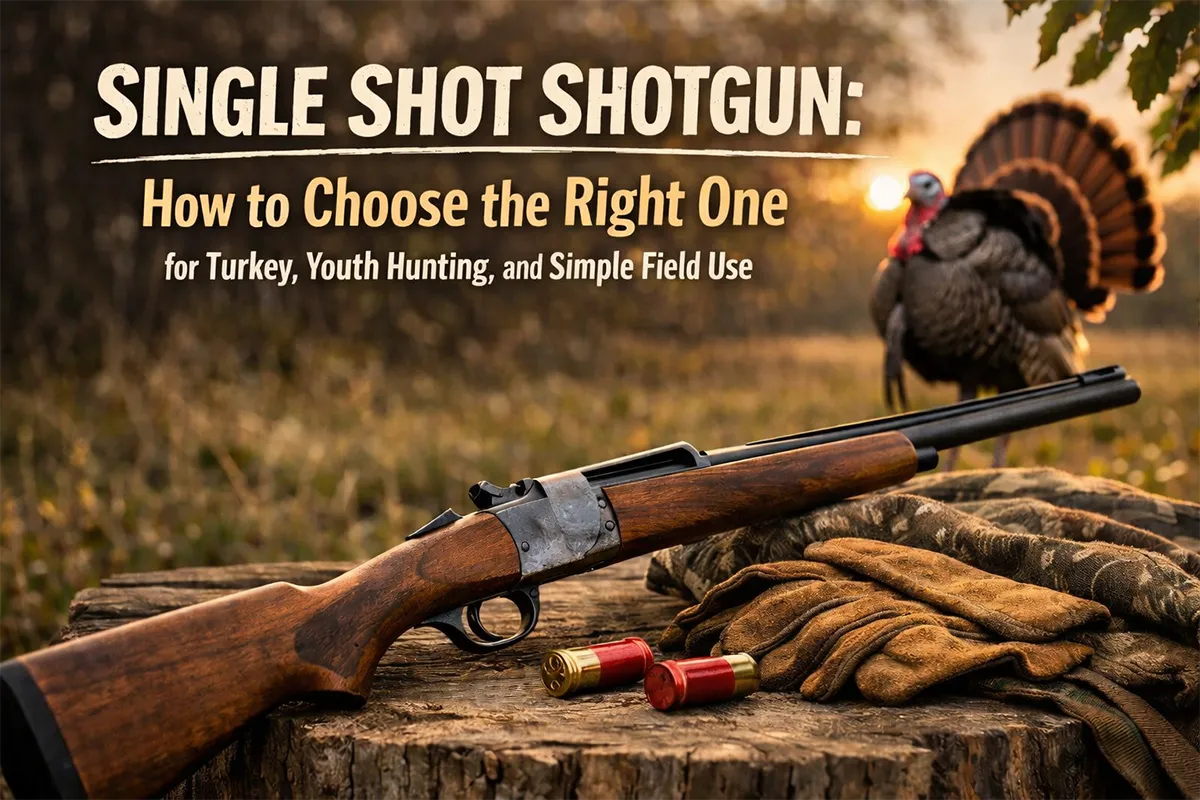
A single shot shotgun still makes a lot of sense in 2026, even in a market full of pumps, semi-autos, and over-unders. If you are researching one, you are usually trying to solve a pretty specific problem: you want a shotgun that is simple to carry, easy to understand, affordable to own, or well-suited to a focused hunting role like turkey or small game. The best pick comes down to gauge, barrel length, weight, choke setup, and whether you want a compact starter gun or a plain, dependable field tool.
That sounds almost too simple, but simplicity is the whole point here. A single shot shotgun gives you one chamber, one round loaded at a time, and a break-action design that is usually easy to inspect visually. For some buyers, that is a limitation. For others, it is exactly why the platform works. It keeps the gun light, trims cost, and encourages deliberate shooting. It also makes a lot of sense for youth hunters, truck-gun duty on private land, turkey hunters who take one careful shot, and experienced shooters who just want a straightforward tool instead of a gadget pile with a trigger attached.
If you want to browse the category first, start here: Single Shot Shotguns. This guide focuses on what actually matters when you are comparing them in 2026, not just what looks good in a catalog blurb.
Why a Single Shot Shotgun Still Matters in 2026
The single-shot format survives because it does a few jobs very well. First, it offers mechanical simplicity. Most examples are break-action guns, meaning the barrel pivots open at the breech so loading and unloading are obvious and direct. That is one reason these shotguns remain popular for teaching and for hunters who want a gun that is easy to check at a glance. There is not much mystery in the manual of arms.
Second, they are often lighter and less expensive than repeaters. That matters for a young hunter, a smaller-framed shooter, or anyone who is walking a lot and does not need extra shells in the gun. A trim single shot can be pleasant to carry for hours. You give up faster follow-up shots, but that trade can be perfectly reasonable in roles where one careful shot is the plan anyway.
Third, they reward disciplined shooting. That may sound old-fashioned, but it is practical. A single shot naturally pushes the shooter toward making the first round count. For turkey hunting, for example, that lines up well with the job. For rabbit, squirrel, or informal field use, it can keep the experience simple and low-stress. There is also a value angle: a single-shot shotgun can be a smart way to get into the field without overbuying.
Single Shot Shotgun 2026: The Buying Factors That Actually Matter
Gauge comes first. A 12 gauge is the broadest, most flexible answer if you want common shell availability and enough payload for turkey, birds, and general field use. The downside is recoil, especially in very light single-shot guns. A 20 gauge is often the sweet spot for newer shooters, youth hunters, and buyers who want less punishment without giving up too much usefulness. A .410 can work well in the right hands and roles, but it is not automatically the “easy” option people assume. Light recoil is nice; the narrower pattern and smaller payload can make hits less forgiving.
Weight matters more in a single shot than many buyers expect. A light gun is great to carry, but it also transmits more recoil. This is one of the classic mistakes in this category: someone buys the lightest, cheapest 12 gauge available for a new shooter, then wonders why range sessions turn unpleasant in a hurry. A little extra weight can make a very practical difference.
Barrel length affects handling and role. Longer barrels often feel smoother and may be useful for general field shooting. Shorter barrels can be handier in blinds or tight woods. A turkey-focused gun may prioritize maneuverability and choke compatibility over the feel you would want for upland birds or casual clays.
Choke setup is a major divider. Some single-shot shotguns are basic fixed-choke guns, while others offer interchangeable choke tubes. If you want one shotgun to stretch across birds, turkey, and general use, screw-in chokes are a genuine advantage. If the gun will live one narrow life, like a simple rabbit or pest-control tool, fixed choke may be perfectly fine.
Sights and stock fit deserve more attention than they usually get. A bead sight may be all you need for field carry, but turkey hunters often benefit from better sighting systems. Stock fit matters too. A gun that is too long, too short, or too awkward at the shoulder will not magically become pleasant because it was inexpensive.
Spec Highlights and Common Single-Shot Roles
| Category | Compatibility | Materials | Weight | Dimensions | Features | MSRP |
|---|---|---|---|---|---|---|
| Youth / starter single shot | Training, small game, beginner field use | Steel barrel, wood or synthetic stock | Usually light | Shorter stock and barrel options common | Simple break action, easy handling | Varies by SKU |
| General field single shot | Small game, birds, utility use | Steel barrel, wood or synthetic stock | Light to moderate | Common field barrel lengths | Basic bead sight, simple controls | Varies by SKU |
| Turkey-oriented single shot | Turkey hunting, deliberate one-shot use | Steel barrel, camo or matte finish possible | Moderate | Compact field dimensions vary by SKU | Choke flexibility, tighter pattern focus | Varies by SKU |
Those buckets are more useful than chasing one “best” gun. A single-shot shotgun shines when its role is clear. The moment you ask it to be everything for everyone, the tradeoffs get obvious.
Three Practical Buying Lanes
The youth or first-field-gun lane: This is where a 20 gauge or even a .410 often enters the conversation, but the real decision is less about tradition and more about whether the shooter can mount the gun correctly and enjoy practicing with it. In this lane, fit and manageable recoil matter more than “maximum versatility.” A smaller, simpler gun that gets used is better than a larger one that lives in the closet because it is unpleasant.
The budget field-tool lane: This is the classic single-shot use case. You want a shotgun for property carry, simple rabbit or squirrel work, occasional birds, or general field utility without spending repeater money. In this role, a plain 12 or 20 gauge with dependable lockup and sensible barrel length can be all you need. Fancy features matter less than durability, handling, and whether you actually like carrying it.
The turkey-specific lane: A single shot can be very sensible for turkey because the job is built around one carefully placed shot. Here, choke options, sight setup, and shell compatibility matter more than capacity. A compact gun with the right pattern can be more useful than a general-purpose field gun wearing the wrong choke and hoping for the best.
Brand Directions Worth Comparing
One clean way to shop this category is by brand philosophy rather than by chasing tiny spec differences first. For value-minded buyers, Rossi often sits in the conversation because the brand tends to appeal to practical shoppers looking for straightforward utility. That makes it relevant for the “simple field tool” buyer who cares more about function than finish drama.
Charles Daly is another brand worth a look if you want broader entry-level shotgun coverage and are comparing across budget-conscious field options. This lane often attracts buyers who want a basic working gun, possibly for seasonal use, without pretending it needs to become a forever heirloom.
If your research is tilting more toward hunting-oriented simplicity, Traditions can make sense to compare, especially if you like the idea of a purpose-driven field gun rather than a crossover range piece. And for buyers who want to compare across a wider spread of shotgun options before committing, it is worth viewing the broader Shotguns category alongside the single-shot subcategory.
The point is not that one of these brands automatically wins. It is that they can represent slightly different buyer mindsets: starter gun, budget field tool, or role-specific hunting piece. That is usually a more helpful comparison frame than obsessing over a minor weight difference on a spec sheet.
Who Should Buy One, and Who Probably Shouldn’t?
A single-shot shotgun makes the most sense for youth hunters, newer shooters under supervision, turkey hunters who value simplicity, and experienced shooters who just want a light field tool. It also works for buyers on a tighter budget who still want a legitimate hunting shotgun rather than a compromise they do not trust.
It makes less sense for someone who wants a do-everything clay, bird, and home-defense shotgun, or for a shooter who knows they will value rapid follow-up shots. In those cases, a pump or semi-auto usually provides more flexibility. A single shot is best when you appreciate the trade, not when you are merely tolerating it.
Common Mistakes to Avoid
- Buying an ultra-light 12 gauge for a recoil-sensitive shooter.
- Assuming .410 is automatically the easiest option just because recoil is light.
- Ignoring stock fit because the gun is “just a basic single shot.”
- Choosing fixed choke when you really want one gun to cover multiple hunting roles.
- Buying the cheapest option without thinking about how often it will actually be carried and practiced with.
A Simple Research Checklist Before You Commit
Start with the role: youth training, turkey, general field use, or budget hunting tool. Then choose the gauge based on the shooter, not on internet chest-thumping. Compare actual weight, choke setup, and stock dimensions. Think honestly about recoil tolerance, because light single-shot guns can get lively fast. Finally, ask whether you want the gun to be a specialized one-shot hunting tool or a low-cost general-purpose field companion. Once that answer is clear, this category gets much easier to shop.