
SIG P365-FUSE COMP: Specs, Optic Setup, and Who This Comped Micro-Compact Is For
March 12, 2026
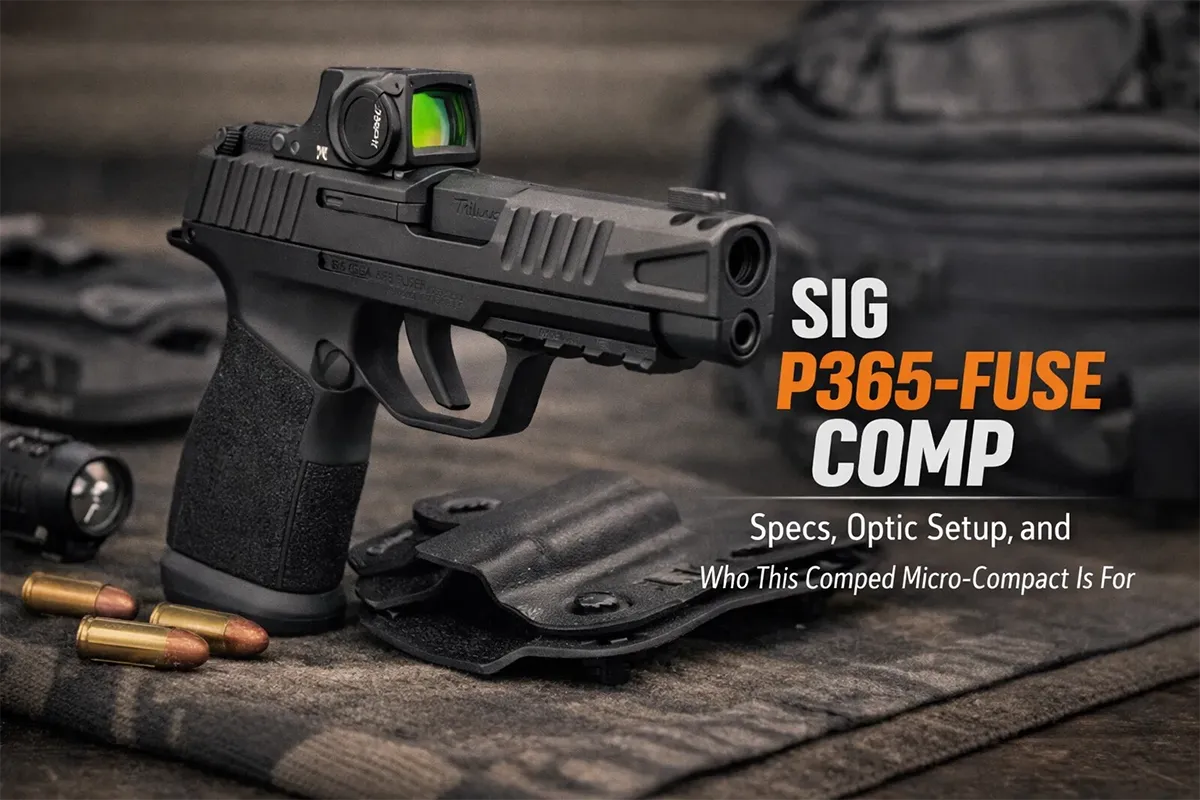
TL;DR: The SIG P365-FUSE COMP pushes the P365 family further into “shoots like a bigger gun” territory by pairing a factory compensated setup with a factory-ready optics approach. If you want a carry-sized pistol that’s easier to track in rapid strings—without immediately heading to the aftermarket—this is the research lane.
On February 25, 2026, coverage and product pages for the P365-FUSE COMP started circulating widely, highlighting a clear direction for 2026 carry pistols: more factory compensation, more optics readiness, and more “complete packages” out of the box. The FUSE COMP sits in that sweet spot where it’s still a micro-compact ecosystem gun (P365 mags, holster support, parts availability) but is tuned toward faster shooting and better control.
Before we go further, a quick definition: a compensator is a device or gas-management feature that redirects muzzle gases to reduce muzzle rise. On a carry gun, the goal is usually faster follow-up shots—not turning your pistol into a range-only race setup.
SIG P365-FUSE COMP Key Specs (What to Pay Attention To)
| Platform | Handgun |
| Action | Striker-fired |
| Caliber | 9mm |
| Barrel / Weight | Varies by SKU |
| Capacity | Varies by magazine |
| Overall Length | Varies by SKU |
| MSRP / Street | Varies by package |
Why the “varies”? Because SIG commonly ships families with multiple trims and package options. For research, focus on three practical questions instead of getting lost in small measurement differences:
- How is the comp implemented? Integrated/slide-managed comp designs can change recoil feel without adding as much length as a screw-on comp.
- What optic footprint or mounting approach is used? A factory enclosed emitter optic package can be convenient, but you should confirm compatibility if you plan to swap optics later.
- What does it do to carry reality? Extra length, sharp edges, and holster fit matter more than marketing words.
What’s New: The “Factory Comp + Enclosed Optic” Direction
Three trends show up clearly in the P365-FUSE COMP concept:
- Factory compensation is becoming normal: Instead of treating a comp as an aftermarket add-on, manufacturers are tuning the system as a whole (slide, barrel length, springing).
- Enclosed emitter optics are creeping into carry: An enclosed emitter red dot protects the emitter from lint, moisture, and debris better than an open emitter design. That matters if the pistol lives close to your body every day.
- Package guns reduce “research friction”: For many buyers, the value is not in ultimate customization—it’s in getting a coherent setup from day one.
This doesn’t mean every shooter needs a comped, optics-equipped micro-compact. It means the baseline is changing, and you should decide if the added complexity pays off for your shooting goals.
Who the SIG P365-FUSE COMP Is For
This model makes the most sense for:
- High-round-count trainers: If you actually practice (not just “own”), a flatter-shooting setup can reduce fatigue and speed up learning.
- Carry shooters who want faster tracking: Compensation can help keep the dot/sights closer to your line of sight through recoil, especially in rapid pairs.
- People who don’t want immediate aftermarket work: If you’ve ever bought a pistol and immediately priced a comp, optic, taller sights, and a holster, you understand why package guns exist.
It may be less ideal for buyers who want maximum simplicity, minimal maintenance, or who don’t plan to run an optic at all. A simpler P365 variant might be a better research start in those cases.
Carry & Compatibility Considerations (The Stuff People Discover After Purchase)
- Holster fit: Comped slides or longer dust covers can change which holsters fit. Research holster support before committing to a specific trim.
- Cleaning reality: Comped systems can put more carbon on the front end. That’s not “bad,” it’s just maintenance you should expect.
- Optic durability: If you carry daily, enclosed emitters can be a meaningful reliability bump. But confirm battery access and mounting method so you’re not re-zeroing constantly.
- Ammo selection: Some compensated systems feel best with certain bullet weights/loads. You don’t need to chase unicorn ammo—just plan to test your preferred range load and your defensive load.
Browse comparable carry pistols here: Semi-auto Pistols on GunGenius. For brand context and related models: SIG Sauer on GunGenius.
Alternatives Worth Researching Alongside It
- Springfield — The Hellcat Pro Comp concept is a direct “same-problem, different ecosystem” comparison for comped carry pistols.
- Shadow Systems — Their compensated micro-compact options are often researched by shooters who want a flatter feel in a small package.
Research Checklist: Make the Decision With Less Regret
- Will you actually use an optic, and do you prefer enclosed or open emitter?
- Do you have holster options that fit your intended carry position?
- Are you okay with the extra cleaning that can come with comped designs?
- Can you confirm magazine compatibility with other P365 mags you already own?
- Do you want a “package” pistol, or would you rather choose each component separately?