
Side-by-Side Shotgun in 2026: How to Choose the Right One for Upland Hunting, Cowboy Action, and Classic Field Use
April 13, 2026
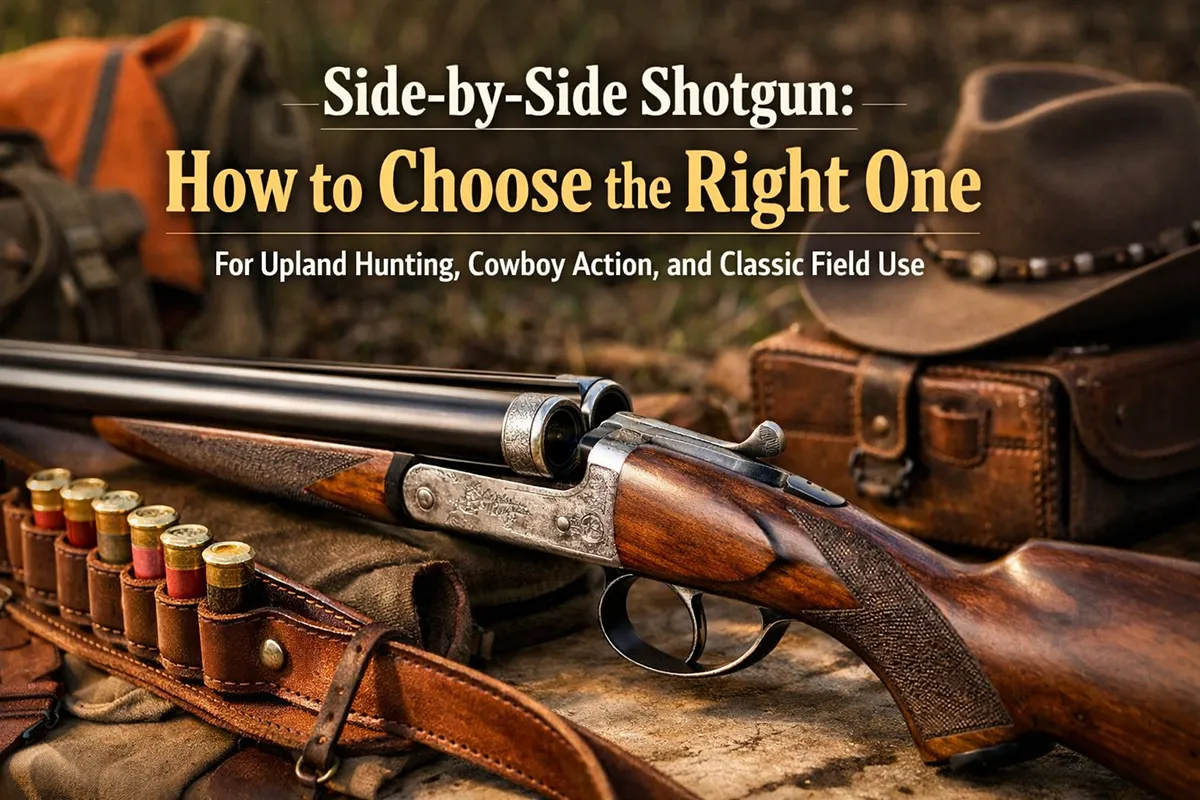
If you are researching a side-by-side shotgun in 2026, you are probably not looking for the most accessorized or trend-driven gun on the shelf. You are looking for something more specific: a shotgun that carries easily, handles quickly, feels traditional in the hands, and still makes practical sense for the kind of shooting you actually do. That could mean upland hunting, casual clays, cowboy action competition, or simply owning a classic field gun that is enjoyable to carry and straightforward to operate.
The side-by-side shotgun remains a niche compared with the over-under shotgun or the semi-auto shotgun, but “niche” does not mean obsolete. It means the platform rewards buyers who know what they want. A side-by-side gives you two barrels, fast mechanical simplicity, excellent balance in the right configuration, and a profile many shooters still prefer in the field. What you give up is capacity, rail-friendly modularity, and, in some cases, the easy familiarity that modern shooters have with pumps and semi-autos. The smart buy depends less on hype and more on choosing the right gauge, barrel length, trigger arrangement, and stock fit for your role.
Why a Side-by-Side Shotgun Still Matters
A side-by-side shotgun is a break-action gun with two barrels positioned horizontally. That layout gives it a distinctive sight picture and often a slightly different feel in the swing compared with an over-under. Some shooters love that broad, flat visual plane; others never warm up to it. The important thing is that the platform still solves real problems well.
For upland hunting, a side-by-side is attractive because it can be trim, quick to mount, and pleasant to carry all day. For cowboy action shooting, the appeal is obvious: short, handy guns with simple loading and unloading fit the sport naturally. For traditionalists, a side-by-side offers something harder to measure on a spec sheet but still real—character, balance, and a style of shooting that feels a little more deliberate and a lot less gadget-driven. That is not nostalgia for its own sake. It is a different ownership experience.
The catch is that a side-by-side shotgun is less forgiving of bad fit than many other shotgun types. If the stock dimensions do not work for you, or the barrels feel too lively or too heavy, the gun can seem awkward fast. That is why the best research path is not “Which one is best?” but “Which type of side-by-side fits my intended use?”
Side-by-Side Shotgun Specs That Actually Matter
Spec sheets are useful, but only if you know how to read them in context. Gauge matters because it affects recoil, gun weight, and field versatility. Barrel length changes handling more than many first-time buyers expect. Trigger style matters because double triggers and single triggers ask different things of the shooter. Chokes matter because a field gun set up for birds is not automatically ideal for clays or informal range use.
| Platform | Action | Caliber | Barrel/Weight | Capacity | OAL | MSRP/Street |
| Field Side-by-Side | Break Action | 12 or 20 Gauge | 26–28 in / varies by SKU | 2 | Varies by SKU | Varies by SKU |
| Coach-Style Side-by-Side | Break Action | 12, 20, or .410 | 18.5–20 in / varies by SKU | 2 | Varies by SKU | Varies by SKU |
| Premium Upland Side-by-Side | Break Action | 20, 28, or .410 | 26–30 in / varies by SKU | 2 | Varies by SKU | Varies by SKU |
For many buyers, the first real decision is 12 gauge versus 20 gauge. A 12 gauge is versatile and easy to feed with common loads, but a 20 gauge often makes more sense if you want a lighter gun and softer recoil in a package built for birds and long carries. The next big decision is barrel length. Shorter barrels feel handier and work well in coach-style or competition-oriented guns. Longer barrels usually give a steadier swing and more traditional field manners.
The Main Buying Paths: Field Gun, Coach Gun, or Premium Classic
Most buyers fall into one of three lanes. The first is the practical field-gun shopper. This person wants a bird gun, likely in 20 gauge or 12 gauge, with barrels long enough to swing well and enough choke flexibility for real hunting use. The second is the coach-gun buyer, usually looking for a shorter, handier gun that works for cowboy action, casual range fun, or simply the appeal of a compact side-by-side. The third is the premium classic buyer, who cares about fit, finish, wood quality, and long-term pride of ownership as much as raw utility.
Those categories overlap, but not completely. A coach gun can be fun, compact, and fast-handling, but it is not automatically the best choice for upland use if you want smoother follow-through on crossing birds. A premium field gun can be beautiful and wonderfully balanced, but it may be a poor choice if you really wanted a hard-use range toy and were mostly paying for finish and tradition. The best move is to identify which of those lanes describes you before comparing brand names.
Brand Personalities and Practical Tradeoffs
Stoeger is one of the easier entry points for buyers who want a working side-by-side without treating the purchase like a museum acquisition. The line tends to make sense for shoppers focused on value, basic reliability, and accessible configurations, especially if they are curious about coach-style guns or a general-purpose field option without a premium price tag.
CZ-USA has been a familiar name for buyers who want a more field-oriented, traditional-feeling shotgun. The appeal here is often stronger among upland-minded shooters and buyers who want a little more classic personality in layout, furniture, and handling. It is a good lane to research if the goal is not just owning a side-by-side, but owning one that actually encourages you to carry it in the field.
Charles Daly tends to enter the conversation for buyers who want options and flexibility in the value-to-midrange space. Depending on the exact model, that can mean a practical alternative for someone not committed to one specific brand identity but still interested in a traditional double gun. As always in this category, the exact SKU matters more than the logo alone.
If you want the shortest version of the market: Stoeger often makes sense for budget-conscious practicality, CZ-USA often appeals to buyers chasing more of a classic field-gun feel, and Charles Daly can be a useful “compare before you decide” brand in the same conversation. None of those brand labels eliminate the need to evaluate stock fit, triggers, and barrel length. In side-by-side shopping, details beat brand mythology.
Single Trigger vs Double Triggers
This is one of the biggest fork-in-the-road decisions. A single trigger feels more familiar to modern shooters and can simplify the manual of arms. A double-trigger setup, meanwhile, gives you a traditional layout and lets you choose barrels instantly with your trigger finger rather than a selector. Some shooters swear by it, especially in hunting roles where a fast choice between choke setups can matter. Others find it clumsy at first and never truly love it.
There is no universal winner here. The better question is whether you want modern simplicity or classic flexibility. If you are buying for cowboy action, tradition may be part of the draw anyway. If you are buying mainly for casual shooting or easier transition from other shotguns, a single trigger may feel more intuitive.
How Side-by-Sides Compare with Over-Unders and Semi-Autos
Compared with an over-under, a side-by-side usually leans more traditional and can feel faster or more compact in the hands, but many shooters find an over-under easier to point consistently because of its narrower sighting profile. Compared with a semi-auto, a side-by-side is mechanically simpler in concept and faster to inspect open and safe, but it gives up capacity and much of the recoil-softening that semi-auto guns can offer.
That means a side-by-side is rarely the “do everything best” shotgun. It is more often the “do these specific things in a way I really enjoy” shotgun. That is an important difference. Buyers are happiest when they treat the platform as a deliberate choice rather than trying to force it into every role a semi-auto or pump might cover.
Research Checklist Before You Buy
- Choose your main role first: upland hunting, cowboy action, casual clays, or classic field carry.
- Decide whether 20 gauge fits your needs better than 12 gauge before chasing the broadest ammo selection.
- Compare barrel lengths with your intended use in mind instead of assuming shorter is always better.
- Handle both single-trigger and double-trigger options if possible.
- Pay close attention to stock fit, especially comb height, length of pull, and how naturally the gun points for you.
- Confirm choke configuration and whether the exact shotgun is fixed-choke or uses interchangeable tubes.
A good side-by-side shotgun is less about raw specification and more about how the gun comes alive when you shoulder it. That sounds poetic, but it is also practical. Poor fit and mismatched handling stand out immediately in a double gun, while a well-chosen one feels intuitive in a way that keeps people loyal to the platform for years.
What to Watch Next in the Side-by-Side Shotgun Market
The side-by-side shotgun market is unlikely to become a hotbed of radical innovation in the next month, and that is part of the platform’s appeal. What buyers should watch instead is configuration availability: more practical 20-gauge options, better choke flexibility, and value-tier guns that balance classic looks with usable modern features. The big opportunity in this space is not a reinvention of the double gun. It is better execution of familiar formats.
If your goal is to own a shotgun that feels trim, classic, and genuinely enjoyable in the field, a side-by-side still earns a serious look in 2026. Just go in with clear expectations. It is not the highest-capacity option, and it is not the most modular. What it offers instead is handling, simplicity, and a shooting experience that many people still find deeply satisfying. Sometimes that is reason enough. Sometimes it is the whole reason.
Browse more options in the side-by-side shotguns category on GunGenius.