
Gas vs Inertia Semi-Auto Shotguns: 2025 Deep Dive
December 19, 2025
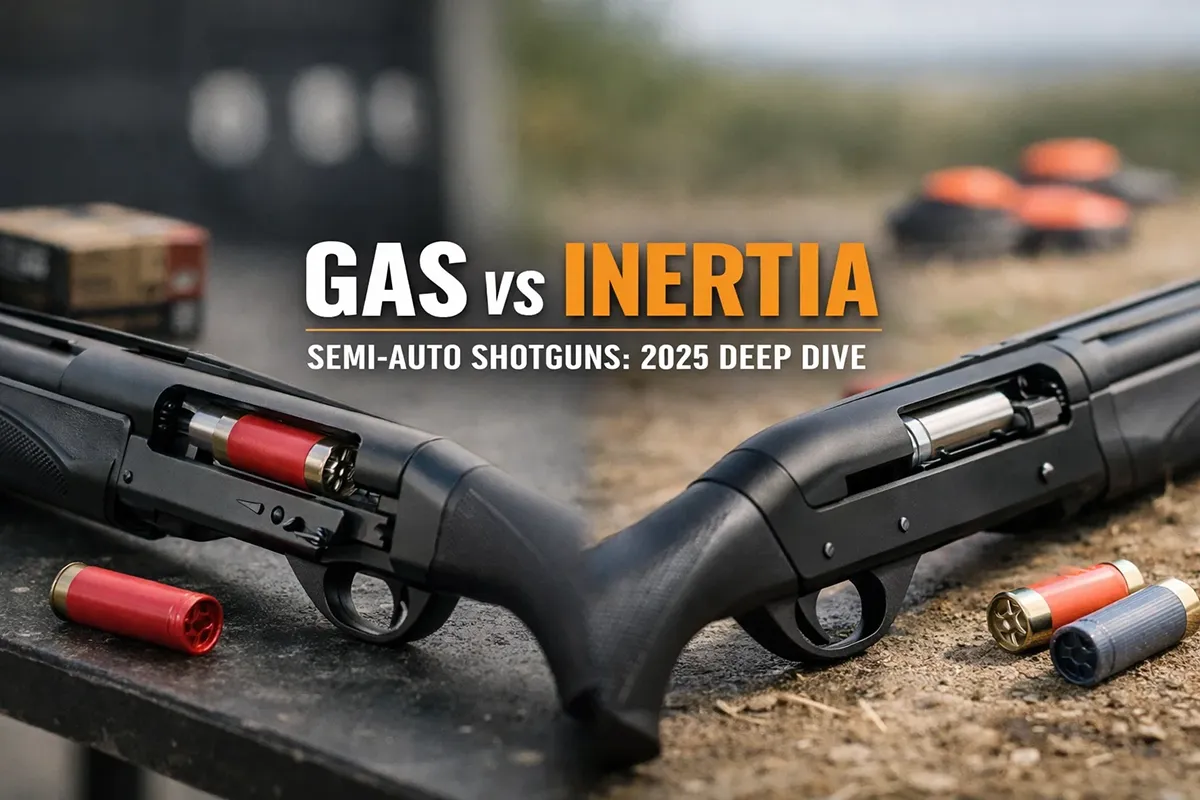
If you shoot a lot of mixed loads or want the softest recoil, modern gas-operated semi-auto shotguns are usually the easiest win. If you prioritize lighter weight and simple internals—especially for waterfowl trips where grit happens—an inertia-driven gun is tough to beat. This guide explains Gas vs Inertia Semi-Auto Shotguns in plain English so you can choose confidently.
Deciding between gas and inertia operation can feel like arguing over pizza toppings—both are good, just different. Below we break down the core mechanics, real-world recoil, reliability in the field, maintenance, and which shooters benefit most. We’ll also point you to our semi-auto shotgun category and top brands like Benelli and Beretta so you can dig deeper.
Gas vs Inertia Semi-Auto Shotguns: Pros & Cons
Gas-operated: A portion of the shot’s gas drives a piston to cycle the action. Extra parts (piston, seals, springs) add weight and need periodic cleaning, but the gas system also “soaks up” energy and tends to reduce felt recoil. Many gas guns also handle a wide spectrum of loads—from light target to magnum waterfowl—without manual adjustments.
Inertia-driven: The gun relies on recoil energy acting through a spring and rotating bolt. The system is mechanically simple, usually lighter, and stays cleaner because gases vent out the muzzle rather than through the action. Inertia guns can feel a bit snappier and may prefer mid-to-hot loads for perfect reliability, though modern designs have broadened their operating window considerably.
| Factor | Gas-Operated | Inertia-Driven |
|---|---|---|
| Recoil feel | Softer, more “push” | Sharply brisk, quick return |
| Weight | Often a bit heavier | Often lighter |
| Load flexibility | Excellent with light to magnum | Best with medium to hot |
| Cleaning | More parts; clean gas system | Fewer parts; stays cleaner |
| Field grit tolerance | Good; parts can gum up | Very good; simple internals |
| Perceived blast | Often milder impulse overall | A bit snappier impulse |
How Each System Feels on the Range
Recoil & control: Gas guns usually feel softer and let newer shooters stay on the gun for longer practices—think high-volume clays or a 100-round sporting course. Inertia guns kick a tad more but return to shoulder quickly, which some shooters prefer for fast follow-ups on flushing birds. Your shoulder will notice—your ego doesn’t have to.
Balance & swing: Gas systems add a bit of forward weight near the forend, which can steady the swing on crossing targets. Inertia guns’ lighter front ends feel lively and quick to mount—great when a mallard flares or a chukar erupts underfoot.
Reliability in the Real World
Cold, mud, and rain: In soggy blinds or cold late-season hunts, both systems run well when maintained. Inertia guns get the nod for sheer simplicity if you expect sand or marsh muck—the action has fewer “gas paths” to clog. Gas guns can match that reliability if you keep the piston group reasonably clean.
Ammo spectrum: If you live on reduced-recoil target shells, a gas gun is often the surer bet. Many inertia models run light target loads just fine today—especially 1 1/8 oz 12-ga—but the broadest “everything from 7/8 oz to 3½″ magnums” flexibility still tilts toward gas designs.
Maintenance & Ownership
Cleaning cadence: Gas guns reward a simple wipe-down of the piston, rings, and related parts after a few boxes—more often if you’re shooting filthy bargain shells. Inertia guns are happy with a light clean of rails and bolt lugs; their main “gotcha” is over-oiling, which can attract grit.
Parts & service: Gas systems have more consumables (o-rings, springs) you may eventually replace. Inertia systems have fewer wear bits but still benefit from periodic spring refreshes over the long haul. Either way, keep a small spares kit in the range bag and you’ll avoid hunt-day heartbreaks.
Who Should Pick What?
Waterfowlers & marsh rats: Lean slightly inertia if you expect muddy, freezing blinds and lots of disassembly in a truck bed. Pair with a corrosion-resistant finish and a good sling.
Clay shooters & high-volume trainers: A gas gun keeps recoil civilized through long practice strings. Adjustable comb stocks and extended chokes help you fine-tune point of impact and patterns for skeet, trap, and sporting clays.
Upland hunters: Inertia’s lighter carry weight and lively mount are easy to love when you’re covering miles. If you’re a mixed-use hunter who also shoots clays often, a gas gun’s comfort might still win.
Home & ranch roles: Either system works if you prioritize reliability with your chosen defensive load. Test with the exact shells you intend to keep in the tube, and confirm point-of-impact at realistic distances.
Popular Examples & Where to Start
Inertia standouts: Benelli’s inertia lineage is the reference point for many shooters (browse the brand page here: Benelli). Stoeger and Franchi also offer approachable inertia options for new buyers.
Gas favorites: Beretta’s gas systems are renowned for soft shooting and broad load compatibility (see Beretta). Browning and Winchester gas models are also proven performers with clay and field loads.
Buying Checklist
- Fit first: Mount the gun with eyes closed, then open—are you naturally on the bead? Stock shims help; many modern semi-autos include them.
- Pattern your loads: Try two or three chokes and a couple of shell recipes; don’t assume the box label equals your barrel’s reality.
- Controls & usability: Oversize bolt handles, loading ports, and cross-bolts matter with gloves or cold fingers.
- Maintenance plan: Decide how often you realistically clean. Gas guns appreciate more frequent attention; inertia guns tolerate more neglect.
- Budget for extras: Factor in choke sets, a quality sling, and a case. If waterfowling, add a rugged, non-slip buttpad.
Bottom Line
If you want the broadest ammo flexibility and softer recoil for long days on the range, start with a gas-operated semi-auto. If you prioritize a lighter gun with simple internals and strong resilience in dirty field conditions, inertia-driven models are terrific. The best way to decide is to shoulder options in our semi-auto shotgun category and then test the exact shells you plan to shoot.