
Shotgun Choke Tubes Explained: Constriction, Patterning, and What to Buy
January 2, 2026
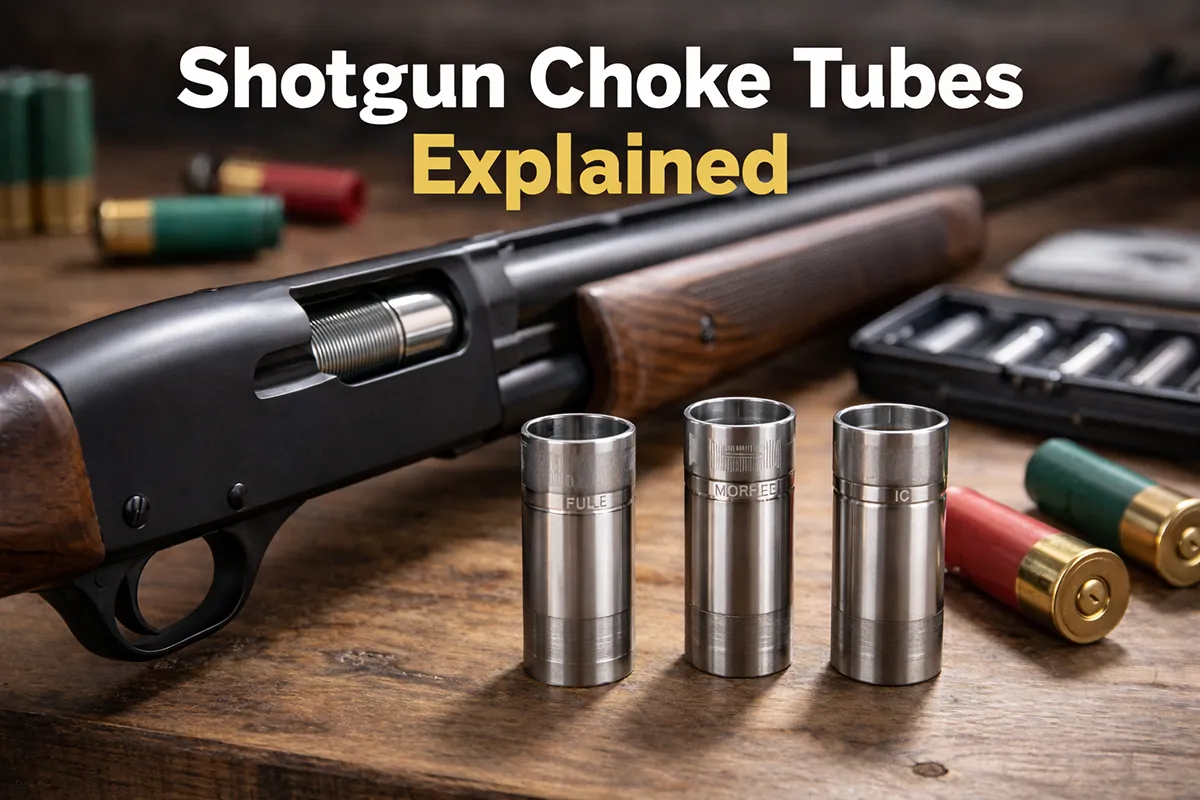
Shotgun choke tubes are the easiest way to tune your pattern for clays, upland birds, turkey, and general field use. Pick the lightest constriction that still gives you reliable hits at your realistic distance—then confirm it by patterning your actual load in your actual gun.
Shotgun choke tubes are one of those upgrades that looks “small” but changes everything. The same 12 gauge can be a forgiving close-range bird gun one day and a tighter-patterning clay or turkey setup the next—just by swapping a tube. If you’ve ever wondered why two shotguns with the “same barrel length” feel different on target, choke constriction and pattern quality are usually part of the answer.
This guide breaks down choke constriction in plain English, how patterning works, and how to choose tubes based on what you actually shoot (not what sounds cool on a product page).
Shotgun choke tubes: the simple definition
A choke is a slight narrowing at the muzzle end of a shotgun barrel. More constriction generally tightens the pattern (keeps pellets closer together) at distance. Less constriction generally opens the pattern (spreads pellets sooner), which can be more forgiving up close.
Most modern shotguns use screw-in choke tubes, letting you swap constrictions in seconds. That’s why choke tubes are worth understanding: they’re a fast, reversible way to match your shotgun to your job.
Want to compare platforms while you read? Start browsing the broader Shotguns catalog, and jump into a maker’s lineup like Benelli to see how choke systems and barrel options show up across models.
The common choke names (and what they’re usually for)
Choke labels vary a bit by manufacturer, but most fall into a familiar ladder. Think of this as a “starting point,” not a guarantee—ammo choice and barrel behavior matter a lot.
| Choke | Constriction level | Typical use | Notes |
| Cylinder (CYL) | None / very open | Very close targets, some defensive setups | Fast spread; can be great up close, can run out of pattern sooner |
| Improved Cylinder (IC) | Light | Upland, close-range clays | Often a “do-most-things” option for mixed distances |
| Modified (MOD) | Medium | General field, many clay games | A common default for balanced reach and forgiveness |
| Improved Modified (IM) | Medium-tight | Longer clays, some waterfowl | Can tighten patterns nicely without going “full” |
| Full | Tight | Longer targets, some turkey/lead setups | Often chosen when you need maximum density at distance |
| Extra Full / Turkey | Very tight | Turkey-specific loads and distances | Specialized; pattern first and be cautious with ammo compatibility |
If you only take one thing from the table: the “best” choke is the one that gives you the most consistent, repeatable pattern for your distance—not the tightest tube you can buy.
Patterning 101: why your choke is only half the story
Patterning is simply shooting at a target (usually paper) to see how your pellets actually distribute. Two shotguns with the same choke marking can pattern differently. Even the same gun can pattern differently with different loads.
What changes patterns the most:
- Ammo type (birdshot vs buckshot vs slugs)
- Shot size and payload (smaller pellets vs larger pellets, lighter vs heavier loads)
- Wad design (modern wads can tighten patterns compared to older designs)
- Velocity (sometimes faster isn’t “better” for pattern quality)
- Barrel behavior (every barrel is its own personality)
That’s why choke selection is a two-step process:
- Step 1: Choose a sensible constriction based on your use case.
- Step 2: Confirm it by patterning your actual load at your actual distance.
Yes, it’s slightly nerdy. But it’s the good kind of nerdy—the kind that saves you from buying three tubes you don’t need. (And if you’ve ever “mysteriously missed” an easy bird, patterning will feel like turning the lights on.)
Choosing choke tubes by role
Here are practical starting points that work well for many shooters. Treat them as a baseline, then pattern and adjust.
Upland birds and walk-up hunting
Upland shots tend to be quicker and closer. Many hunters like IC early season and may move toward MOD as leaves drop and distances stretch. If you’re using a light, fast-handling field gun, the “right” choke is often the one that buys you forgiveness when a bird flushes at an awkward angle.
Sporting clays and mixed-distance targets
Sporting clays is a game of variety. Many shooters settle into IC/MOD as a flexible pair, swapping based on station distance and target presentation. If you’re shooting an over/under or side-by-side, a common approach is a more open choke for the first shot and a slightly tighter choke for the second shot—because the second target is often farther or you’re taking it later in the flight.
Waterfowl and tougher conditions
Waterfowl can push distances, and wind can make patterns look worse than they “should.” Many hunters lean MOD or IM depending on the load and typical shot distance. The key is pellet energy and pattern density where you need it—patterning is especially valuable here because some loads produce surprisingly different results through the same choke marking.
Turkey
Turkey setups are the most specialized. “Turkey” and “extra full” tubes are designed to maximize density in a small area at a known distance window. That can work extremely well—but only if your ammo and choke combo pattern correctly. Pattern your chosen load carefully, and avoid assuming that “tightest” automatically equals “best.”
What to look for when buying choke tubes
Not all choke tubes are created equal. Here’s what matters most for practical buyers.
- Compatibility — Confirm your shotgun’s choke system (thread pattern) before you buy. “12 gauge” doesn’t automatically mean the tubes interchange across brands.
- Intended ammo — Some tubes are labeled for lead-only, steel-rated, or specific shot types. Match the tube to your load.
- Flush vs extended — Flush tubes are sleek and protected. Extended tubes are easier to swap and sometimes easier to keep consistent (especially if you change chokes often).
- Marked constriction — Clear markings matter when you’re swapping tubes at the range or in the field.
- Quality machining and finish — Better fit and corrosion resistance can mean less hassle over time, especially in wet hunts.
If you’re shopping for a shotgun where choke flexibility is a priority, focus your browsing on platforms that support a wide range of tubes and barrel options in the Shotguns category, then compare how different manufacturers set up their field vs sporting vs tactical trims.
Common mistakes (and easy fixes)
- Buying “extra full” as a default. Fix: start with IC or MOD for general use; go tighter only when distance demands it.
- Assuming the label guarantees performance. Fix: pattern your real load at your real distance. Barrels and ammo vary.
- Ignoring ammo selection. Fix: treat ammo as part of your pattern system; a choke swap won’t fix a load that doesn’t pattern well in your gun.
- Overthinking the perfect constriction. Fix: get one or two smart tubes, then spend the time you saved on practice and patterning.
A simple “starter set” for most shooters
If you want a practical baseline without collecting choke tubes like trading cards, a common approach is:
- Improved Cylinder (IC) for closer work and forgiving patterns
- Modified (MOD) for general purpose and a bit more reach
From there, you can add a more specialized tube only when you can clearly explain why you need it (longer clays, a dedicated turkey setup, or a specific hunting pattern goal).