
Ruger RXM Full Size: 9mm Platform Deep Dive
May 21, 2026
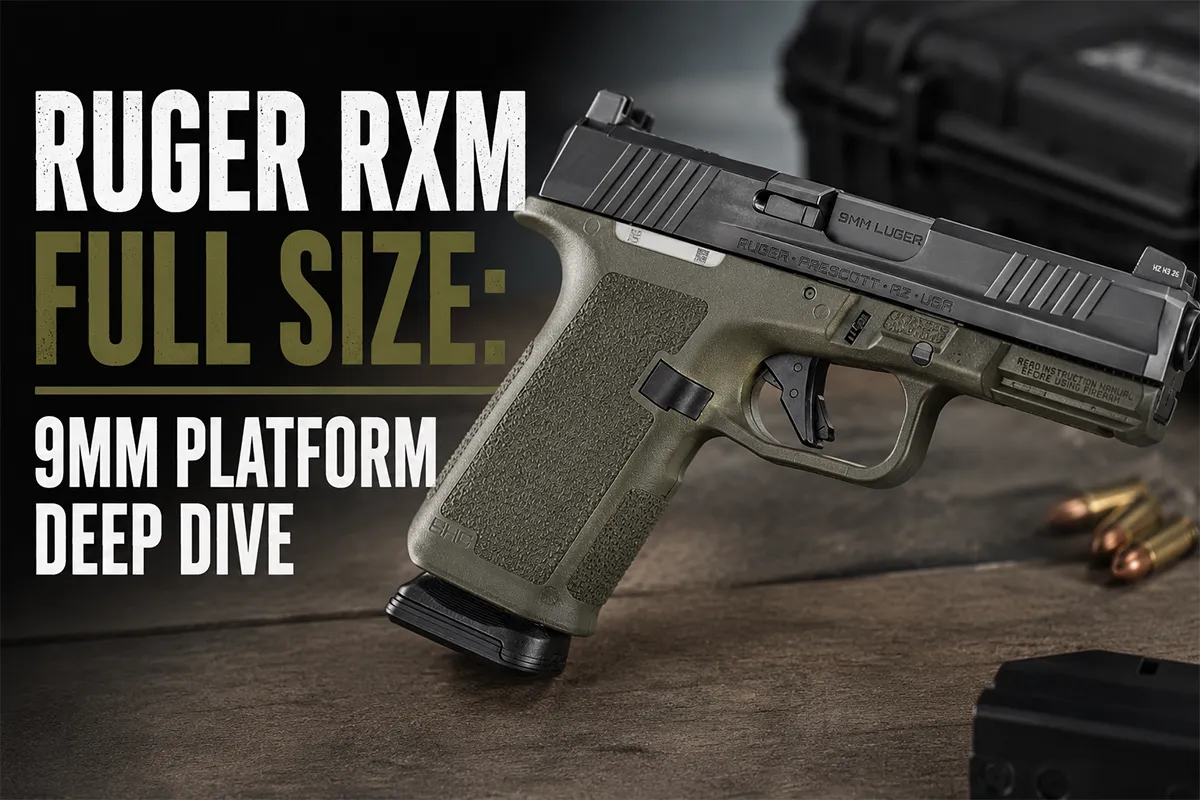
The Ruger RXM Full Size gives shoppers a larger version of Ruger’s modular 9mm pistol, with 17-round magazines, a longer grip, and the same optics-ready foundation that made the original RXM interesting. It matters because many buyers want one pistol family that can cover range practice, home-defense research, competition, and occasional carry without learning a new trigger each time.
GunGenius readers can start with the broader semi-auto pistol category, then compare the Ruger platform against familiar Glock ecosystem choices. The key question is simple: does the RXM’s modular design solve a real fit problem, or is it just another striker-fired 9mm?
Ruger RXM Full Size: quick answer
The short answer is that the full-size RXM is best viewed as a platform pistol. It is not trying to be the smallest carry gun. Instead, it gives the shooter a full grip, factory optic support, a removable fire control insert, and access to a deep parts ecosystem.
That mix fits buyers who already like compact striker-fired pistols but want more hand contact and more magazine capacity. It also fits new owners who want a mainstream 9mm with simple controls, common holster options, and room to grow.
Ruger lists the 19443 version with a 4.5-inch barrel, 17+1 capacity, tritium co-witness-height front sight, steel drift-adjustable rear sight, and RMR, DPP, and RMSc optic pattern support on its RXM spec sheet. Those specs place it in the same practical conversation as duty-size and competition-friendly 9mm pistols.
What changed from the compact RXM?
The original RXM formula was close to the compact double-stack 9mm pattern. It used a four-inch barrel, a compact grip, and 15-round magazines. That size is easier to conceal, yet still large enough for serious practice.
The full-size setup shifts the priority toward control. A longer grip gives most hands more surface area. The 17-round magazines add capacity. The 4.5-inch model adds slide and barrel length, which can help sight tracking and balance during fast strings.
| Configuration | Action | Caliber | Barrel/Weight | Capacity | OAL | MSRP |
|---|---|---|---|---|---|---|
| RXM Compact | Striker-fired | 9mm Luger | 4 in. / 23.2 oz. | 15+1 | 7.15 in. | $539 |
| RXM Full Size, 4 in. | Striker-fired | 9mm Luger | 4 in. / 23.4 oz. | 17+1 | 7.15 in. | $539 |
| RXM Full Size, 4.5 in. | Striker-fired | 9mm Luger | 4.5 in. / 23.6 oz. | 17+1 | 7.65 in. | $539 |
Those numbers do not make the compact model obsolete. They show that the RXM line now covers different roles with related parts and a consistent manual of arms. That is useful if you want a range-focused pistol and a more compact setup built around the same system.
Why the fire control insert matters
The RXM’s serialized fire control insert is the heart of the pistol. In plain language, the regulated component lives inside the grip module. That lets Ruger and Magpul offer different grip sizes without making each grip the serialized firearm.
For the buyer, the benefit is fit. One shooter may prefer a shorter grip for carry. Another may want a full-size grip for range work. A third may want a compact slide with a longer grip because it points well and accepts larger magazines.
This is where the RXM differs from many traditional polymer pistols. You are not limited to the frame shape that came in the box. Grip modules can change the feel, color, and role of the pistol while preserving the same core controls.
Optics, sights, and accessory fit
Optics support is one of the strongest practical arguments for the RXM. The slide is cut for common optic patterns, and the pistol includes co-witness-height sights. That combination helps readers who plan to run a red dot from the start.
The universal accessory rail also matters. A full-size handgun often gets used for range training or home-defense research, where a light may be part of the setup. Before buying any light, verify fit with the exact RXM grip module in use.
Parts compatibility deserves a careful read. Ruger says many major components are designed around Gen 3 compatibility. That does not mean every aftermarket part will drop in cleanly. Treat triggers, barrels, compensators, and holsters as fit-check items, not assumptions.
The RXM is most appealing when you value fit, optics, and parts availability more than brand tradition.
Who should research this pistol?
Range-focused shooters should give the full-size RXM a close look. The longer grip makes reloads easier. It also gives more support-hand contact, which can help with recoil control during drills.
Competition-curious buyers may also see value. The pistol has useful baseline features without forcing a premium price. It gives a new shooter a familiar 9mm starting point before they invest in match-specific gear.
Concealed-carry researchers should be more selective. The full-size grip is harder to hide than the compact RXM grip. If concealment is the priority, compare grip length, holster support, belt setup, and cover garment needs before choosing the larger version.
Home-defense researchers may like the full-size control layout. More grip, a rail, optics support, and common magazines are all practical traits. Still, local laws, safe storage, training access, and personal ability matter more than any spec sheet.
Ruger RXM Full Size buyer tradeoffs
- Choose the compact RXM if concealment is the main job.
- Choose the four-inch full-size grip model if you want compact slide length with 17-round magazines.
- Choose the 4.5-inch model if range balance and sight tracking matter more than carry comfort.
- Budget for an optic, holster, magazines, and live-fire practice before chasing small upgrades.
Common comparison mistakes
Do not compare only barrel length. Grip length often matters more for concealment, draw comfort, and reload speed. A four-inch slide with a full-size grip can feel very different from a compact grip on the same slide length.
Avoid treating Glock compatibility as a guarantee. The RXM lives near that ecosystem, but exact fit still depends on the part, generation pattern, and manufacturer. Confirm the item against your model number before ordering.
Also avoid buying the larger pistol just because it is newer. The best RXM is the version that matches your role, hand size, holster needs, and training plan. New hardware should make practice easier, not distract from it.
Research checklist before buying
Start by deciding the role. A range pistol, carry pistol, and bedside research pistol can share traits, but one configuration rarely wins every category. Write down the job before comparing models.
Next, handle both grip sizes if possible. The full-size grip may feel better in large hands. The compact grip may carry better for smaller frames or lighter clothing.
After that, confirm magazine availability. The RXM’s value depends partly on affordable magazines and common accessories. Check the exact magazine pattern for the model you are researching.
Finally, verify optic fit before purchase. Direct mounting can be excellent, but screw length, optic footprint, and sight picture still matter. A low-mounted dot is useful only when it is installed correctly.
Bottom line
The Ruger RXM Full Size is a strong research candidate for readers who want a modern 9mm that can adapt over time. Its best argument is not one single spec. It is the combination of a modular grip system, optic-ready slide, common accessory logic, and a price that leaves room for training gear.
Buyers who only need deep concealment may prefer the compact version or another micro-compact 9mm. Buyers who want a general-purpose range and home-defense research pistol should keep the full-size RXM on the comparison list.