
Ruger Harrier AR-15: What Changed From the AR-556
May 4, 2026
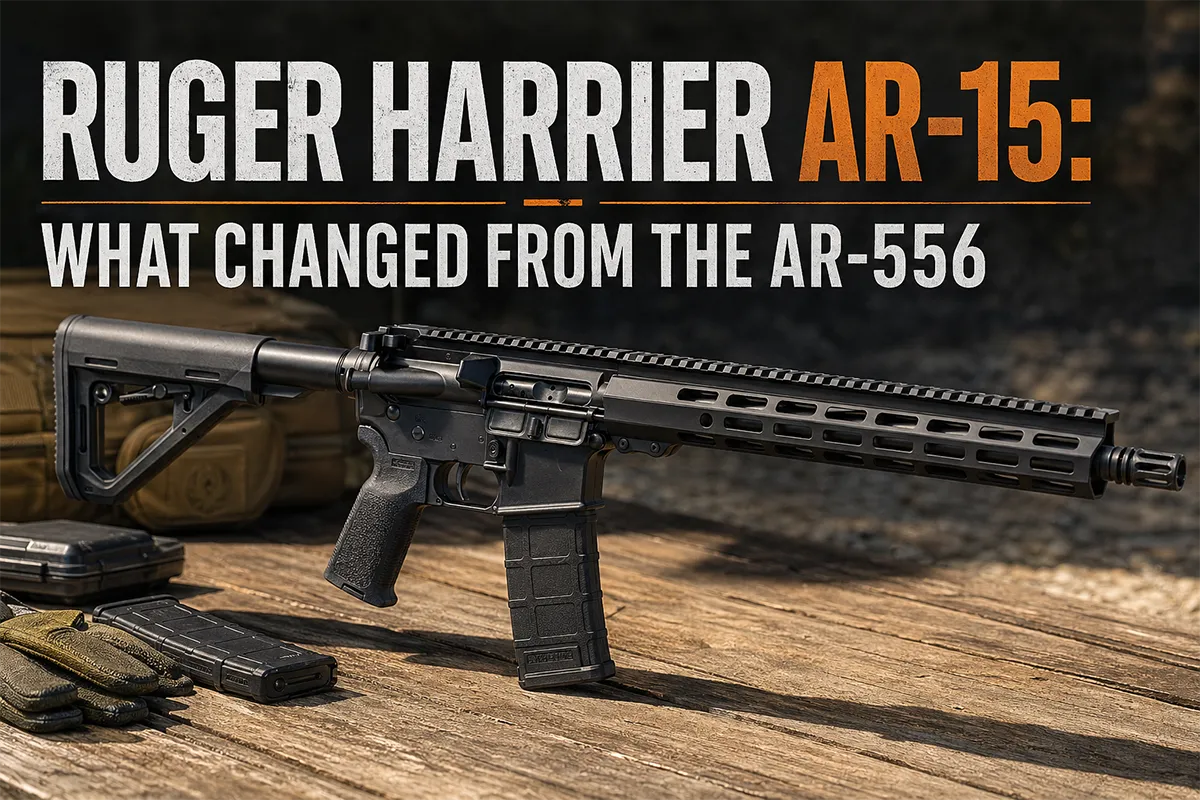
The Ruger Harrier AR-15 is Ruger’s new entry-level 5.56 rifle line, and it matters because many buyers are comparing it with older AR-556 rifles, PSA builds, and Smith & Wesson Sport models. The short answer is simple. The Harrier keeps a familiar direct-impingement AR layout, adds a free-floated handguard, and gives shoppers two factory setups instead of one generic starter carbine.
Ruger announced the Harrier on December 31, 2025. As of April 29, 2026, Ruger’s own Harrier model page lists two available rifles. Both are chambered in 5.56 NATO with .223 Remington compatibility, both use 16.10-inch barrels, and both ship with 30-round magazines where lawful. That makes the decision less about caliber and more about furniture, handguard layout, gas system, and long-term upgrade plans.
Ruger Harrier AR-15 Basics
The Harrier is a modern sporting rifle built around the common AR-15 pattern. Ruger says the upper and lower receivers are forged 7075 aluminum with Type III hard-coat anodizing. The lower also includes an integrated tension screw, which lets the owner reduce upper-to-lower receiver play without installing a separate wedge or shim.
For GunGenius readers, the Harrier fits best in the semi auto rifles category and the Ruger brand research path. It is not a precision rifle, a lightweight hunting rifle, or a premium duty carbine. It is a factory AR with mainstream parts, a recognizable maker, and prices aimed at first-time AR shoppers.
| Model | Action | Caliber | Barrel/Weight | Capacity | Handguard | MSRP/Street |
|---|---|---|---|---|---|---|
| 28600 | Semi-auto | 5.56 NATO | 16.10 in / about 6.8 lb | 30 where lawful | Full Picatinny with M-LOK | $749 / often lower |
| 28601 | Semi-auto | 5.56 NATO | 16.10 in / varies by listing | 30 where lawful | Partial Picatinny with M-LOK | $699 / often lower |
What Changed From the AR-556?
The biggest practical change is the handguard. Older starter AR rifles often used basic polymer handguards or front-sight-base layouts. The Harrier line moves buyers into a free-floated M-LOK setup from the start. That helps with accessory placement and keeps sling pressure or support-hand pressure away from the barrel.
Model 28600 is the more complete package. It uses a mid-length gas system, Magpul MOE-K2 grip, Magpul DT stock, and a full-length top rail. Those details matter if the rifle will wear a red dot, magnifier, backup sights, white light, sling mount, or hand stop. The rifle gives the user more rail space without buying an aftermarket handguard on day one.
Model 28601 is the simpler price play. It has a carbine-length gas system, A2-style grip, M4-style collapsible stock, and a lighter handguard with partial top rail coverage. That version makes sense for a buyer who wants the Ruger name and plans to keep the rifle basic. It also leaves more room in the budget for magazines, a sight, and a case.
Which Harrier Model Should You Research First?
Start with Model 28600 if this will be your only AR for a while. The mid-length gas system is a common preference on 16-inch 5.56 rifles because it can feel smoother than a carbine-length setup. The Magpul furniture also saves two early upgrades that many owners make later anyway.
Look at Model 28601 if price is the main filter. It has the same chambering, same listed barrel length, and the same basic role. The tradeoff is that it ships with simpler furniture and less continuous top rail space. That is not automatically bad. It only matters if your optic and accessory plan needs that extra room.
The best value is not always the lowest price. It is the rifle that needs the fewest immediate changes after the first range trip.
How It Compares With Other Budget AR-15 Options
The community question around the Harrier is not whether it works like an AR-15. It does. The question is whether Ruger’s version is the best use of a budget near the $600 to $750 range. That is why forum threads keep comparing it with PSA rifles, Smith & Wesson’s M&P Sport line, and older Ruger AR-556 models.
A PSA rifle may offer aggressive sale pricing and many configurations. A Smith & Wesson Sport model has a long track record with new owners. The Ruger Harrier AR-15 answers with mainstream specs, broad AR compatibility, and Ruger customer-service familiarity. None of those points makes it the automatic winner. They do make it a credible shortlist rifle.
The caution is also clear. Because the Harrier is still new, long-term owner data is thin. Early reviews and user posts are useful, but they cannot replace several years of hard use reports. Buyers should check current street prices, inspect fit and finish in person when possible, and compare the included parts against any rifle sitting next to it.
Ruger Harrier AR-15 Buyer Checklist
- Confirm whether you are seeing Model 28600 or Model 28601. The handguard, stock, grip, and gas system differ.
- Compare street price against a similarly equipped PSA, M&P Sport, or used AR-556. Include shipping, transfer fees, and local taxes.
- Handle the rifle if possible. Check receiver fit, stock lockup, trigger feel, safety movement, and handguard alignment.
- Budget for a quality optic or iron sights if the listing does not include what you need.
- Check magazine rules in your state before assuming the included 30-round magazine applies to your purchase.
- Read the current manual and follow Ruger’s safety instructions before any range use.
What to Verify Before You Buy
Online listings can lag behind factory updates, so match the retailer page to the exact Ruger SKU. Photos are not enough. Confirm the model number, included magazine, listed stock, and handguard style before you treat two prices as equal. Also check whether the seller is showing the Magpul-equipped 28600 or the simpler 28601.
In person, focus on basic quality signals. The controls should move cleanly, the stock should lock solidly, and the handguard should sit straight. Dry handling will not prove reliability, but it can reveal mismatched expectations. A buyer comparing several budget ARs should write down the final price and the parts that would need immediate replacement.
Who Should Skip It?
Skip the Harrier if you already know you want a premium barrel, ambidextrous controls, upgraded trigger, or suppressor-tuned setup. Buying a basic rifle and replacing half the parts can cost more than starting with a higher-spec model. The Harrier also may not satisfy a buyer who wants a proven model with years of user data.
Also pause if your main interest is hunting. A 5.56 AR can be useful in some lawful hunting roles, but game rules vary by state, species, magazine capacity, and bullet type. A bolt-action rifle or different chambering may be a cleaner fit for many hunters.
Bottom Line: A Better Starter Rifle, Not a Magic One
The Ruger Harrier AR-15 gives Ruger a fresher answer in the crowded starter AR market. Model 28600 is the stronger research pick for most buyers because the furniture, rail, and mid-length gas system reduce early upgrade pressure. Model 28601 is still worth a look when the price is meaningfully lower.
Treat the Harrier as a practical comparison point, not a brand-loyalty test. Put it beside current PSA and Smith & Wesson options, then compare the parts you get for the final out-the-door price. If the details line up, the Harrier gives new AR buyers a sensible Ruger-backed route into the platform.