
Pistol Weapon Light in 2026: Lumens vs Candela, Fit, and What Actually Matters
February 23, 2026
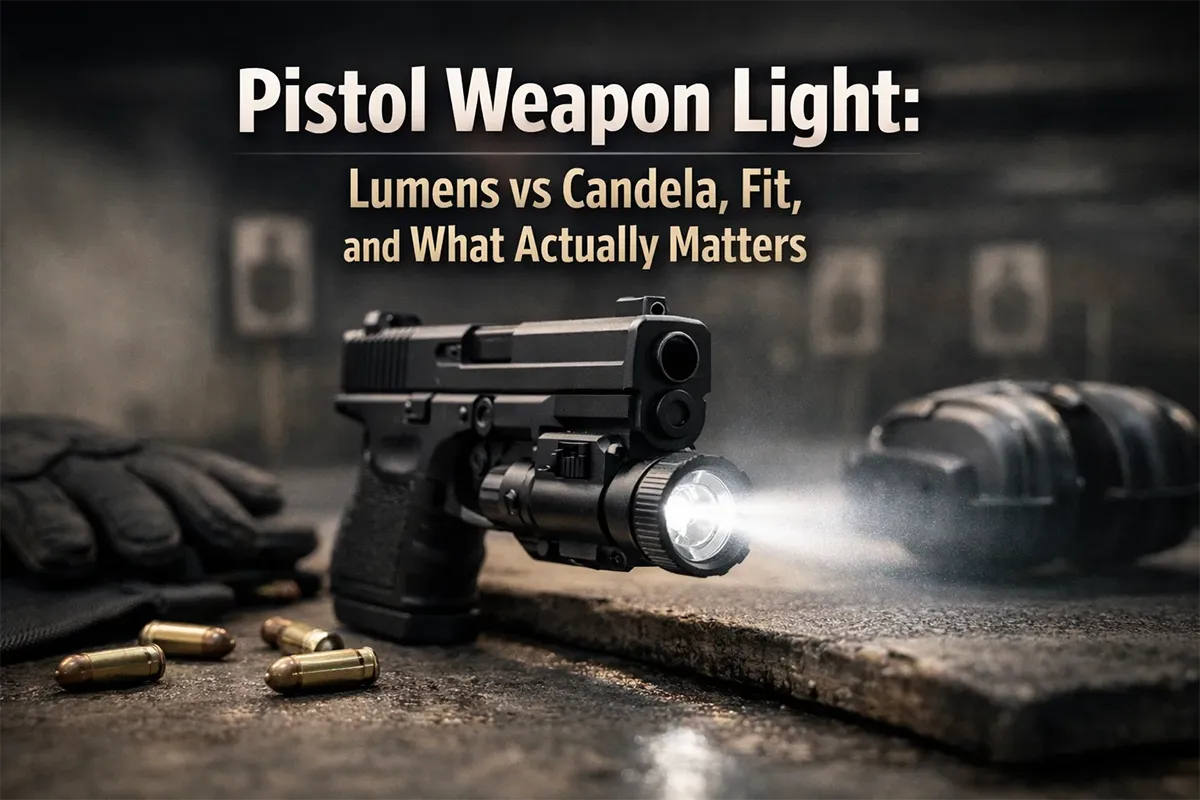
TL;DR: If you’re shopping a pistol weapon light in 2026, your best pick usually comes down to (1) how far you need positive ID (PID) indoors vs outdoors, (2) holster compatibility, and (3) whether the light actually fits your handgun’s rail and trigger-guard geometry. Lumens are “how much total light,” candela is “how intense the hotspot throws,” and the right balance depends on your real use—not the biggest number on the box.
This deep dive will help you decide what output you need, how to avoid common fitment/holster mistakes, and how to compare full-size vs compact lights on popular carry and duty pistols—without overbuying (or underbuying and regretting it).
The 2026 Trend: Pistol Weapon Light Specs Are Easier—Fit and Holsters Aren’t
In 2026, the “spec conversation” around pistol lights is more mature than it was a few years ago. Most serious options are durable enough for regular training, bright enough for indoor PID, and designed around common handgun rails. The bigger friction points are now practical: will it mount correctly on your frame, will your holster support it, and do the switches work for your grip?
That’s why a pistol light purchase is really a system decision: handgun + light + holster + (sometimes) optic + your preferred carry position. If one piece doesn’t play nicely, the whole setup feels compromised—like buying great tires for a car that doesn’t have wheels yet.
Lumens vs Candela: The Only Explanation You Actually Need
Lumens measure total light output. More lumens generally means a brighter “wall of light” up close. Candela measures beam intensity at the hotspot. More candela generally means more “throw” and a tighter, more piercing center beam at distance.
Here’s the practical way to think about it:
- Indoor/home distances (across a room or down a hallway): You don’t need extreme throw. You need enough light to identify what you’re looking at, manage shadows, and avoid getting blinded by splashback off white walls.
- Outdoor/property distances (yard, driveway, barn, trailhead): Candela starts to matter more. A hotter center beam helps you see and identify at longer distances.
- Smoke, fog, dust, rain, reflective signs: Very “hot” beams can create glare. This is where beam pattern matters as much as raw output.
A common mistake is chasing “maximum everything.” If you’re mostly indoors, a super tight, ultra-high-candela beam can feel harsher than a balanced beam. If you’re mostly outdoors, a wide flood can feel like it runs out of steam too early. The right answer is the beam that matches your most likely environment.
Full-Size vs Compact Lights: What You Gain (and Give Up)
Most buyers end up choosing between a full-size duty light and a compact carry light. The names vary, but the tradeoffs are consistent.
- Full-size lights: Typically longer bodies, larger reflectors/lenses, and more output options. They tend to offer better reach and longer runtime, and they’re commonly supported by duty holsters. Downside: bulk and comfort for concealed carry.
- Compact lights: Designed to sit closer to flush on shorter slides and conceal better. Downside: less runtime, often less throw, and sometimes more finicky fitment on unusual rails.
Rule of thumb: if this is a home-defense or duty-style setup, full-size lights make life easier. If this is a daily concealed carry pistol, compact lights are usually the better “you’ll actually carry it” move—assuming the switch ergonomics work for you.
Quick Comparison Table: Common Pistol Light “Types”
| Category | Best For | Typical Traits | Tradeoffs |
|---|---|---|---|
| Full-size duty | Home defense, OWB, range training | More throw options, strong holster support | Bulkier for concealed carry |
| Compact carry | IWB carry on compact/micro pistols | Shorter length, lighter weight | Less runtime; beam varies widely |
| “High-candela” throwers | Outdoor ID, longer lanes | Tight hotspot, strong reach | Can be harsh indoors on bright walls |
| Micro/subcompact specific | Micro-compact carry guns | Rail-specific fit, small footprint | Holster fit can be brand/model picky |
Fitment: Rails, Keys, and Why “Universal” Isn’t Universal
Most pistol lights attach to a handgun’s accessory rail, but “Picatinny-style” doesn’t always mean identical geometry. Many lights use interchangeable rail keys (small inserts) to match different slot spacing or rail shapes. If the key is wrong, the light may:
- sit too far forward/back (hurting switch reach),
- wiggle under recoil,
- fail to lock securely, or
- interfere with the trigger guard.
This is especially common when mixing lights with compact frames or “almost-Pic” proprietary rails. Before you buy, treat fitment like a checklist item—not a hope-and-pray item.
If you’re researching common carry platforms, start by browsing semi-auto pistols on GunGenius, then narrow by your exact make/model and confirm whether your frame uses a true 1913 slot or a proprietary rail.
Switch Ergonomics: The “Spec Sheet” Doesn’t Tell You This Part
Two lights can have similar output numbers and feel completely different in use because of the switches. What matters:
- Can you activate momentary light without shifting your grip? If you have to “hunt” for the switch, you’ll default to bad habits.
- Do you prefer down/rocker toggles or rear paddles? Some people run one style far more cleanly under stress.
- Left-handed or ambi use: True ambidextrous controls are a big deal if the gun might be used by more than one person.
- Strobe: Some users want it; many don’t. Make sure you can disable it or avoid it if that’s your preference.
One tiny (but real) reality: if the switches annoy you, you’ll practice less. And “the best light” doesn’t matter if it lives in a drawer.
Holster Compatibility: The Most Expensive Surprise
Holsters are commonly molded for a specific light model, not just the gun. That means switching lights later can force you into a new holster—even if the light is only slightly different in shape.
To avoid the classic pain loop (buy light → realize holster doesn’t fit → buy holster → realize you don’t like the switch), decide your carry role first:
- IWB concealed carry: Compact light + a holster designed specifically for that light.
- OWB/home-defense: Full-size light + a proven holster pattern with wide support.
- Multi-role “one pistol does it all”: Pick the light with the holster ecosystem you actually want to live in.
How Output Choices Map to Real Handguns
Instead of listing “best lights” (which ages fast), here’s how to match light categories to common handgun roles. If you’re building around popular platforms like Glock or SIG, it helps to browse those manufacturer pages while you research compatibility and common configurations.
- Compact/mid-size duty-capable pistols: Think “service pistol” size. These often support full-size duty lights well. Browse common options under GLOCK or SIG Sauer.
- Micro-compact carry pistols: These benefit most from compact/subcompact-specific lights to keep length down and reduce printing.
- Home-defense pistol kept staged: Full-size lights are easier to grip, easier to activate, and easier to find holsters for if you ever go OWB.
For example, a Glock 19 tends to be forgiving with “duty-size” light fitment and holster options, while ultra-compact pistols can be more rail-geometry sensitive. (If that Glock 19 page doesn’t exist yet, see the editor note at the bottom.)
Battery Type and Runtime: Don’t Ignore the Boring Part
Most pistol lights run either disposable lithium cells (often CR123-style) or rechargeable cells on certain high-output platforms. The right answer is the one you’ll maintain reliably.
- Disposable lithium: Easy to store, predictable shelf life, simple logistics. Great for “set it and check it” home-defense setups.
- Rechargeable: Can be cost-effective and convenient if you train a lot, but it adds a routine. If you’re not consistent, you can end up with a dead light at the wrong time.
Also consider how you confirm status. Some lights give clearer low-battery signals than others. If your routine is “swap batteries every X months,” choose a schedule you’ll actually follow.
Research Checklist: Buy the Light Like a System Builder
- Define your primary environment: mostly indoors, mostly outdoors, or mixed.
- Pick beam style: balanced flood (general purpose) vs higher candela (more reach).
- Confirm rail fit: does your frame use 1913/Pic slot spacing or a proprietary rail?
- Confirm switch reach: can you activate momentary without grip shifts?
- Choose holster path: select a light that has holster support for your carry method (IWB/OWB).
- Decide on batteries: disposable simplicity vs rechargeable routine.
- Set a maintenance habit: monthly function check; scheduled battery swaps.
If you do those seven steps, you’ll avoid 90% of the “I bought a great light that doesn’t work for me” outcomes. The remaining 10% is just personal preference—because hands are different, and unfortunately manufacturers don’t ship a free set of new thumbs with every purchase.
What to Watch Next
Expect more lights that prioritize reliability in bad conditions (rain, lint, carbon) and more carry-oriented models designed specifically around micro-compact rails. Also expect holster ecosystems to keep driving buying decisions—because the most “popular” light is often the one you can actually find holsters for across multiple carry styles.
To keep your research organized, start with your host pistol category and narrow from there: Semi Auto Pistols.