
Over Under Shotguns for Sporting Clays in 2025: A Practical Deep Dive on Fit, Feel, and Features
December 29, 2025
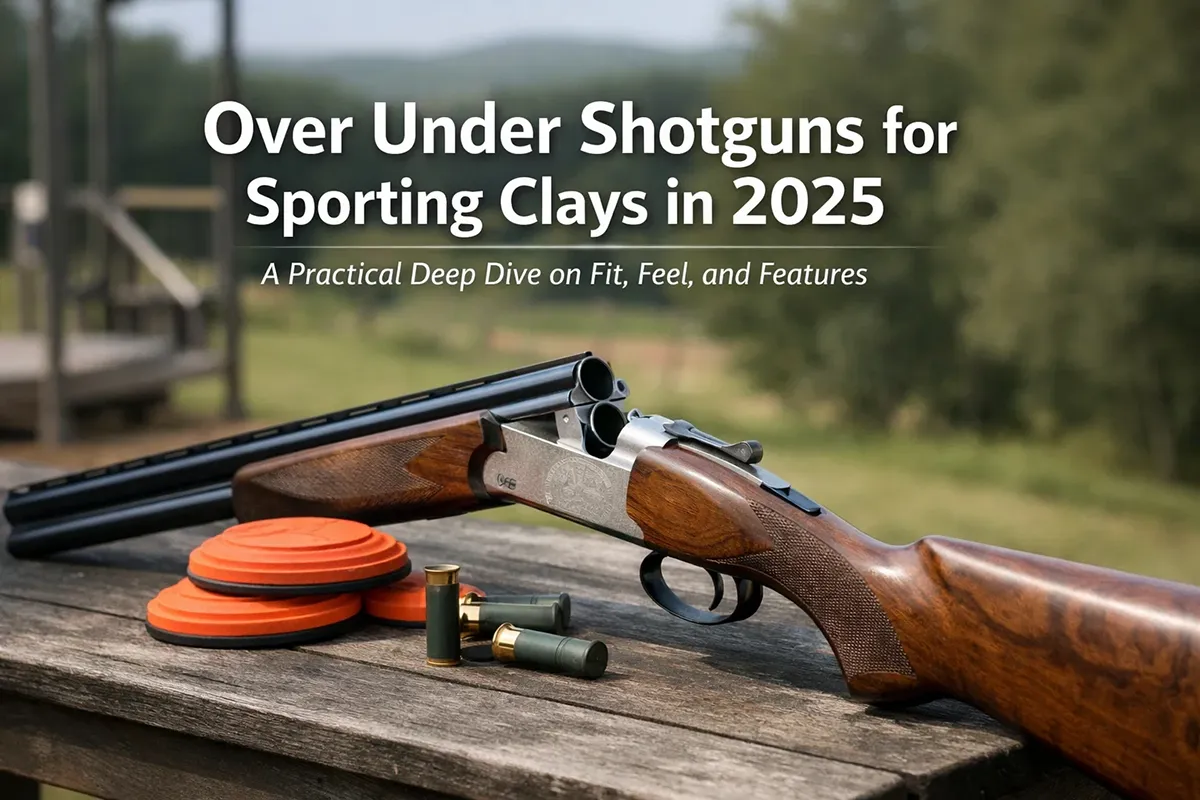
If you’re shopping Over Under Shotguns for sporting clays in 2025, you’re in the right lane: O/U guns dominate clay games for a reason. They’re simple to run, easy to verify as “safe/open,” and the two-barrel setup gives you real flexibility—two chokes, two patterns, and two slightly different points of impact if you want them. The tricky part isn’t finding an O/U. It’s finding your O/U.
This guide focuses on what matters most for clays—fit, balance, barrel length, choke strategy, and the features that actually change your scores. For browsing, start with the Over Under Shotguns category, then compare options against the full Shotguns category.
Why Over Under Shotguns Keep Winning in Sporting Clays
- Two chokes on tap: Run a more open choke for closer presentations and a tighter choke for longer crossers—without swapping anything mid-station.
- Consistent handling: A well-balanced O/U swings smoothly and rewards good fundamentals.
- Simple operation: Break it open, load two, close, shoot. It’s hard to beat for clarity on the line.
- Brass management is easy: You’re not chasing hulls all day.
Sporting clays can expose “almost fits” faster than most other shotgun sports. If an O/U doesn’t mount naturally and put the pattern where your eyes are looking, you’ll feel like you’re arguing with it—like trying to dance with someone who insists on leading from three feet away.
Fit First: The Fastest Way to Make (or Break) an O/U Choice
In clays, fit is performance. The goal is a repeatable mount where your dominant eye becomes the rear sight—without you “hunting” for the bead. Three fit checkpoints matter most:
- Length of pull (LOP): Too long slows your mount and can drive the gun into your shoulder awkwardly; too short can feel cramped and whippy.
- Comb height: Determines how high your eye sits relative to the rib. Too low and you’ll tend to shoot under; too high and you may shoot over.
- Cast: Subtle left/right offset that helps center your eye down the rib. The “right” cast makes the gun feel like it’s looking where you look.
If you’re between sizes or unsure, prioritize an O/U that offers adjustability (adjustable comb, shims, or easily-tuned stock dimensions). You can’t “practice” your way out of a gun that doesn’t line up with your face.
Barrel Length and Balance: The Clays Sweet Spot
For sporting clays, longer barrels generally make it easier to keep the swing moving smoothly, especially on long crossers and chandelles. But “longer” isn’t automatically “better.” The real target is balance—how the gun starts, stops, and tracks.
- Longer barrels: Often feel steadier and help avoid stopping the gun on the shot.
- Shorter barrels: Can be faster to start and easier in tight stands, but may feel more lively (sometimes too lively) for new clays shooters.
- Balance point: A neutral-to-slightly-forward balance tends to be forgiving on clays because it encourages follow-through.
Takeaway: don’t shop by barrel length alone. Two shotguns with the same barrel length can feel totally different depending on rib weight, forend shape, and stock design.
Chokes, Pattern, and the “Two-Barrel Advantage”
Sporting clays throws everything from close, fast rabbits to long, floating crossers. With an O/U, you can set two chokes and “solve” a station with intention:
- First barrel: Often set more open for the closer/faster target.
- Second barrel: Often set a bit tighter for the longer or more distant presentation.
The important part isn’t memorizing a universal choke chart—it’s learning what your shells do in your barrels. Two guns labeled the same can pattern differently. A quick pattern check removes guesswork and saves you from chasing “magic” chokes that aren’t the real issue.
Trigger Types, Ejectors, and Other Features That Actually Matter
Here are the O/U features that tend to show up on scorecards (directly or indirectly):
- Trigger feel: A clean, predictable break helps you stay focused on the target rather than the gun.
- Barrel selector: Useful if you want to choose which choke fires first on a given presentation.
- Ejectors vs. extractors: Ejectors kick hulls out; extractors lift them for easy removal. Ejectors are convenient for speed; extractors can be calmer (and friendlier for reloaders).
- Rib and bead setup: A rib you can “read” easily helps consistent head position. Keep it simple—your eyes should be on the bird, not the hardware.
- Recoil management: Fit does more than pads. A gun that fits spreads recoil into your body correctly and helps you shoot longer without fatigue.
Quick Spec Checklist for Comparing Over Under Shotguns
Use this as a shopping checklist when you’re bouncing between listings. You can also use the Compare tool to line up key attributes quickly while you browse.
| What to compare | Why it matters for clays | What to look for |
| Gauge | Recoil, ammo cost/availability, handling | 12 gauge for versatility; 20 gauge for lighter recoil/weight (model-dependent) |
| Barrel length | Swing smoothness and follow-through | Choose the length that feels steady without feeling slow |
| Weight & balance | Fatigue vs. stability | Neutral-to-slight forward balance is often forgiving |
| Stock fit (LOP/comb/cast) | Point of impact and consistency | Natural mount with your eye centered down the rib |
| Choke system | Station flexibility | Common, available tubes and repeatable patterns |
| Ejectors/extractors | Speed and hull handling | Pick what matches your pace and preference |
| Adjustability | Future-proofing your fit | Adjustable comb or fit solutions if you’re between sizes |
Brand Browsing: A Smart Way to Narrow the Field
If you don’t want to drown in options, pick a few brands that consistently offer clays-friendly O/U configurations and start there. Browse brand pages, then filter down to O/U shotguns and compare similar trims.
- Beretta (a staple in clays circles, with lots of competition-adjacent options)
- Browning (known for popular O/U designs and broad model variety)
- CZ-USA (often strong feature sets across different price tiers)
- Stoeger (common entry point for new shooters exploring O/U format)
Then sanity-check your finalists by role: are you building a “one-gun does most clays” setup, or a dedicated sporting clays gun you’ll shoot weekly? The more you shoot, the more you’ll appreciate fit adjustability and a smooth, consistent swing.
Common Shopping Mistakes (and How to Avoid Them)
- Buying on looks alone: Gorgeous wood doesn’t guarantee a good mount. Fit beats finish.
- Ignoring balance: If it feels whippy or nose-heavy in the store, it’ll feel twice as obvious by station 8.
- Over-optimizing chokes early: If you’re missing, it’s usually fit, timing, or target read—not a choke conspiracy.
- Skipping adjustability when you’re unsure: If you’re new, your mount will evolve. A little adjustability can save you from a full replacement later.
Bottom line: the best sporting clays O/U is the one that mounts naturally, swings smoothly, and lets you focus on targets—not troubleshooting your posture.