
Mossberg Maverick SA Semi-Auto Shotgun: A Practical 2026 Field Gun Deep Dive
March 10, 2026
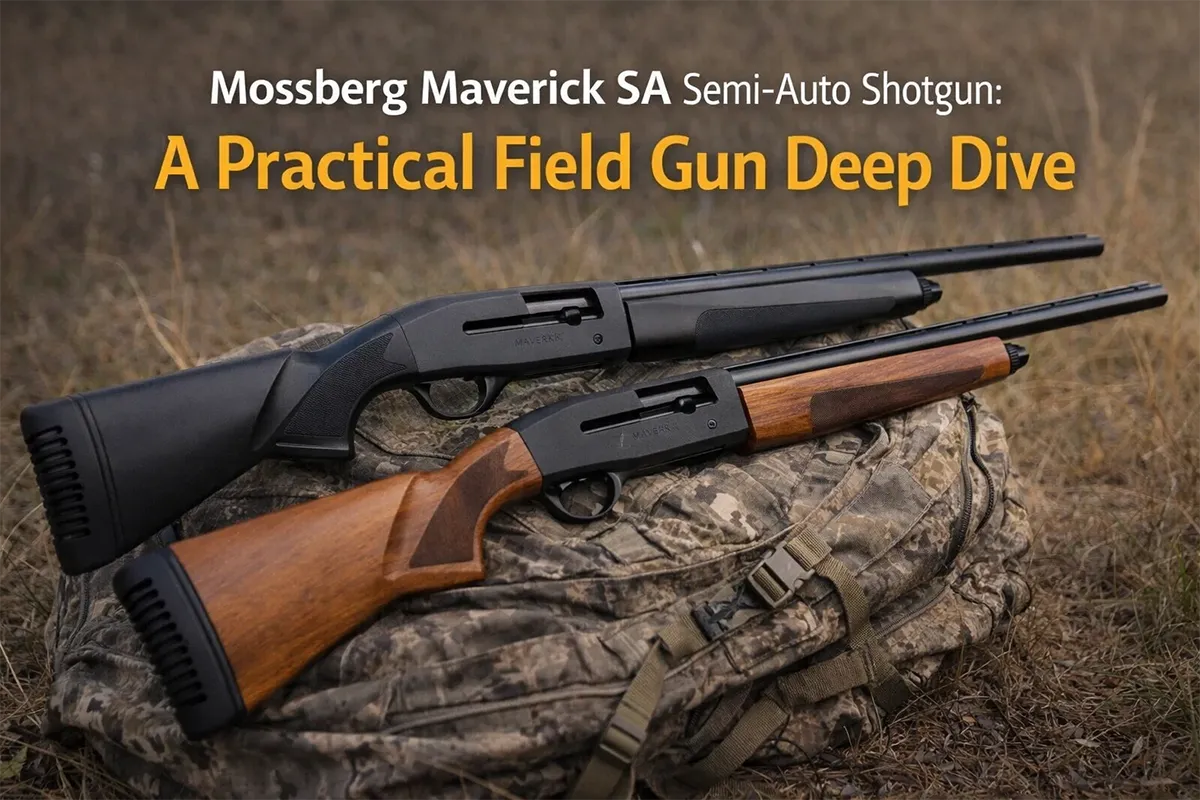
TL;DR: The Mossberg Maverick SA Semi-Auto Shotgun is positioned as a no-nonsense, multi-season semi-auto meant to cover common roles without boutique pricing. If you want one shotgun to research for birds, clays practice, and general utility, this is the type of release that’s worth a closer look—especially if reliability and simple controls are your top priorities.
“Semi-auto” (semi-automatic) means the shotgun uses energy from firing to cycle the action and load the next shell. The practical benefit is smoother follow-up shots and often less perceived recoil compared to some pump-gun setups, depending on the operating system and load.
In early 2026, Mossberg introduced the Maverick SA line with the idea of a working shotgun: something you can take from dove to duck to informal clays without feeling like you bought the “wrong” tool. The Maverick name is already associated with value-minded shotguns, so the interesting question is whether the SA line hits that same sweet spot in a semi-auto format.
Mossberg Maverick SA Semi-Auto Shotgun: Key Specs (What to Confirm by SKU)
| Category | Semi-auto shotgun |
| Compatibility | Varies by model (field/clays roles) |
| Materials | Varies by SKU |
| Weight | Varies by SKU |
| Dimensions | Varies by SKU |
| Features | Multi-season positioning; chambering for 2.75″ and 3″ shells (confirm per SKU) |
| MSRP | Varies by SKU |
With new shotgun lines, the “gotcha” is often that the family name covers multiple trims. Your job as the researcher is to confirm the exact chambering, barrel length, choke system, and included accessories for the SKU you’re considering.
What’s New and Why It Matters in 2026
The 2026 context matters because many buyers are trying to simplify: one shotgun that can do most normal things well. The Maverick SA pitch is essentially “workhorse semi-auto,” which typically means:
- Broad load compatibility: A field-focused semi-auto that runs common bird loads reliably is the baseline expectation.
- Practical capacity and controls: You’re not buying a competition specialist—you’re buying something intuitive to load, unload, and carry.
- Value positioning: The point is to compete on “enough features” rather than luxury finishing.
This is also where expectations should stay realistic. A value-minded semi-auto that does 90% of what most people need can be a smarter buy than a premium gun that makes you afraid to scratch it.
Use Cases: Where the Maverick SA Concept Makes Sense
- Upland birds and dove: You want a shotgun that points naturally and cycles reliably with commonly available loads.
- Duck (with appropriate setup): Confirm chambering and corrosion-resistant features for wet environments, and ensure your choke and load choices align with your local rules.
- Casual clays: A soft-shooting semi-auto can make long practice sessions more enjoyable, especially for newer shooters.
- General utility: For property use, pest control (where legal), and “one shotgun household” logic, simple reliability is the win.
What to Compare Before You Decide
Don’t compare the Maverick SA to every semi-auto ever made. Compare it to the models people actually cross-shop when they want a dependable shotgun without chasing prestige.
- Mossberg vs. Mossberg: If you already like Mossberg ergonomics, compare the Maverick SA against other Mossberg semi-auto options to see what you gain or give up.
- Value semi-auto vs. pump: A pump gun can still be the best “do everything” choice for some owners. If your budget is tight, compare to a solid pump and decide if semi-auto cycling is worth it for your use.
- Choke system and barrel options: If you plan to shoot multiple sports or hunt multiple birds, barrel length and choke options can matter more than brand.
Start broad with the category: Semi-auto Shotguns on GunGenius. Then drill into the brand family: Mossberg on GunGenius.
Practical Fit and Handling: The “Try Before You Buy” Factors
Shotguns are brutally honest about fit. Two people can shoot the same model and have completely different experiences. Here’s what to prioritize in your research (and in-store handling, if possible):
- Length of pull: If it’s too long, you’ll fight it in heavy clothing; too short, and it can feel cramped.
- Balance: A front-heavy gun can be steady on targets but tiring to carry; a lighter front end can feel quick but “whippy.”
- Safety and controls: Make sure you can manipulate them naturally, especially with gloves.
- Recoil feel: Semi-autos can soften recoil, but stock design and weight still matter.
Research Checklist: Confirm These Before You Commit
- Exact chambering (2.75″ vs 3″) for the specific SKU
- Barrel length and intended role (field vs clays leaning)
- Choke compatibility and what chokes are included
- Sight setup and rib style (if applicable)
- Parts and service support in your area