
Mossberg 990 SPX Magpul: Buyer Fit and Model Checks
August 13, 2026
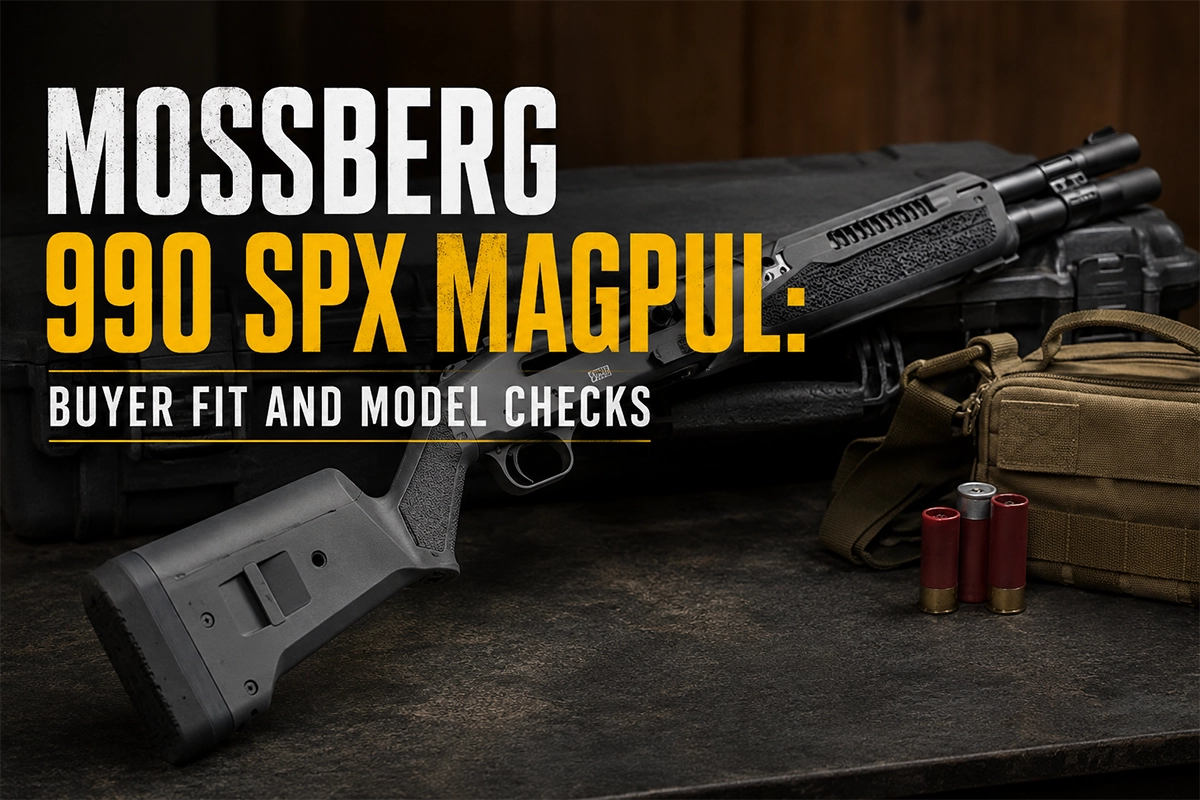
The Mossberg 990 SPX Magpul is a gas-operated 12-gauge semi-auto built around practical controls, an optic-ready receiver, and an adjustable Magpul SGA stock. The main decision is not simply whether the platform looks appealing. Buyers need to separate the 18.5-inch standard shotgun from the regulated 14.75-inch version, then compare capacity, fit, and transfer requirements before choosing a listing.
Interest has increased as both versions have become more visible at dealers in summer 2026. That makes careful identification important. Product photos can look nearly identical, while the barrel length and legal classification create very different buying processes. This guide explains the confirmed specifications, fit factors, and questions worth asking.
Mossberg 990 SPX Magpul at a Glance
Mossberg offers the stocked 990 SPX Magpul with either an 18.5-inch barrel or a 14.75-inch barrel. Both use a 3-inch chamber, a gas system contained inside the forend, an Accu-Choke barrel, and controls sized for quick access. The shorter model is an NFA/Class 3 firearm. It requires the applicable federal transfer process and may face additional state or local restrictions.
| Category | Compatibility | Materials | Weight | Dimensions | Features | MSRP |
|---|---|---|---|---|---|---|
| 18.5-inch shotgun | 12 gauge, 2.75- and 3-inch shells | Matte-blue metal, synthetic forend and stock | About 7.5 lbs. | 18.5-inch barrel; 39.5-inch OAL | 7+1 with 2.75-inch shells, optic cut, M-LOK, Accu-Choke | $1,259 |
| 14.75-inch NFA/Class 3 | 12 gauge, 2.75- and 3-inch shells | Matte-blue metal, synthetic forend and stock | About 7.25 lbs. | 14.75-inch barrel; 35.75-inch OAL | 5+1 with 2.75-inch shells, optic cut, M-LOK, Accu-Choke | $1,259 |
Specifications above reflect Mossberg’s published configurations and can change. Confirm the item number and current factory listing before purchase. Magazine capacity also depends on shell length. A shell marked 2.75 inches is measured after firing, so actual loaded length can vary by brand and load.
What Changes From the 940 Platform?
The 990 is not merely a 940 with different furniture. Its gas operating components are housed within the forend, and the platform uses coated internal parts intended to resist fouling and corrosion. Mossberg identifies nickel-boron or specialized finishes on the gas piston, magazine tube, hammer, and sear. That design still needs normal inspection and cleaning. No finish makes a gas-operated shotgun maintenance-free.
The loading area is designed around an enlarged, beveled port, a longer elevator intended to reduce pinching, and an orange follower that is easy to see. The charging handle and paddle-style bolt release are also enlarged. These details matter more than cosmetic differences because they affect loading, unloading, and status checks.
Readers comparing other semi-auto shotguns should avoid assuming that 940 accessories or internal parts automatically fit the 990. Treat cross-model compatibility as unconfirmed unless Mossberg identifies the exact part for both platforms.
How the Magpul Stock and SPX Forend Affect Fit
The Magpul SGA stock is a major reason to choose this configuration. Spacers allow the length of pull, the distance from the trigger to the rear of the stock, to be adjusted for different shooters or clothing. A shorter setting can help a smaller shooter keep the shotgun close without reaching for the controls. A longer setting can improve comfort for someone with longer arms.
Stock fit should be evaluated with the shotgun unloaded and pointed in a safe direction. The shooter should be able to mount it consistently, reach the tang safety, and operate the trigger without twisting the wrist. The comb should also place the eye naturally behind the sight or optic. Adding an optic can change the preferred cheek height.
The SPX forend includes M-LOK slots and quick-detach sling cups. Those attachment points support a practical light or sling setup without requiring a separate barrel clamp. Accessories add weight toward the front, however. A simple configuration is often easier to balance and test than a fully loaded handguard.
Optic, Sight, and Choke Considerations
The receiver is cut for direct mounting of compatible micro red dots. Direct mounting can keep the optic low enough to work with the winged fiber-optic front sight. Confirm the optic footprint, screw length, and torque specification before installation. A screw that is too long can cause a problem even when the footprint appears correct.
The included cylinder-bore Accu-Choke suits close-range use with many loads, but patterning remains essential. Patterning means firing the selected shell at a paper target to see where the pellets strike and how widely they spread. Different buckshot, birdshot, and slug loads can behave very differently from the same barrel.
Choose the load by verified function and target pattern, not by the label on the box alone.
Use only ammunition and choke combinations permitted by the current owner manual. If slugs are part of the planned use, confirm the slug type and choke guidance rather than relying on general advice for other shotguns.
18.5-Inch or 14.75-Inch: Which Fits?
The 18.5-inch version is the straightforward research choice for most buyers. It provides the higher listed capacity, avoids the federal short-barreled-shotgun transfer process, and is easier to compare with ordinary stocked shotguns. Its extra four inches of barrel length are noticeable, but overall handling also depends on stock setting, mounted accessories, and the shooter’s technique.
The 14.75-inch version is for a buyer who specifically values the shorter package and accepts the added process. With a shoulder stock and a barrel under 18 inches, it is classified federally as a short-barreled shotgun. Do not treat the tax, approval, possession, transport, or state-law questions as a checkout detail. Review the current requirements with the transferring dealer and appropriate authorities before placing an order.
Do not assume that changing grips or stocks changes the classification in a simple or beneficial way. Configuration history and dimensions can matter. This article is product research, not legal advice.
Mossberg 990 SPX Magpul Buyer Checklist
- Verify the item number. Confirm whether the listing is the 18.5-inch standard shotgun or 14.75-inch NFA/Class 3 model.
- Check the included parts. Ask whether the box includes stock spacers, choke tools, manual, lock, and the advertised choke.
- Confirm condition. On a used example, inspect the loading port, elevator, magazine tube, optic cut, muzzle, and stock hardware.
- Test personal fit. Evaluate length of pull, safety reach, cheek position, and the balance with planned accessories.
- Plan ammunition testing. Budget for a function test and patterning session with the actual loads under consideration.
- Read the warranty terms. Confirm whether coverage and service procedures differ for a used firearm.
Current factory specifications are available from Mossberg’s 990 SPX Magpul announcement. Use that page and the current manual to verify details rather than relying only on dealer copy.
Who Should Research This Shotgun?
The 990 SPX Magpul makes the most sense for someone who wants a modern gas-operated 12 gauge with adjustable stock fit, direct optic mounting, and integrated accessory points. It also suits a buyer who prefers Mossberg’s tang safety and wants controls designed for use from either shoulder.
It may be a poor fit for someone seeking the lightest field shotgun, a traditional sporting stock, or broad parts interchangeability with an older model. The NFA version is also a specialized choice. The standard 18.5-inch model preserves most of the platform’s functional features with a simpler acquisition path and two additional rounds of listed capacity.
Browse the Mossberg catalog to compare the 990 with other semi-auto and pump-action options. Focus on fit, verified configuration, and intended use. Those checks will tell you more than the shortest specification sheet ever could.