
Lever Action Rifle in 2026: How to Choose the Right One for Hunting, Range Use, and Long-Term Value
March 31, 2026
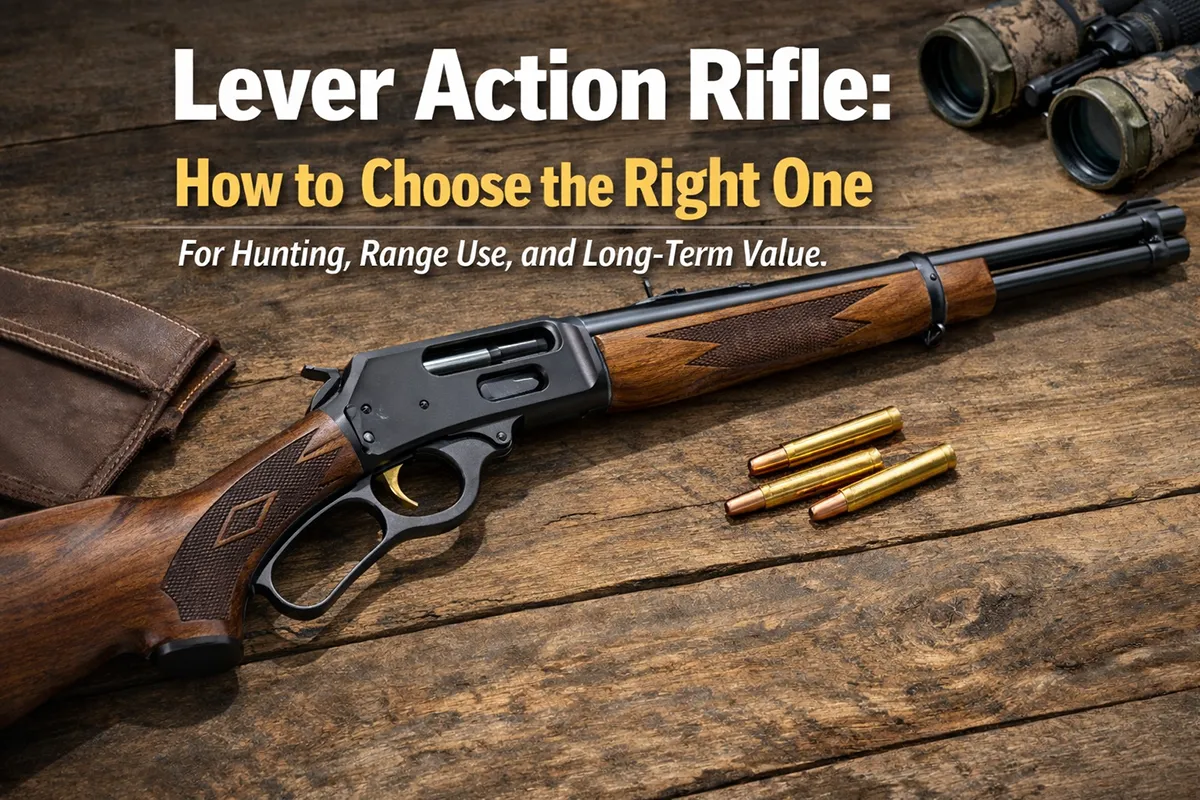
If you are researching a lever action rifle in 2026, you are probably trying to answer a simple question with a surprisingly long list of tradeoffs: do you want a handy hunting rifle, a nostalgic range gun, a practical suppressor-ready host, or something that can do a little of everything? On March 31, 2026, the lever-action category still stands out because it blends fast handling, slim carry dimensions, and classic ergonomics in a market that often feels crowded with feature-heavy alternatives. This article breaks down what matters most, who each style fits best, and how to narrow the field without buying on vibes alone. Cowboy charm is fun, but fit and purpose still pay the bills.
For most buyers, the smartest path is to match the rifle to the job first, then choose caliber, barrel length, loading style, and furniture. A lever gun that feels perfect in a deer stand may be less ideal for casual plinking, and a range-friendly .357 Magnum carbine is not the same tool as a heavier .45-70 built for larger game. The good news is that the category has never been easier to sort if you focus on a few practical filters.
Why a Lever Action Rifle Still Makes Sense in 2026
The appeal starts with handling. Lever actions tend to carry flatter than many scoped bolt guns and feel quicker to shoulder than many heavier semi-auto rifles. They also balance well around the receiver, which matters when you are hiking, climbing into a blind, or moving through thicker cover. For hunters, that often translates to a rifle that is easier to live with over a full day, not just easier to admire at the counter.
There is also more variety in the category than many first-time researchers expect. You can stay traditional with walnut and blued steel, go weather-resistant with stainless and laminate, or look at newer tactical-leaning lever rifles with threaded muzzles, rail space, and synthetic furniture. That means the category now covers everything from nostalgia-driven range use to practical hunting setups and modern backcountry roles.
Just as important, lever guns reward clear priorities. If you know your typical distance, game size, recoil tolerance, and preference for classic versus updated features, the decision gets easier quickly. You can browse the broader category here: Lever Action Rifles.
Start With the Right Caliber
Caliber is the biggest fork in the road. Pistol-caliber lever guns such as .357 Magnum, .44 Magnum, and .45 Colt are often easier on recoil, cheaper to shoot than many centerfire rifle rounds, and a natural fit for range use, informal target work, and shorter-range field roles. They also tend to pair nicely with compact optics or iron sights because their effective distance usually stays moderate.
Traditional rifle cartridges such as .30-30 Winchester remain the all-around answer for many deer hunters. They offer enough reach and field practicality for common whitetail distances without turning the rifle into a heavy specialist tool. If your use case is “one lever gun for real hunting, not just recreation,” .30-30 is still hard to dismiss.
Then there are the heavy hitters, most notably .45-70 Government. These rifles are powerful, memorable to shoot, and useful for larger game or buyers who want a more serious field rifle, but they bring higher recoil and usually higher ammunition cost. They make sense when you genuinely need that level of performance or simply know you want the category’s big-bore experience. They make less sense when your real-world use is mostly range time at moderate distance.
A good research shortcut is this: for mostly range use, start with pistol calibers; for broad deer-hunting use, start with .30-30; for specialized big-bore interest, start with .45-70 and be honest about recoil and cost.
Barrel Length, Weight, and Handling Matter More Than Specs Lists Suggest
Lever guns are often bought on feel, and that is not irrational. A shorter, lighter rifle can be a better hunting companion in woods or brush because it moves quickly and carries easily. A slightly longer barrel may steady the rifle better and squeeze a bit more performance from some loads, but it can also shift the balance forward and feel less lively.
Weight works the same way. Lighter rifles are easier to pack and quicker to mount, while heavier rifles can soften recoil and feel steadier from field positions. That tradeoff shows up clearly when comparing a handy .30-30 carbine to a larger .45-70 with more substantial furniture. Neither is “better” in the abstract. One just fits a different job.
For many buyers, the sweet spot is a compact field rifle that stays easy to carry but does not become whippy. If you plan to add an optic, sling, or suppressor-compatible accessories on a modernized model, remember that those additions can change balance fast.
Loading Style, Optics, and Modern Features
Older-school lever guns often emphasize traditional tube loading and iron-sight use. That still works well, especially for buyers who want a classic experience. Newer models, however, may add side loading gates, removable magazine features on some designs, threaded muzzles, optics rails, or ghost-ring sights. Those upgrades are not gimmicks if they match your use case.
A side loading gate lets many shooters top off the magazine without changing their rhythm. A threaded muzzle matters if you specifically want suppressor compatibility and have already confirmed the legal and practical details for your location. Receiver drilling or factory rail accommodation matters if you know you want a red dot or low-power optic instead of relying only on irons. None of these features are mandatory, but they can sharply improve day-to-day usability for the right buyer.
This is also where traditional and modern buyers tend to split. If you want the classic lever-gun feel, extra rail space may just add weight and visual clutter. If you want a practical field rifle with contemporary flexibility, those same features may be exactly why one model beats another.
Lever Action Rifle Brands and Models Worth Researching
Brand matters in lever guns because the category mixes heritage, design differences, and feature sets more dramatically than many shoppers expect. Three strong starting points are Henry, Marlin, and Winchester.
- Henry: Often a smart entry point for buyers who want broad model variety, strong brand recognition, and configurations that range from traditional hunting rifles to more feature-forward options. A buyer looking for a polished all-around experience should look closely at the Henry Side Gate Lever Action .30-30.
- Marlin: A strong fit for buyers prioritizing rugged field use, especially in larger calibers. The Marlin 1895 SBL is one of the first models many researchers consider when the conversation turns to stainless construction, modern utility, and .45-70 performance.
- Winchester: The historic reference point for many lever-action shoppers and still a natural place to start if your priorities lean classic. The Winchester Model 94 remains one of the clearest examples of the traditional deer-rifle formula.
You can also compare how those brands fit your use case by asking a few basic questions. Do you want blue steel and walnut, or more weather-resistant materials? Are you staying with iron sights, or planning for optics from day one? Are you buying for whitetail season, backcountry carry, range fun, or a mix? That framework usually narrows the field faster than browsing by looks alone.
Quick Comparison Table
| Platform | Lever-action rifle |
| Common calibers | .357 Magnum, .44 Magnum, .30-30 Winchester, .45-70 Government |
| Best for | Hunting, range use, brush carry, classic rifle fans |
| Handling focus | Fast shoulder mount, slim carry profile, quick follow-up shots |
| Feature split | Traditional wood-and-blue guns vs. modern threaded/optic-ready models |
| Street price pattern | Varies by brand, caliber, finish, and feature set |
Research Checklist Before You Choose a Lever Action Rifle in 2026
- Pick the rifle’s main job first: deer hunting, range use, backcountry carry, or general ownership.
- Choose caliber based on distance, recoil tolerance, and ammo cost, not just reputation.
- Decide whether you want a traditional setup or a modern optics-ready, threaded configuration.
- Check barrel length and unloaded weight together, because balance matters more than either number alone.
- Confirm what sighting system you actually plan to use: irons, red dot, or low-power scope.
- Compare real-world carry convenience, not just bench-top appeal.
Bottom Line
The best lever gun is usually the one that matches your real use, not the one with the loudest online fan club. A pistol-caliber model makes a lot of sense for relaxed shooting and shorter-range utility. A .30-30 remains one of the most practical hunting answers in the category. A .45-70 is a more specialized choice that shines when you truly want big-bore capability. Across the board, the category still offers something many rifles do not: a combination of speed, portability, and character that feels useful rather than merely nostalgic.
For research purposes, start broad, narrow by caliber, then compare brand style and feature set. That keeps the process grounded and helps you avoid paying extra for details you do not actually need.