
Left-Handed Bolt-Action Rifles: A 2026 Buyer’s Deep Dive for Southpaws
January 5, 2026
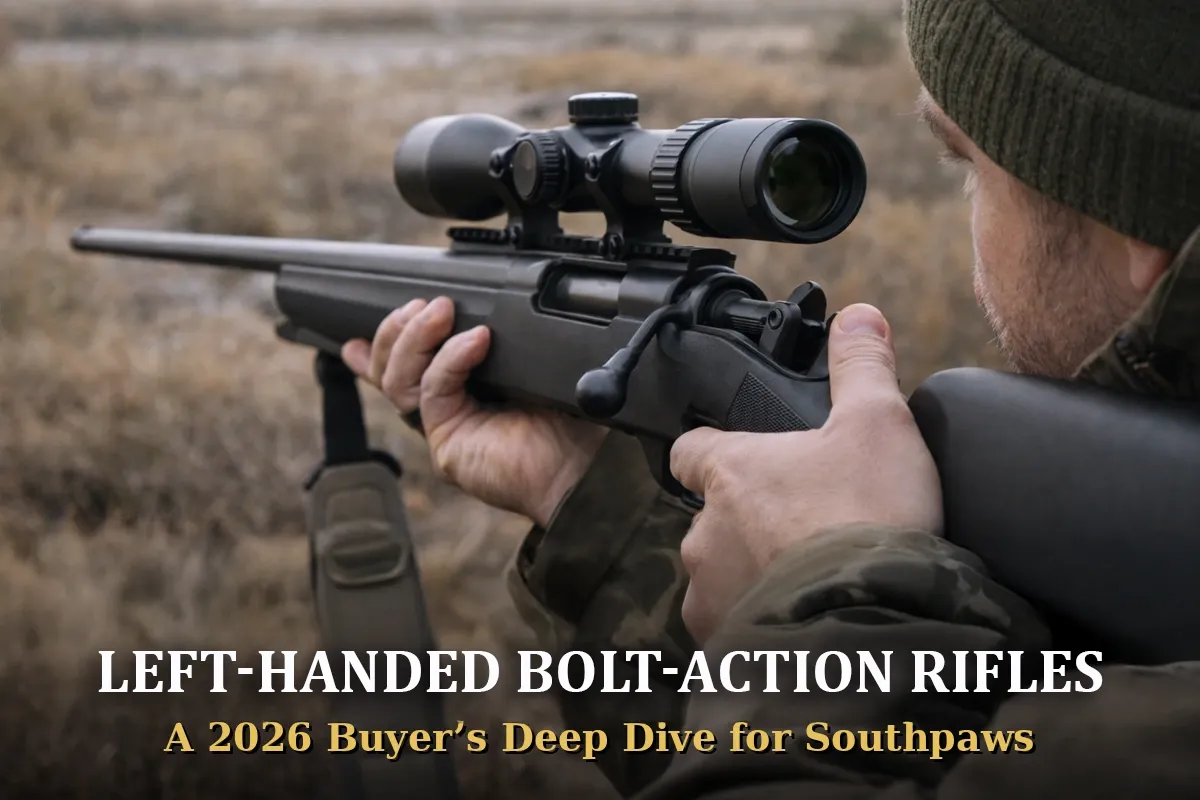
Left-handed bolt-action rifles aren’t “niche” anymore—there are more solid options than ever, but the best choice depends on how you hunt (or shoot), how you mount optics, and whether you prioritize weight, recoil control, or long-term parts support.
As of now, the market for left-handed bolt-action rifles is quietly in a great place: more true left-hand actions, more off-the-shelf optic solutions, and more stock/chassis options that don’t force you into awkward compromises. Southpaws, rejoice—no more running a right-hand bolt like a bad yoga pose.
The Trend: Why Left-Hand Options Keep Getting Better
For a long time, “left-handed rifle” meant one of three things: (1) pay extra and wait, (2) buy a right-hand gun and adapt, or (3) settle for a limited set of calibers and configurations. That’s changing for a few practical reasons:
- More factory SKUs: Brands are broadening left-hand catalogs in popular hunting and precision chamberings, not just “one token model.”
- Optics-first buying: As more shooters plan to run scopes (and rails) from day one, the industry is building rifles that mount glass cleanly—left or right handed.
- Better ergonomics expectations: Shooters now expect adjustable stocks, solid triggers, and consistent magazine systems at more price points.
- Cross-over demand: Hunters want lighter rifles that still shoot well; precision shooters want stable rifles that still carry. Left-hand lines are being pulled along with those trends.
The result: you can now shop left-hand rifles by “mission” instead of shopping by “whatever exists.” That’s a big upgrade—and it changes how you should shortlist options.
What Matters Most in Left-Handed Bolt-Action Rifles
If you’re left-eye/left-shoulder dominant, a true left-hand bolt is about more than comfort. It affects how you feed, clear, and shoot from field positions—especially with gloves, packs, and awkward terrain.
- True left-hand action (bolt + ejection): A left-side bolt handle and left-side ejection are the “full” solution for smooth cycling and safer brass management.
- Safety location and direction: Look for a safety you can sweep without breaking grip. (And verify it’s intuitive under stress or cold hands.)
- Stock geometry for cheek weld: Comb height and cheekpiece shape matter more than most people admit. If your cheek weld is inconsistent, your field accuracy will be too.
- Magazine system: Detachable mags are convenient, but the best system is the one that’s easy to load, secure, and supported long-term. Don’t ignore availability.
- Optics mounting “cleanliness”: Prefer rifles with straightforward rail options and enough clearance for your scope objective and bolt throw.
- Weight vs. shootability: Ultralight rifles carry great and shoot “fine.” Heavier rifles shoot great and carry “fine.” Decide which “fine” you can live with.
- Threaded muzzle and recoil management: Even without getting fancy, the ability to add a brake (or keep a thread protector) gives you options—especially in bigger calibers.
If you want a fast path to candidates, start broad in Bolt-Action Rifles and then narrow into the left-hand-friendly pool via the left-handed rifle tag hub.
Spec Highlights & Standouts to Prioritize
Here are the “high impact” features that tend to matter most for real-world use. Not all of them need to be on the rifle from day one—but the rifle should support them without drama.
- Trigger you can live with: A clean, predictable break beats a “lighter” trigger that feels vague. Adjustable is a plus.
- Rigid bedding/contact: Whether it’s a traditional stock or a chassis, consistency is king. Inconsistent contact equals inconsistent point of impact.
- Practical barrel profile: Pencil barrels carry well but heat quickly. Heavier barrels hold consistency longer but add weight. Pick based on your shot count per outing.
- Weatherproofing: If you hunt wet, cold, or dusty environments, prioritize corrosion resistance and a finish you won’t baby.
- Support ecosystem: The best rifle is the one you can feed with mags, mount with rails/rings, and maintain without a treasure hunt.
Comparisons: Four Left-Hand Bolt Guns Worth a Look
Below are four examples that illustrate different “lanes” within left-handed bolt-action rifles. These aren’t the only good choices—but they’re useful reference points to calibrate what you want.
| Model (examples) | Best for | Why it stands out | Watch-outs |
| Tikka T3x Superlite (Left Hand) | Carry-first hunting | Lightweight focus with a proven hunting-friendly layout | Ultra-light builds can feel sharper in recoil with magnum cartridges |
| Bergara B-14 Timber (Left Hand) | Classic hunting feel, modern performance | Traditional stock vibe with modern accuracy expectations | Wood stocks are great—just verify fit and stability for your climate |
| Savage 110 Tactical (Left Hand) | Range + precision crossover | Precision-minded features and an optics-ready orientation | Heavier setups are excellent shooters, but you’ll feel the weight in the field |
| Ruger M77 Hawkeye Hunter (Left Hand) | Rugged hunting durability | A traditional “go hunt” profile with strong fundamentals | Make sure the stock fit matches your optic height and cheek weld needs |
To expand from here, jump into brand ecosystems and see what else matches your priorities: Tikka, Bergara, Savage, and Ruger.
Tip: If you’re deciding between “light hunting rifle” and “shoots-like-a-dream range rifle,” don’t overthink it—be honest about how often you’ll hike versus how often you’ll shoot multiple strings at the range. Then use the Compare tool to sanity-check the candidates side-by-side.
How to Shortlist Without Getting Lost
The quickest way to a smart shortlist is to define your “must-haves” first, not your dream model name. Start with these five filters and you’ll avoid 80% of the rabbit holes:
- Use case: whitetail woods, western hunting, range/steel, or a do-it-all crossover
- Cartridge: pick based on realistic distance, recoil tolerance, and ammo availability where you live
- Weight target: a number you can carry all day without hating life
- Optic plan: scope size and mount style you’ll actually run
- Budget: include rings/rail and a sling (at minimum) so your “rifle budget” is real
From there, browse broadly in Bolt-Action Rifles, then drill down through left-handed rifle results to find true left-hand options and comparable alternatives.
What to Watch Next in 2026
Going into 2026, a few patterns are worth watching if you’re shopping (or planning an upgrade) on the left-hand side of the aisle:
- More factory “ready” setups: Expect more rifles shipped with rails, better stock adjustability, and practical muzzle setups—especially in hunting/precision crossovers.
- Lightweight without “punishment”: More brands are trying to balance carry weight with recoil management and shootability.
- Better left-hand parity: When a popular right-hand variant launches, watch for left-hand follow-ons that arrive sooner than they used to.
- Optics standardization: As optics become a default assumption, compatibility and mounting solutions should keep improving across the board.
If you want to keep your options wide, start with the category page and build a short list from brand hubs. Then narrow to “the one” using side-by-side comparisons and your real-world priorities—not hype.