
Large-Format Pistols in 2026: What Should You Compare?
May 26, 2026.
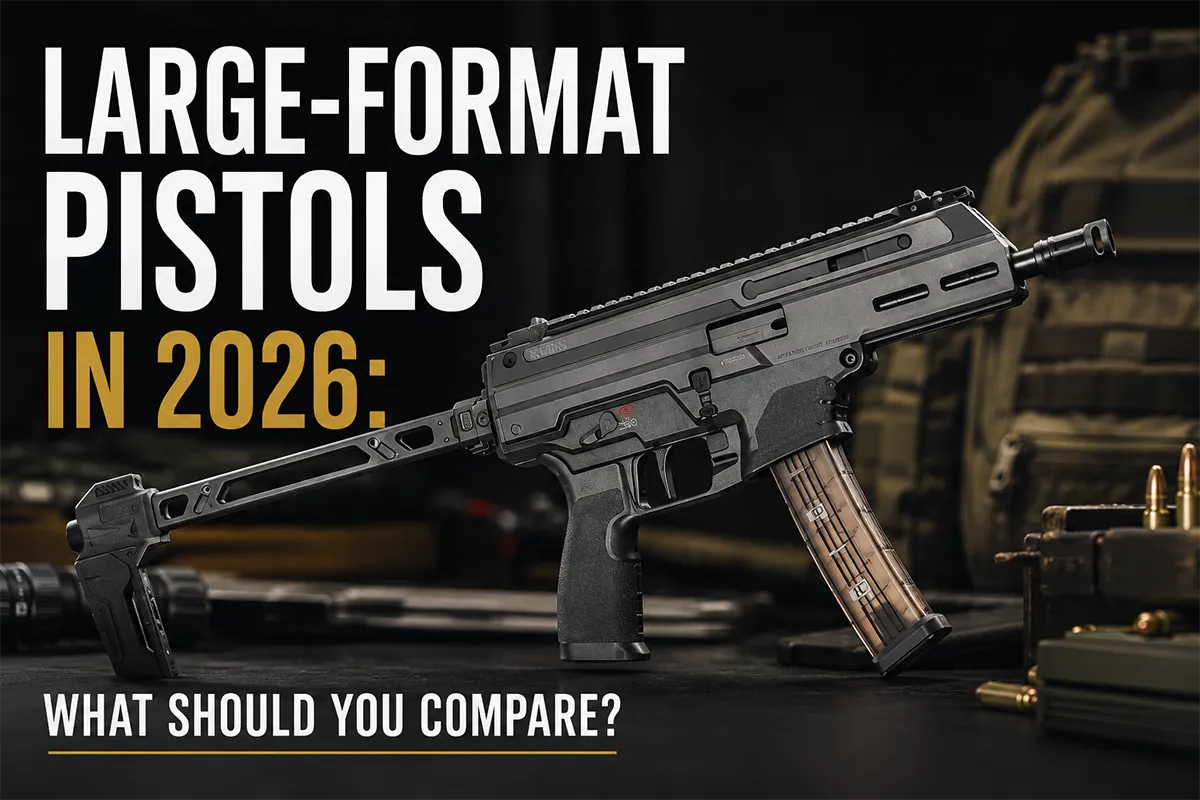
Large-Format Pistols are getting fresh attention in 2026. They solve a real research problem. Many buyers want more control, more optic space, and more magazine capacity than a standard handgun. They may not want a full pistol-caliber carbine.
The category includes 9mm PDW-style pistols, 5.7x28mm designs, rimfire trainers, and compact semi-auto platforms. Each one sits between handgun and carbine use. The best way to compare them is by size, action type, magazine support, brace or end-plate setup, and intended role.
A short model list is useful. A better first question is simpler: does the format solve your storage, range, training, or home-defense research need better than a compact handgun or a true carbine?
How Do Large-Format Pistols Fit Between Handguns and PCCs?
A large-format pistol usually gives you a longer barrel, a longer optic rail, and more contact points than a traditional handgun. It remains a handgun-class firearm in many product listings. In use, it often feels closer to a compact pistol-caliber carbine.
That is why shoppers compare this category against both semi-auto pistols and 9mm PCCs. The tradeoff is bulk. A large-format pistol is easier to stabilize than a micro 9mm. It is not as easy to carry, conceal, or store as a normal defensive handgun.
This format can also bring legal and accessory questions. Braces, stocks, suppressors, and short-barreled rifle rules can change the analysis. Treat this article as product research, not legal advice. Verify current rules before buying or configuring anything.
Which Specs Matter Before Model Names?
Start with caliber. 9mm remains the practical center of the category. Ammunition is common. Magazines are familiar. Recoil is manageable in heavier platforms.
5.7x28mm models appeal to buyers who want high capacity and flat-shooting behavior in a light package. Rimfire versions make sense for training and range use. They solve a different problem than a centerfire PDW-style pistol.
Next, compare the operating system. Direct blowback designs are simple. They often need more bolt mass or spring weight. Roller-delayed systems can feel softer for many shooters because the action slows the bolt before it opens.
That does not make every roller-delayed gun better. It means you should compare reliability, magazine price, parts support, and warranty support along with recoil feel.
| Platform | Action | Caliber | Barrel/Weight | Capacity | OAL | MSRP/Street |
|---|---|---|---|---|---|---|
| KelTec KP50 | Semi-auto | 5.7x28mm | 9.6 inch barrel / 4 pounds unloaded | 50 rounds | 18.6 to 28.3 inches | $1,099 MSRP |
| Springfield Kuna | Roller-delayed | 9mm | 6 inch barrel / about 4 pounds 10 ounces | 30 rounds | 15.5 inch pistol, longer with brace | $999 to $1,149 MSRP |
| Taurus RPC | Roller-delayed | 9mm | 4.5 inch barrel / varies by configuration | 32 rounds | Compact PDW format | $939.99 to $1,098.99 MSRP |
Which 2026 Models Are Worth Researching?
The KelTec KP50 is a useful example. It shows where 5.7x28mm large-format pistols are headed. KelTec moved the KP50 to a bottom-insert, drop-free 50-round magazine system. That change directly addresses a common complaint about the older P50 layout.
KelTec’s KP50 announcement frames the platform as a compact, high-capacity option rather than a conventional carry handgun. That matters for buyers who are comparing capacity, reload method, and storage length before they compare brand preference.
The Springfield Kuna is the 9mm roller-delayed model many buyers will cross-shop first. Its 6-inch barrel, 30-round magazines, ambidextrous controls, and optics rail fit the PDW space. It also shows the main caution in this category. Proprietary magazines and newer platforms need time to prove long-term parts support.
The Taurus RPC is worth watching because it brings another roller-delayed 9mm option into the same price band. It uses a short 4.5-inch barrel and 32-round magazines. That compact size is attractive. It also makes optic height, hand placement, muzzle device choice, and support gear more important to research before buying.
Why Do Magazines and Ammo Come First?
Magazine support can matter more than the logo on the side. Some models use common Glock-pattern magazines. Others use proprietary magazines. Proprietary does not mean bad, but it can mean higher cost, fewer stores, and slower restocks.
Check magazine price before you get focused on barrel length. Check spare availability. Look for restricted-state capacity options. Also note whether the gun ships with enough magazines to start.
Ammunition shapes the ownership experience too. 9mm is usually the easiest choice for high-volume range use. 5.7x28mm can offer capacity and speed in a light system. Its cost and local availability deserve a serious look. .45 ACP and rimfire options can be useful, but they should match a clear purpose.
How Should You Think About Optics and Braces?
Large-Format Pistols benefit from optics more than most small handguns. The top rail is usually longer and more stable. A compact red dot or enclosed emitter can make the platform easier to aim. It should not turn the gun into a heavy accessory project.
Look for rail length, backup sights, charging handle clearance, and whether the optic blocks controls. Braces and rear Picatinny sections are common selling points. They are also where buyers need to slow down.
Do not assume every configuration is legal in your state. Do not assume every accessory fits cleanly. If a model is sold both bare and braced, compare folded length, unfolded length, lockup quality, and storage fit.
What Should You Avoid?
Avoid buying only because a model is new. New releases can be exciting, but early support matters. Replacement magazines, spare parts, holsters, bags, optics mounts, and warranty service all affect long-term value.
Avoid treating every PDW-style pistol as a home-defense answer. Some are excellent range platforms. Others are collection pieces. A few are compact research options for people who already understand the legal and storage issues. Define the role before you define the budget.
Also avoid ignoring total cost. A low entry price can disappear fast. Add magazines, an optic, a mount, a sling, a case, and transfer fees. Then compare that total against a simple PCC or a quality compact handgun. This keeps the purchase grounded.
Research Checklist for Large-Format Pistols.
- Pick the role first: range training, compact storage, collection, or home-defense research.
- Compare caliber cost and availability before chasing a new platform.
- Check magazine type, spare magazine price, and capacity options.
- Review operating system, warranty support, and early owner reports.
- Confirm optic rail length, charging handle clearance, and sight setup.
- Verify current federal, state, and local rules for braces, stocks, suppressors, and transport.
Where Does GunGenius Fit Your Research?
Use GunGenius to compare the broad handgun category first. Then narrow into specific brands and models. If you are comparing new large-format pistols against standard 9mm handguns, start with the semi-auto pistol category and brand pages.
From there, compare dimensions, magazine systems, controls, and availability. Do not rely on a single launch headline. Large-Format Pistols make the most sense when their extra size gives you something useful: better control, easier optic use, higher onboard capacity, or a more stable range platform.
If the added bulk does not solve a problem, a compact handgun or a true PCC may be the cleaner choice. The best buy is the one that matches your real use case, support gear, and local compliance needs.