
EOTECH EFLX CE: The Enclosed-Emitter Pistol Red Dot That Signals a Bigger 2026 Shift
February 20, 2026
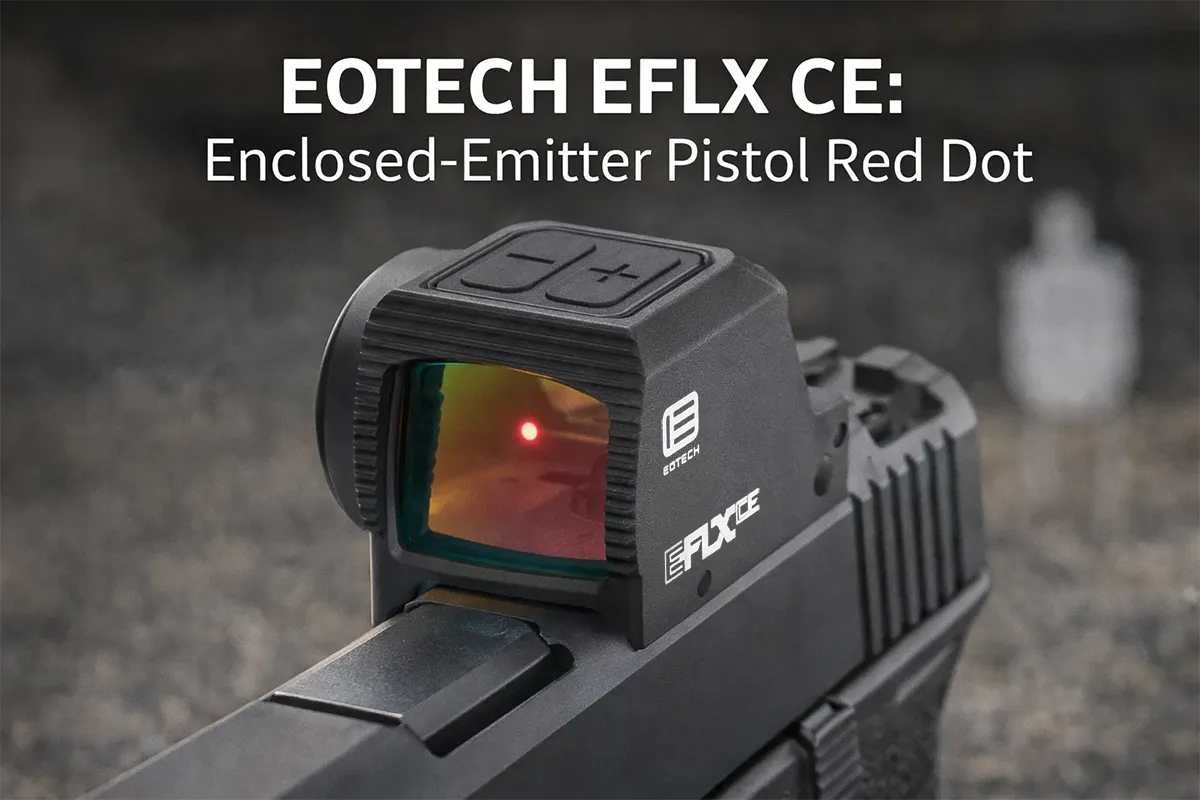
If you’ve been watching handgun optics evolve, you already know the pattern: open-emitter red dots made slide-mounted optics “normal,” and now enclosed-emitter designs are pushing the category into true all-weather reliability. The EOTECH EFLX CE is a notable 2026 release because it’s EOTECH’s first fully enclosed pistol optic—and it lands right as more shooters start treating “closed emitter” as the default, not the upgrade.
This deep dive is for research-focused buyers trying to answer three practical questions: (1) what the EFLX CE actually brings to the table, (2) who benefits most from an enclosed-emitter dot, and (3) how to choose mounting, reticle, and setup details without buying the wrong parts twice.
For context and host options, it helps to browse the broader handgun field first: Semi Auto Pistols. And if your shortlist includes common “dot hosts,” brand hubs like Glock and Sig Sauer are useful for comparing optics-ready variants and platform ecosystems.
EOTECH EFLX CE: Why This Release Matters Right Now
Plenty of red dots launch every year. What makes the EFLX CE worth researching is where it fits in the trendline: it’s a purpose-built, enclosed-emitter optic aimed at the “serious-use” pistol market, not a novelty accessory. Enclosed-emitter designs protect the light emitter inside a sealed housing, which helps keep the dot usable when rain, sweat, dust, lint, or carbon build-up would otherwise interfere with an open emitter.
In 2026, that protection matters because more people are actually carrying dot-equipped pistols daily. Pocket lint, winter grit, and wet weather aren’t rare edge cases—they’re Tuesday. (Okay, sometimes Wednesday too.)
Open Emitter vs Enclosed Emitter: The Real-World Difference
Here’s the simplest way to think about it:
- Open-emitter optics are lighter and often cheaper, with lots of mature options. The emitter is exposed to the environment. In heavy rain, mud, or pocket carry lint, the dot can be obscured or distorted until you clear the debris.
- Enclosed-emitter optics put the emitter inside a sealed “tube-like” housing (even if the optic still looks compact). They can keep working through weather and grime that would be annoying—or mission-ending—on an open emitter.
Does that mean an enclosed emitter is mandatory for everyone? No. But if your pistol will live in a holster every day, ride in a chest rig, get used in classes, or be staged for home defense where it might sit for months between checks, enclosed designs reduce the number of “surprise failures” you have to manage.
EFLX CE Key Features (What to Pay Attention To)
Specs only matter if they connect to outcomes. These are the EFLX CE details that actually change how it performs and how easy it is to live with:
- Enclosed emitter housing: The core “why” behind the model.
- Selectable reticle system: A 3 MOA dot, a 42 MOA ring, or a circle-dot combination. Dot-only tends to favor precision; circle-dot often speeds up acquisition and helps track the dot through recoil.
- Top-mounted controls: Buttons on top can be easier to access on a slide-mounted optic, especially when the optic is close to the ejection port and your hands are cold or gloved.
- Shake-awake style activation: Designed to wake when movement is detected, reducing “oops, it was off” moments—assuming you still do basic function checks.
- Side-load CR2032 battery: Battery changes without removing the optic help you avoid re-zeroing and reduce screw/plate wear over time.
- Integrated rear backup iron sight: This can matter more than it sounds. Some shooters want a backup sight picture that doesn’t require tall suppressor-height irons. An integrated rear can simplify the system (though you still need to confirm how your front sight pairs with it).
- Mounting footprint support: The EFLX CE is designed to work with popular footprint families (confirm your slide cut and/or plate system before you buy).
Takeaway: the EFLX CE isn’t just “another dot.” It’s a system choice—reticle + mounting + backup sighting strategy + maintenance routine.
EOTECH EFLX CE Specs Table (Research Snapshot)
Use this as a quick comparison anchor while you research competing enclosed emitters. Values can change by revision or package, so verify the exact listing you’re considering.
| Type | Magnification | Objective | Reticle | Tube | Weight | Length | Mount | MSRP |
|---|---|---|---|---|---|---|---|---|
| Enclosed reflex | 1x | Varies by design | 3 MOA dot / 42 MOA ring / circle-dot | N/A | ~1.46 oz | ~1.6 in | DeltaPoint Pro or RMSc footprint compatibility | ~$479 |
Who Should Actually Buy an Enclosed-Emitter Pistol Dot
Enclosed emitters shine when your environment is messy, your maintenance intervals are long, or your stakes are higher than “range day convenience.” The EFLX CE is most compelling for:
- Everyday carry (EDC) users who deal with lint, sweat, and weather. Pocket and deep-concealment carry are especially rough on open emitters.
- Training-heavy shooters who want fewer interruptions for cleaning, clearing water droplets, or troubleshooting “why is my dot weird today?”
- Home defense setups where the pistol may sit staged and untouched. Sealed designs can reduce the chance that dust or humidity creates a surprise at the worst time.
- Duty-style users (or anyone who treats their setup like duty gear) who want redundancy and durability features baked in.
If your handgun mostly lives in a range bag, you shoot in fair weather, and you don’t mind wiping lenses and checking the emitter area regularly, an open emitter can still be a smart, cost-effective choice. The point is to match the optic type to the way you actually live—not the way your “ideal routine” looks in your head.
Mounting and Fit: The Fastest Way to Make a Good Optic Feel Bad
Most red-dot frustration isn’t caused by the optic. It’s caused by a mismatch between slide cut, plate, screws, and sight height. Before you commit to an EFLX CE (or any enclosed emitter), do these checks:
- Identify your slide’s optic cut: “Optics-ready” can mean different footprints depending on the pistol family and generation.
- Know your plate plan: If your pistol uses plates, confirm that a quality plate exists for the EFLX CE footprint you need—and that it’s in stock in your world.
- Confirm screw length and thread pitch: Too long can bind internals; too short can loosen under recoil. Use the correct screws for the plate/slide, not whatever was closest on the bench.
- Decide your backup sight strategy: If you want a co-witness, determine whether you need taller irons, and how the integrated rear sight feature plays with your front sight.
- Holster compatibility: Some holsters index near the optic area or have tight optic “hoods.” Enclosed emitters can be bulkier up top than an open emitter.
If you’re researching a new host pistol specifically for dot use, keep it simple: browse Semi Auto Pistols and focus on models with widely supported optic cuts and strong holster availability. The easiest systems to own are the ones that are common enough that everyone already makes parts for them.
Reticle Choice: Dot vs Circle-Dot for Real Use
The EFLX CE’s selectable reticle option is useful if you understand what each pattern does for your vision and your shooting.
- 3 MOA dot: Cleaner aiming point for tighter groups and more precise shot placement. Many shooters find dot-only best once their presentation is consistent.
- Circle-dot: Often faster to “find” during the draw and easier to track during recoil. The ring can act like training wheels while you build index and consistency.
- Ring only: Niche, but some shooters like it for rapid target transitions at closer distances.
If you’re new to dots, the circle-dot option can help you get on target faster while you develop a repeatable draw. Over time, many shooters settle into dot-only for simplicity. The nice part: you’re not locked into one approach forever.
Battery and Maintenance: A Simple Routine That Prevents “Dot Drama”
Even with shake-awake and long claimed battery life, you still need a maintenance habit. A good “set it and forget it” setup is really “set it and verify it.” Here’s a practical routine that keeps enclosed emitters performing like they should:
- Monthly function check: Confirm the dot turns on, brightness adjusts, and the glass is clear enough for your needs.
- Lens wipe: Use a clean lens cloth; avoid grinding grit into the coatings.
- Mounting screw check: Verify fasteners are secure (follow the torque guidance used for your plate/slide system).
- Battery cadence: If the optic is for defensive use, replace the battery on a schedule you can remember (many people tie it to a birthday, daylight savings, or a quarterly check).
The EFLX CE’s side-load battery design is a quality-of-life improvement here because it reduces the temptation to put off battery changes to “avoid re-zero hassle.”
What to Compare the EFLX CE Against
If you’re researching the EFLX CE, you’re probably also comparing other enclosed emitters (and maybe one proven open emitter as a baseline). Instead of comparing marketing phrases, compare these decision points:
- Footprint compatibility with your current pistols and plates.
- Window shape and usability during fast presentations (especially from concealment).
- Controls and brightness behavior (how easy is it to adjust under stress?).
- Battery access (top/side vs bottom remove-and-reinstall).
- Backup sight integration and your co-witness plan.
- Total system cost: optic + plate (if needed) + irons (if needed) + holster adjustments (sometimes needed).
And don’t forget the host pistol reality: a dot that’s amazing on a proven optics-ready platform can be a headache on a niche slide cut with limited plate and holster options. If you’re standardizing on common hosts, brands like Glock and Sig Sauer tend to be easier to support at scale because the accessory ecosystem is so large.
Buyer’s Research Checklist (Use This Before You Click “Buy”)
- Confirm your footprint (direct cut vs plate system) and ensure the EFLX CE mounting route is straightforward for your pistol.
- Decide your reticle preference (dot-only vs circle-dot) based on how you shoot and how fast you need to acquire the dot.
- Choose your backup sight plan (integrated rear usage, front sight height, and whether you want a co-witness).
- Account for holster fit if your current holster has tight optic clearance.
- Budget for the system, not just the optic (plates, irons, and spare batteries).
- Set a maintenance cadence for defensive guns so the optic is always ready when you are.
If you want a single-sentence summary: the EFLX CE is most attractive to buyers who want enclosed-emitter protection, modern controls, and an easier battery routine—without turning the pistol into a science project.