
Double Action Revolver in 2026: How to Choose the Right One for Range Use, Trail Carry, and Home Defense Research
March 20, 2026
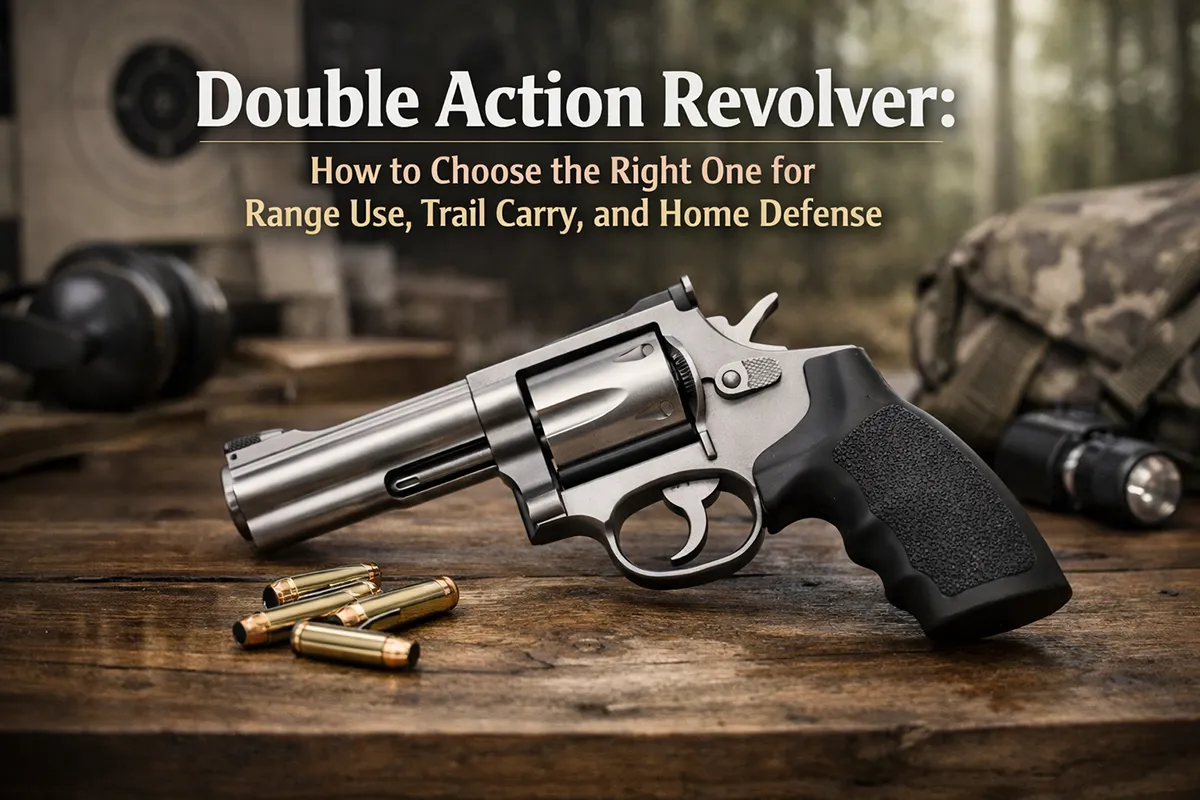
If you are researching a double action revolver in 2026, you are probably not chasing trends. You are trying to answer a practical question: what kind of revolver still makes sense today, and which size, caliber, and feature set fits your actual use? That could mean a range gun with easy manners, a trail sidearm that is simple to carry, or a home-defense option that prioritizes straightforward operation. This guide focuses on those decisions so you can sort through the category with fewer assumptions and more useful tradeoffs.
A double action revolver lets the trigger both cock and release the hammer in one pull. Many models can also be fired in single action, where the hammer is manually cocked first for a lighter trigger break. That sounds basic, but it matters because trigger feel, recoil control, and intended role all change depending on how you plan to shoot. In 2026, revolvers remain relevant not because they are magically better than modern semi-autos, but because they offer a different balance of simplicity, caliber flexibility, and long-term durability. They are less about fashion and more about fit.
Why a Double Action Revolver Still Makes Sense in 2026
The first reason is mechanical clarity. A revolver’s manual of arms is easy to understand: load the cylinder, close it, aim, and press the trigger. That does not make it “easy mode,” but it does reduce some of the complexity that comes with magazine management, slide operation, and optic compatibility. For buyers who value directness, that still counts for a lot.
The second reason is versatility. A good revolver can serve very different roles depending on barrel length, frame size, and caliber. A compact .38 Special or .357 Magnum revolver can work as a carry or trail option. A mid-size 4-inch gun often lands in the sweet spot for general use. A heavier 6-inch revolver leans toward range work, hunting support, or just plain enjoyable practice. You can browse the broader category at Revolvers, but the key is understanding that “revolver” is not one job description.
The third reason is caliber flexibility. Revolvers are chambered for mild training rounds, established defensive cartridges, and serious field-use loads. That means the right gun can be tuned to the shooter more easily than many new buyers expect. The wrong combination, though, can be punishing. A light revolver in a powerful caliber may look appealing in a product listing and feel much less charming at the range.
Start With the Use Case, Not the Brand Name
The smartest research path is to decide how the revolver will actually be used before you start comparing logos or finishes. For range use, weight is usually your friend. A steel-frame revolver with a 4-inch to 6-inch barrel tends to be easier to shoot well because the extra mass helps manage recoil and smooth out the sight picture. These guns are not the lightest to carry, but they are often the most rewarding for deliberate practice.
For trail carry or general outdoors use, balance matters more. You want a revolver that is still portable but not so small that it becomes difficult to control with full-power ammunition. This is where mid-size .357 Magnum revolvers remain popular. They offer broad ammo flexibility because many can also shoot .38 Special, which is usually softer recoiling and more pleasant for practice.
For home-defense research, many buyers initially assume smaller is better because it seems simpler to handle. In reality, a slightly larger revolver is often easier to shoot accurately, easier to reload under calm practice conditions, and less harsh in recoil. Small-frame revolvers are excellent at being compact. They are not always excellent at being forgiving.
Spec Table: Common Double Action Revolver Lanes
| Platform | Action | Caliber | Barrel/Weight | Capacity | OAL | MSRP/Street |
| Small-frame carry revolver | Double action / often DA-SA | .38 Special or .357 Magnum | Often 1.8–3 in / light to moderate | Commonly 5 rounds; varies by SKU | Compact | Varies by brand, material, and sights |
| Mid-size general-purpose revolver | Double action / often DA-SA | .357 Magnum | Often 3–4.25 in / moderate | 5–7 rounds; varies by frame | Mid-length | Varies by finish and trim |
| Full-size range revolver | Double action / often DA-SA | .357 Magnum or .44 Magnum | Often 4–6 in / moderate to heavy | Typically 6–8 rounds; varies by SKU | Standard to long | Usually higher with premium features |
| Field or hunting-support revolver | Double action / often DA-SA | .44 Magnum and up | Often 4–7.5 in / heavy | Usually lower capacity | Standard to long | Varies by chambering and construction |
Barrel Length and Frame Size: The Two Choices That Shape Everything
Barrel length changes more than velocity. It also affects sight radius, balance, draw comfort, and how “settled” the gun feels during slow fire. Snub-nose revolvers are easy to carry and harder to shoot well. Longer-barreled revolvers are easier to aim and slower to pack around. That is not a flaw in either one. It is the entire point of the tradeoff.
Frame size matters just as much. A larger frame generally gives you more weight, better recoil absorption, and sometimes higher capacity. A smaller frame gives you portability, but recoil can feel sharper and the grip may be less forgiving for larger hands. Buyers sometimes fixate on caliber and overlook how much the frame influences shootability. A medium-frame .357 can feel more manageable than a lightweight small-frame .38, even though that sounds backward on paper.
Caliber Choices: Practical First, Powerful Second
For many buyers, .38 Special remains the easiest entry point. It is a well-established revolver cartridge with manageable recoil in medium-size guns, and it makes a lot of sense for range use and skill building. Step up to .357 Magnum, and you gain power and flexibility, since revolvers chambered in .357 typically also accept .38 Special. That combination is one of the strongest arguments for the platform because it lets a shooter practice with softer loads and still keep magnum capability available.
.44 Magnum sits in a different lane. It can make sense for field use, backcountry carry, or buyers who specifically want a heavy-hitting revolver. It also brings more blast, more recoil, and usually a heavier gun. This is not the chambering to choose casually because a forum thread made it sound romantic. Revolvers are very honest machines, and powerful ones are especially honest.
The best caliber is usually the one you will actually practice with. A controllable revolver with affordable, available ammunition is more useful than a harder-kicking option that stays in the safe after two range trips.
Brand Differences Worth Researching
In this category, the big differences usually come down to trigger feel, lockup, sights, finish quality, grip shape, and how each brand balances classic versus modern features. Smith & Wesson remains a central research stop because of its deep revolver history and wide spread of frame sizes, barrel lengths, and intended uses. Buyers often compare its lighter carry-oriented models against larger K-frame, L-frame, or N-frame style options depending on role.
Ruger deserves equal attention for buyers who prioritize durability, practical pricing, and robust construction. Ruger revolvers are often researched by people who want a hardworking trail gun or a straightforward general-purpose revolver with less emphasis on polish and more emphasis on longevity. That is a broad summary, not a verdict, but it is a useful place to start.
Other brands can also fit the conversation depending on budget and intended use, but these two often anchor the research because they represent different design priorities while covering many of the same roles.
Sights, Grips, and Finish: The “Small” Details That Are Not Small
Sights matter more than many first-time revolver buyers expect. Fixed sights keep things simple and often suit compact defensive or trail revolvers just fine. Adjustable sights are more useful on range-oriented guns, especially if you plan to experiment with different loads. Grips matter too. A grip that is comfortable for slow handling in a store may feel very different under recoil. Shape, material, and hand fit all influence control.
Finish is partly aesthetic and partly practical. Stainless steel is popular for obvious reasons: it is durable-looking, easier to live with in rough weather, and often preferred for outdoor use. Blued guns still have classic appeal and can look fantastic, but they may demand a bit more care depending on how and where they are used.
Research Checklist Before You Pick One
- Choose the role first: range, trail, home, or a blend of those.
- Match barrel length to that role instead of assuming shorter is always better.
- Pick a caliber you can realistically practice with.
- Compare frame size and unloaded weight before deciding recoil will be “fine.”
- Check whether you want fixed or adjustable sights.
- Handle grip shape seriously; comfort and control are connected.
- Compare brand priorities, especially between Smith & Wesson and Ruger, instead of shopping by appearance alone.
The Bottom Line on a Double Action Revolver in 2026
A double action revolver in 2026 still makes plenty of sense for the right buyer. It is not the universal answer, and it does not need to be. Its appeal is that it offers a durable, direct-shooting platform with clear tradeoffs and a lot of role-specific flexibility. A small-frame revolver can be portable and discreet. A mid-size .357 can be one of the most sensible all-around options in the handgun world. A full-size revolver can turn range time into something calmer, steadier, and frankly more satisfying than people expect.
The best choice is usually not the smallest, the loudest, or the most dramatic. It is the revolver that fits your hands, your tolerance for recoil, and the way you will honestly use it. That may not sound glamorous, but it is how good research turns into a good buy.