
DA/SA 9mm Pistol in 2026: How to Choose the Right One for Range Use, Home Defense Research, and Long-Term Ownership
April 7, 2026
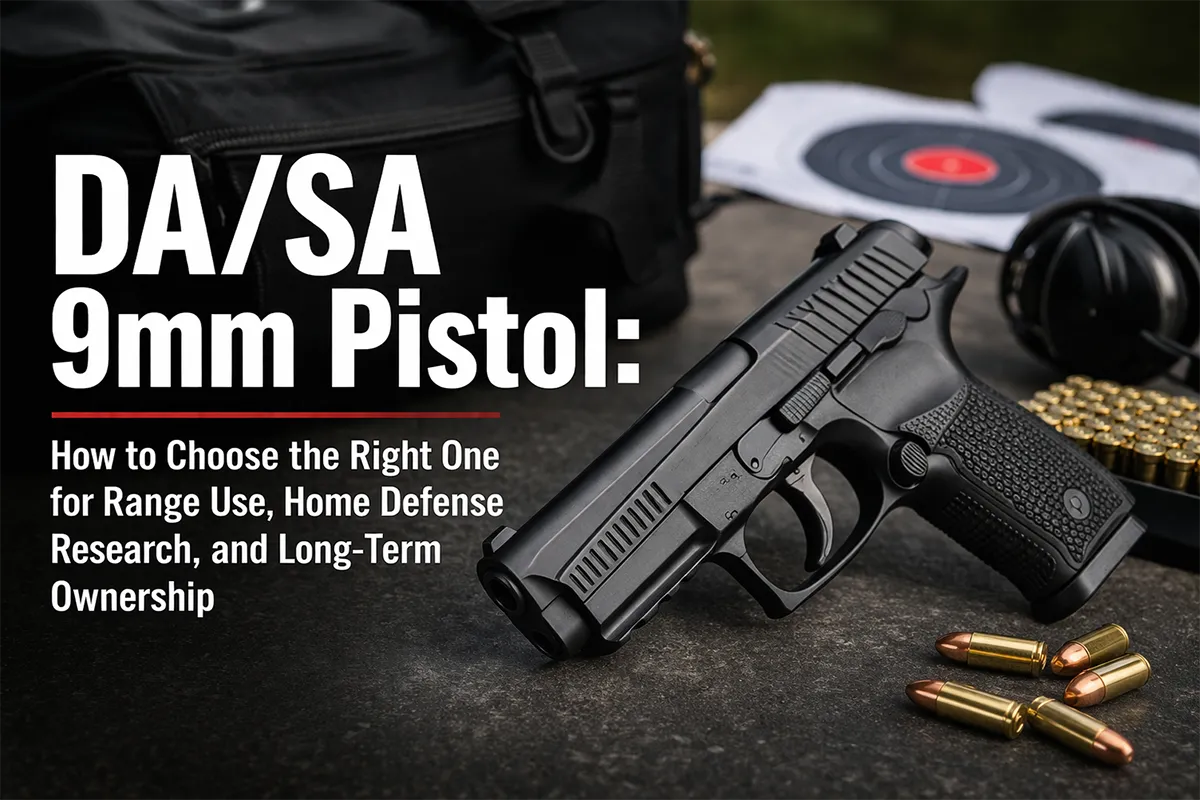
If you are researching a DA/SA 9mm pistol in 2026, you are usually trying to answer a question that does not get as much attention as the newest micro-compacts or polymer duty pistols: is a traditional hammer-fired handgun still a smart buy for real-world shooting? For many buyers, the answer is yes. This guide explains what the platform is, why it still matters, who it fits best, and how to compare size, trigger feel, controls, and long-term value without getting buried in nostalgia or internet arguments.
DA/SA means double-action/single-action. In plain English, the first trigger press can both cock and release the hammer, while later shots fire in a lighter single-action mode after the slide cycles. That gives the platform a different rhythm than a striker-fired pistol. Some shooters like that built-in separation between the first shot and the rest. Others prefer it because an exposed hammer, decocker, or manual safety gives them a little more mechanical clarity during loading, unloading, and storage.
This is not a beginner-only category or an old-school collector niche. A well-chosen DA/SA pistol can still make a lot of sense for range work, home-defense research, training, and general ownership. Start with the broader semi auto pistols category, then compare how different brands approach the same problem.
Why a DA/SA 9mm Pistol Still Makes Sense
The biggest reason is control through context. A DA/SA pistol usually gives you a longer, heavier first trigger press and then a shorter, lighter press for follow-up shots. Some shooters see that as a drawback because it requires more practice. Others see it as a feature because the first shot is more deliberate, while later shots can be faster and cleaner once the gun is running. Neither side is wrong. It comes down to what kind of trigger behavior helps you shoot consistently.
The second reason is ergonomics. Many of the best-known DA/SA pistols are metal-framed or at least have a substantial feel in the hand. That extra weight often softens recoil, helps the gun track flatter, and makes long range sessions more pleasant. If you primarily care about practice quality, not minimum carry weight, that matters a lot. A pistol you enjoy shooting tends to get shot more, which is still the cheapest performance upgrade available.
The third reason is longevity. Hammer-fired service pistols built around proven designs often hold up well over time, with good parts support, durable magazines, and long track records. That does not mean every older design is automatically better. It does mean that many DA/SA pistols were built around hard use, not just short spec-sheet impressions at a store counter.
What Changes the Experience Most
Size is the first filter. Full-size DA/SA 9mm pistols are usually easier to shoot well because they offer longer sight radius, more weight out front, and a fuller grip. Compact models give up some of that comfort in exchange for easier storage, easier carry, and faster handling in tighter spaces. If your main use is the range or a nightstand role, full-size often makes more sense. If you want one pistol that can stretch into concealed carry or all-purpose use, compact is often the smarter compromise.
Trigger reach is the next big factor, and it is more important on this platform than many buyers expect. On the first double-action press, the trigger usually starts farther forward than it does on a striker-fired pistol. Shooters with smaller hands should pay close attention to grip circumference, backstrap shape, and where the trigger sits at rest. A pistol that feels great in single-action can still be awkward on the first shot if the reach is too long.
Controls also matter more here. Some DA/SA pistols use a decocker, which safely lowers the hammer. Others combine a safety and decocker. Others allow “cocked and locked” carry in certain variants, meaning the hammer is back and the safety is on. Those differences affect how the gun fits your habits. The best system is usually the one you can operate correctly every time without needing to stop and think.
| Format | Typical Barrel / Size | What It Usually Does Well | Main Tradeoff |
| Full-size DA/SA 9mm | Varies by SKU; commonly service-size | Softer shooting, easier sight tracking, high practice comfort | Heavier and less convenient to carry |
| Compact DA/SA 9mm | Varies by SKU; shortened slide and grip | Better all-around balance for storage, carry, and range use | More recoil and less forgiving grip area |
| Metal-frame models | Varies by SKU | Excellent recoil control, solid feel, long-term durability | More weight on belt or in bag |
| Lighter alloy/polymer variants | Varies by SKU | Easier carry, quicker handling | Can feel snappier and less settled in rapid strings |
Brand and Platform Examples Worth Research
If you want the classic benchmark, start with Beretta. The 92/M9 family remains one of the clearest examples of what a full-size DA/SA 9mm can be: soft shooting, stable, and easy to enjoy on the range. The tradeoff is bulk. It is not the category’s best answer for every hand size or every storage plan, but it remains a strong reference point because it shows how refined a traditional service pistol can feel.
If you want a lower bore axis and a different grip shape, look at CZ-USA. The CZ 75 pattern, including compact and full-size offshoots, is popular for a reason. Many shooters find these pistols point naturally, sit low in the hand, and shoot with a smooth, controlled feel. The downside is that specific variants can differ quite a bit in weight, rail configuration, decocker versus safety setup, and aftermarket support.
If you want a more modern duty-style take, SIG Sauer is worth comparing. Pistols in the P226 and P229 lane have a reputation for durability, practical controls, and broad institutional history. Depending on the exact version, they can split the difference between older-school service guns and newer defensive pistols pretty well. They are often not the cheapest route into the category, but they tend to make sense for buyers who want a serious, polished “one good gun” approach.
These examples are useful because they show the category’s real tradeoffs. Beretta often wins on smooth shooting and familiarity. CZ-style guns often win on hand fit and shootability for people who like the frame shape. SIG-style guns often appeal to buyers who want a duty-proven layout with a little more modern polish. There is no universal champion. Your hands, trigger preference, and intended use decide more than the logo does.
DA/SA 9mm Pistol vs. Striker-Fired Alternatives
The honest answer is that striker-fired pistols are usually easier to learn quickly. Their trigger feel is more consistent from shot to shot, their controls are often simpler, and the market offers enormous support for holsters, magazines, optics cuts, and small upgrades. If you want the shortest path to a modern, lightweight, easy-to-understand pistol, striker-fired still owns that lane.
A DA/SA 9mm pistol earns its place by offering a different experience, not by pretending to be the same thing. It can reward deliberate practice with a very refined shooting rhythm. It can feel more reassuring to owners who like using a decocker or visually confirming hammer position. It can also offer a more substantial, less “snappy” shooting character than many lightweight polymer guns. The cost of that character is training time. You do have to learn the first-shot trigger press and the transition to single-action.
That is why the best way to think about this category is not old versus new. It is consistency versus flexibility. Striker-fired pistols give you one trigger feel every time. DA/SA pistols ask more from you up front, then pay that effort back with a shooting style many owners genuinely prefer.
Research Checklist for Buying a DA/SA 9mm Pistol
- Check double-action trigger reach first. A pistol that looks perfect on paper can still be a poor fit if the first trigger press feels like a stretch.
- Decide full-size or compact before you shop brands. That single choice removes a lot of confusion.
- Pay attention to decocker versus safety layout. Pick the system you can explain and use without hesitation.
- Think about weight honestly. Heavy is good at the range, but less fun if you plan to carry it often.
- Look at magazine cost and availability. Practice usually gets expensive through magazines before it gets expensive through the pistol itself.
- Research optic options and sight support. Some classic designs are easier to modernize than others.
- Compare long-term parts support. A proven platform with easy-to-find mags and replacement parts is often the smarter buy than the more unusual option.
Who This Category Fits Best
A DA/SA pistol fits shooters who enjoy practice, want a hammer-fired manual of arms, and do not mind learning a two-stage trigger experience. It also fits buyers who want a range gun that can still fill serious defensive research roles without feeling disposable or overly specialized. Where it fits less well is impulse buying. If you want the lightest carry option or the simplest trigger system possible, another category will usually make more sense.
The practical takeaway is simple: buy this platform because you like how it works, not because somebody told you it is more sophisticated. A good DA/SA 9mm pistol should feel intentional, shootable, and easy to live with. If it does, it can be one of the most satisfying handgun categories to own for the long haul. For more comparisons, keep browsing the semi auto pistols category and narrow the field by maker through pages like Beretta, CZ-USA, and SIG Sauer.