
Centurion 11 TAC vs Centurion 11: What Changes?
November 20, 2026
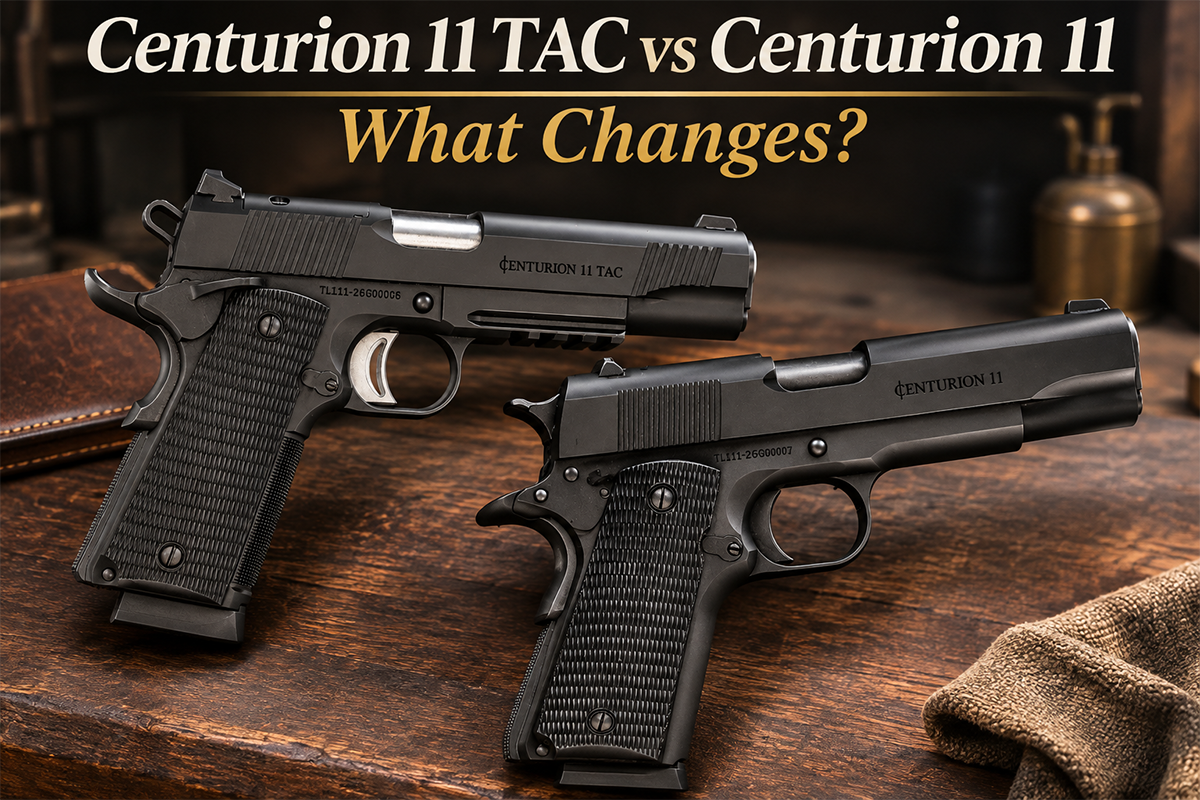
The Centurion 11 TAC adds a factory optic cut and an accessory rail to Century Arms’ traditional .45 ACP 1911. For someone weighing it against the original Centurion 11, the choice comes down to the sights and equipment they actually plan to use. Both follow the familiar full-size, steel-frame 1911 pattern. The TAC is the practical starting point for a red dot or rail-mounted light. The original keeps the simpler GI-style layout. This comparison separates confirmed features from fit and package details that still need checking.
Century Arms announced the TAC on November 12, 2026. Its manufacturer release confirms the steel frame, single-action trigger, .45 ACP chambering, 8+1 capacity, RMSc-pattern optic cut, and integrated 1913 rail. It describes dealer availability, but a release is not a hands-on reliability test. Treat those claims as a starting point for research, then check the exact pistol and accessories before making a decision.
Centurion 11 TAC vs Centurion 11 at a glance
| Feature | Centurion 11 TAC | Original Centurion 11 |
|---|---|---|
| Basic format | Full-size steel-frame 1911 | Full-size GI-style steel-frame 1911 |
| Chambering | .45 ACP | .45 ACP |
| Capacity | 8+1, according to Century Arms | 8+1, according to original-model reporting |
| Optic interface | Factory RMSc-pattern cut | No factory optic cut in the GI configuration |
| Frame rail | Integrated 1913 Picatinny rail | Traditional non-railed dust cover |
| Sights | Modern sight setup; verify the exact SKU | GI-style fixed irons |
| Best fit | Planning a dot, a light, or both | Preferring a classic, simpler 1911 |
The table covers the core distinction. It does not imply that every optic fits the TAC, every light fits its rail, or every holster for a standard 1911 fits either pistol. Those are separate compatibility questions. GunGenius readers can browse the semi-auto pistol category and the Century Arms brand catalog to compare related listings without assuming that a listing proves a particular accessory combination.
What does the TAC’s optic cut change?
A factory optic cut lets a compatible sight sit on a slide designed for it. Century calls the TAC cut RMSc-pattern. That name describes a mounting pattern, not a promise that every sight marketed as compact will fit. Housing shape, screw length, recoil lugs, and any supplied plate can still vary. Confirm the sight maker’s fit information and the pistol’s instructions for the exact model before budgeting for an optic.
That distinction matters because an optic purchase can quickly exceed the difference between two pistol listings. The TAC may be the cleaner path if a dot is already part of the plan. The original Centurion 11 makes more sense if the buyer prefers iron sights and has no reason to pay for an unused cut. A later aftermarket slide service would add cost and require its own compatibility review, so compare the complete setup rather than the bare pistol alone.
Also inspect the actual sight arrangement. Launch information describes a modernized sight system, while individual retailer descriptions may use different terms. Confirm whether the particular TAC SKU includes an optic plate, cover plate, mounting screws, and sights at the height you expect. Ask how the irons appear through the chosen optic after it is mounted. A photograph of the slide is useful, but the package contents and manual are stronger evidence.
When does the 1913 rail matter?
The TAC has a rail built into the frame’s dust cover. It creates an option for compatible accessories without relying on a clamp-on adapter. The original’s traditional profile may suit a buyer who wants the familiar 1911 appearance and an uncomplicated range pistol. A rail only adds value when an accessory fits the actual frame and the owner has a use for it.
Rail presence changes more than accessory choice. It can change holster fit, especially when a light is attached. Holster makers commonly distinguish railed and non-railed 1911 frames, barrel lengths, light models, and optic clearance. Confirm a holster against all of those details. Do not assume that a generic full-size 1911 holster covers both Centurion versions. A buyer who already owns a fitted holster should check it before treating the TAC as a simple drop-in replacement.
The frame rail also affects the comparison for people who do not plan to mount anything. Some prefer the unbroken lines of the GI pattern, while others value the option to add equipment later. Neither preference changes the published .45 ACP chambering or the single-action operating style. It is a question of how the pistol will be configured and what associated gear the owner will need.
How much of the original 1911 experience remains?
The original Centurion 11 was presented as a GI-style, full-size steel pistol with fixed sights. The TAC keeps the full-size steel-frame foundation, .45 ACP chambering, single-action trigger, and stated 8+1 capacity. That is substantial common ground. The visible and practical differences are concentrated in the optic interface, rail, and updated sight package. Buyers who like the feel of a steel 1911 should still handle both versions if possible, because controls and grip details can affect fit more than a spec sheet suggests.
Do not transfer an original-model review directly to the TAC. A report on the older pistol may help explain the family, but it cannot establish the TAC’s accuracy, reliability, trigger feel, or optic durability. The same caution applies to a retailer’s claims about common parts. Ask the maker or a qualified professional about a specific replacement part instead of assuming that every 1911-pattern component interchanges. For a new model, documented performance data may take time to develop.
What should you check before comparing listings?
- Match the model. Confirm the full name, SKU, caliber, finish, and photographs. A GI Centurion 11 listing and a TAC listing should show clearly different slide and frame features.
- Verify the optic package. Check the stated footprint and ask what plates, screws, and covers are included. Confirm a chosen sight against the exact configuration.
- Check the rail and holster. Identify any planned accessory by model. Then confirm a holster made for that pistol, rail, accessory, and optic combination.
- Compare complete cost. Add the pistol, optic, mounting hardware, holster, spare magazines, and any accessories you actually intend to use. Separate optional gear from required gear.
- Read the manual and warranty. Review the maker’s current instructions, service process, and included items. Confirm details with the seller before relying on a short listing description.
This checklist is especially useful when two advertisements use similar names. A listing may emphasize the .45 ACP chambering and eight-round magazine while leaving out the features that justify choosing the TAC. Photos can show an optic cut or rail, but they may be stock images. Ask for the exact item and package description when the listing is unclear.
Which Centurion 11 is the better fit?
Choose the Centurion 11 TAC for research if a factory optic cut or frame rail is central to the intended setup. Its value depends on matching those features with compatible equipment and confirming the total cost. Start with the original Centurion 11 if the goal is a traditional GI-style .45 ACP 1911 and the added interfaces would sit unused. Handle both if possible. The published feature list can narrow the choice, but it cannot decide grip comfort or control reach for an individual.
The Centurion 11 TAC is a recent release, so keep claims about real-world performance modest until independent testing covers this exact model. Check current maker information and the actual listing before treating any price, accessory, or inventory detail as settled. That approach gives the comparison a useful answer: buy the configuration that matches the equipment you will use, and verify each fit claim before committing to the rest of the setup.