
Bolt Action Shotgun in 2026: How to Choose the Right One for Slug Hunting, Deer Season, and Niche Long-Term Value
April 30, 2026
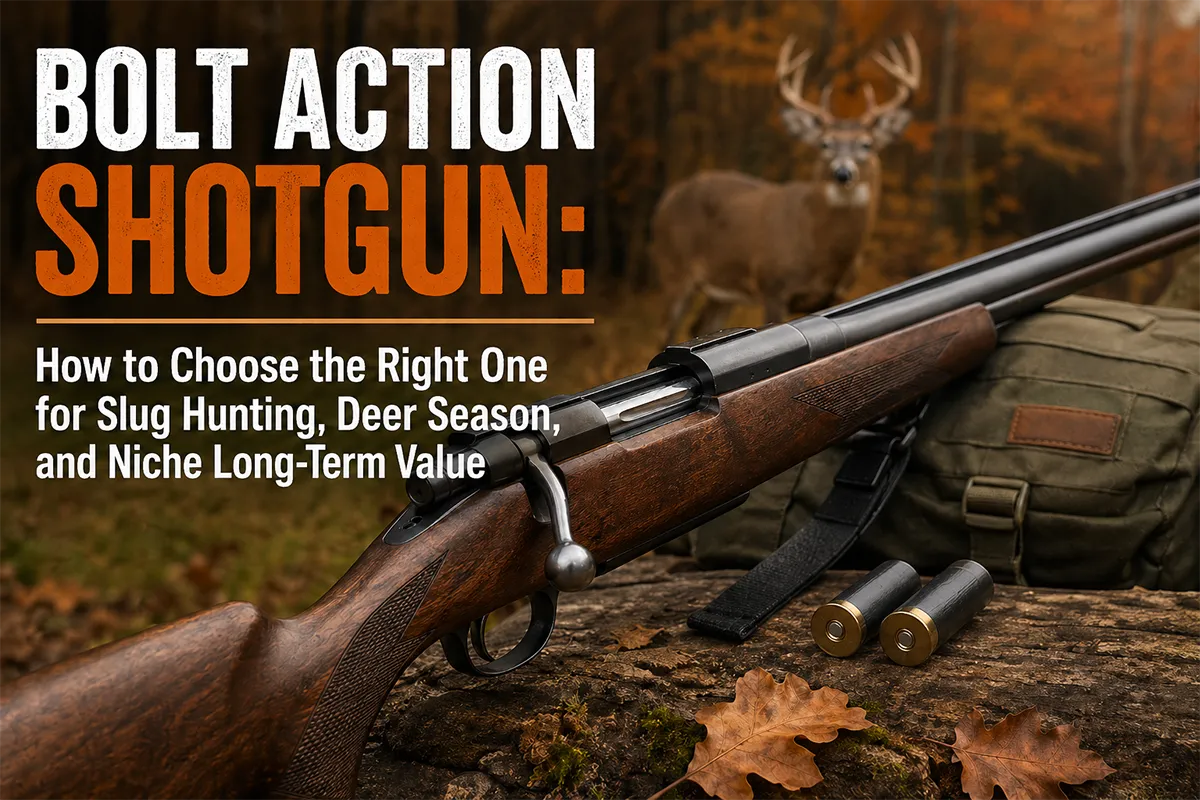
If you are researching a bolt action shotgun in 2026, you are probably not looking for the most common answer on the rack. You are looking for a very particular kind of tool: a shotgun that feels more deliberate than a pump, often more scope-friendly than a classic field gun, and more specialized for slug work or deer-season use than a general-purpose bird gun. That makes this category small, a little unusual, and still surprisingly practical for the right buyer.
TL;DR: A bolt-action shotgun still makes sense when your priority is careful slug placement, straightforward optics setup, and a deer-focused role rather than broad all-around use. For most buyers, the smart question is not “Are bolt shotguns cool again?” It is “Do I actually want a dedicated slug gun more than I want a more versatile shotgun?”
That distinction matters because this category is easy to misunderstand. A bolt shotgun is not the obvious pick for upland birds, home-defense research, or general clay shooting. It is a specialist. It appeals to hunters and researchers who want a manual-action shotgun that behaves more like a simple hunting rifle in rhythm and sighting style, while still fitting a shotgun role. In a market full of pumps, semi-autos, and break-actions, that narrower mission is exactly why it remains interesting.
Why a Bolt Action Shotgun in 2026 Still Has a Real Purpose
The main reason a bolt-action shotgun still matters is focus. A lot of shotguns are asked to do several jobs at once. They need to work for birds, maybe clays, maybe occasional deer hunting, maybe just general ownership. A bolt gun does not usually play that game. It is often at its best when used as a deer-oriented slug platform or a deliberately aimed field gun where precision matters more than rapid follow-up speed.
That can be a real advantage for the right shooter. A bolt action naturally encourages a slower, more controlled shooting rhythm. It also tends to feel familiar to hunters who already spend most of their time with bolt-action rifles. If you like a conventional stock, a scope-friendly receiver, and a shooting process built around making the first shot count, a bolt shotgun can feel refreshingly direct. It is not flashy, and that is part of the point.
The category also has a quiet practicality. For a buyer who mainly wants a dedicated deer-season gun, a bolt shotgun can be easier to justify than a more expensive semi-auto configured for a job it will only do a few weeks each year. It is a niche choice, yes, but not a pointless one. Niche and useful can absolutely coexist. Firearms history is full of proof.
What a Bolt Action Shotgun in 2026 Does Better Than Most People Expect
First, it often makes optics setup feel natural. Many buyers looking at this category are not trying to wing-shoot with a plain bead. They are thinking about slugs, sight clarity, and deliberate shot placement. A bolt gun can fit that mindset well because the overall format often feels closer to a rifle than to a traditional wingshooting shotgun.
Second, it can offer a very clear role definition. Some firearms are hard to shop because they can be configured a dozen different ways. Bolt shotguns are often easier. They are usually bought with one purpose in mind, and that helps narrow the decision fast. That is especially useful for buyers who do not want to wander through endless accessory logic just to end up doing the same job a simpler gun could already handle.
Third, the category often appeals to hunters who value manual control and familiarity. If you already trust bolt actions in centerfire rifles, the controls and rhythm can feel intuitive. That does not make the platform inherently more accurate than every alternative, but it can make it easier for some users to settle into a deliberate, confident shooting style.
How the Main Bolt Shotgun Paths Compare
A Savage route usually makes the most sense for buyers who want the modern, deer-focused version of the idea. The intended Savage 212 path is the heavier-hitting 12-gauge side of the category, while the intended Savage 220 route is the more moderate 20-gauge option for buyers who want the same basic concept with somewhat lighter recoil and a less punishing overall experience. That split alone answers a big part of the buying question for many users.
A Mossberg path, especially around the intended 695, tends to matter more for researchers looking at the broader history of bolt shotguns, older dedicated slug guns, or the used market. This is useful because the category is not only about what is newest. It is also about whether an older specialized design still makes sense for someone who wants a dedicated role gun without drifting into a completely different platform.
In practical terms, the choice often comes down to this: 12 gauge for buyers who want maximum traditional slug-gun authority, 20 gauge for buyers who want a more manageable deer-focused platform, and legacy models for buyers whose priorities include value, nostalgia, or a very specific older setup. None of those routes is automatically best. They are just different answers to slightly different problems.
Who Should Actually Consider One?
A bolt shotgun makes the most sense for the buyer who wants a dedicated deer-season gun. That is the cleanest use case. If your main goal is slug hunting and you prefer deliberate shot placement over fast repeat shots, this category deserves more attention than it usually gets.
It also makes sense for the shooter who prefers a rifle-like manual of arms. Some hunters just shoot bolt actions well. They like the rhythm, the stock feel, the sight picture, and the controlled pace. A bolt shotgun can be a comfortable bridge for that person, especially if their shotgun role is narrow and they are not trying to cover birds, clays, and defensive research with the same long gun.
Where it makes less sense is broad utility. If you want one shotgun for everything, a pump or a versatile semi-auto will usually be easier to justify. Bolt shotguns are best when the role is narrow enough that specialization becomes a strength instead of a limitation.
The Tradeoffs You Should Be Honest About
The first tradeoff is speed. A bolt-action shotgun is not built around fast follow-up shots. That is not a flaw so much as a design reality. The second is versatility. These guns are often at their best in slug-oriented roles, not in all-around field duty. The third is market size. Because the category is smaller, your choices in current production, accessories, or exact configurations may be narrower than in more mainstream shotgun families.
There is also the question of recoil and handling. A 12-gauge slug platform can be a serious piece of equipment, which is a polite way of saying it can get your attention fast. A 20-gauge alternative may offer a more comfortable balance for many shooters. That is why the gauge decision matters so much here. The difference is not theoretical. It shapes how much you will actually enjoy practicing with the gun you buy.
And practice matters. A dedicated deer gun that is unpleasant enough to avoid shooting is not really a smart purchase. It is just a sincere mistake with a sling attached.
Research Checklist Before You Buy
- Decide whether you want a dedicated slug gun or a more versatile shotgun.
- Choose 12 gauge or 20 gauge based on realistic recoil tolerance, not pride.
- Think about whether you want the gun to wear a scope from day one.
- Be honest about how often you will actually use it outside deer season.
- Compare current and legacy options inside the broader Bolt Action Shotguns category before locking into one model idea.
- Look at brand ecosystems through pages like Savage and Mossberg to see whether your shortlist leans modern, legacy, or somewhere between.
- Prioritize fit, shootability, and role clarity over novelty.
Final Take
A bolt action shotgun still has a valid place in 2026 because it does not need to be all things to all shooters. Its value comes from being a focused tool for hunters and researchers who want a deliberate, optics-friendly, deer-oriented shotgun rather than a broad-use field gun. If that is your real use case, the category makes more sense than many people assume. Start with role, then gauge, then fit. Once you do that, the decision usually gets simpler very quickly.