
Bolt-Action Rifle Triggers: What Matters Most in 2026
January 22, 2026
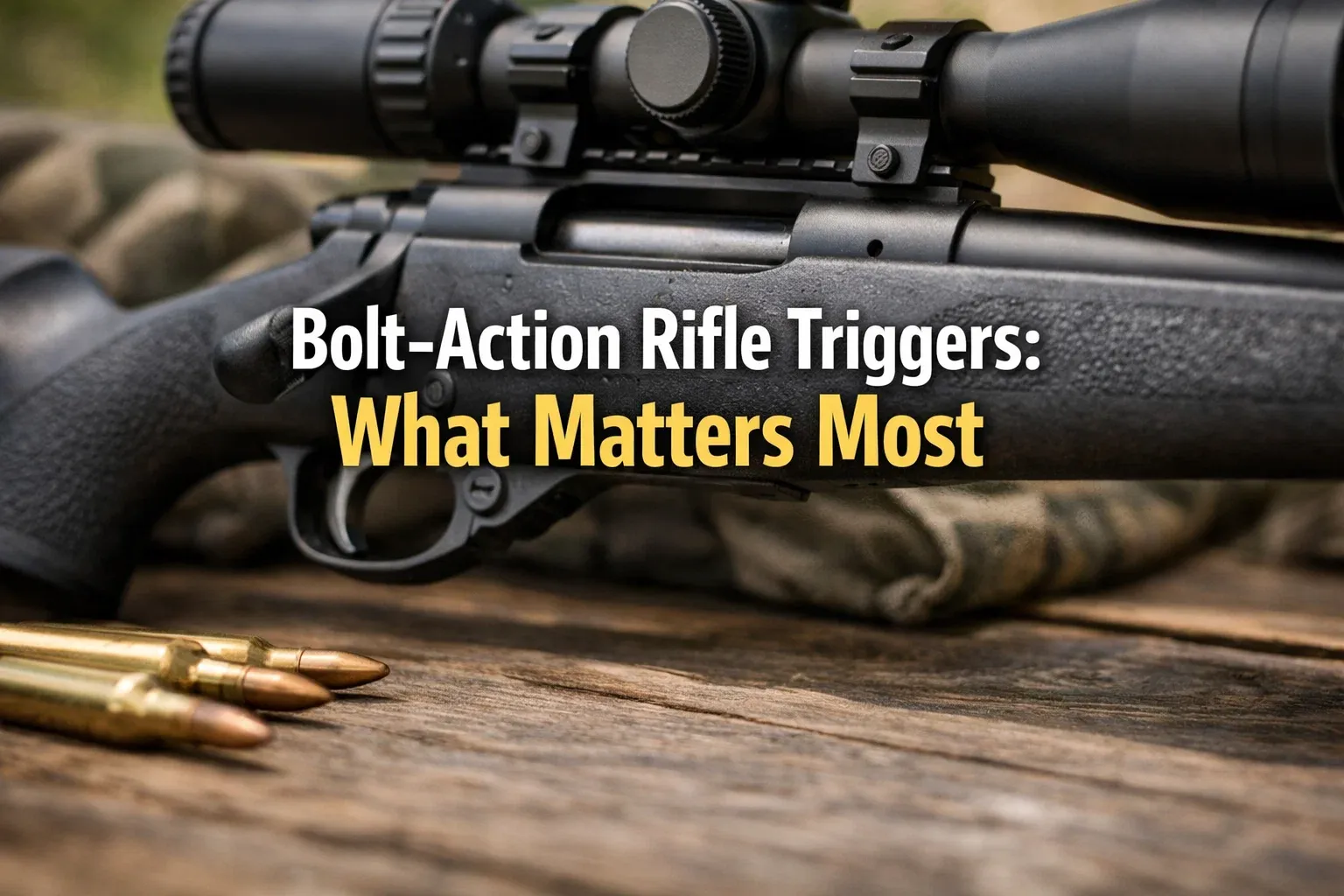
Bolt-action rifle triggers are one of the biggest “feel” upgrades you can make without touching barrels or optics. In 2026, most mainstream bolt guns ship with adjustable triggers that are plenty good for hunting and range work—if you know what to look for (and what to ignore). This guide helps you decide between single-stage vs. two-stage, set a realistic trigger pull weight, and spot features that actually improve practical accuracy.
As of January 22, 2026, the trigger conversation is less about “can I get a decent trigger from the factory?” and more about “which trigger style fits how I shoot?” If you’ve ever blamed a rifle for a flier that was really a jerked press, you already know why this matters. The good news: you don’t need a hair trigger to shoot well. You need a predictable trigger that matches your use case.
Bolt-action rifle triggers: the real job of the trigger
A trigger’s job is simple: release the firing mechanism the same way, every time, without surprises. In practice, a “good” trigger helps you press straight to the rear while keeping the sights (or reticle) steady through the break. That’s why trigger quality often shows up most on small targets, longer distances, and field positions (kneeling, prone, shooting sticks) where your body is already working harder.
If you’re researching rifles, start by browsing the category and then narrowing by brand ecosystems and models you can actually support long-term. The quickest way to compare across the field is the Bolt Action Rifles category, then filter down by makers like Savage, Tikka, or Bergara depending on your budget and goals.
Single-stage vs. two-stage triggers
Single-stage triggers feel like one continuous press: you apply pressure and—at a predictable point—it breaks. Many hunters prefer single-stage because it’s straightforward under stress and with gloves. A clean single-stage trigger can feel “fast” because there’s less to think about.
Two-stage triggers have a deliberate “first stage” (take-up) and then a defined “wall” before the break. The advantage is control: you can take up the first stage while settling the reticle, then finish the shot with a smaller, more intentional movement. Shooters who spend more time on the bench, in practical precision, or in slow-fire target work often like the built-in “prep” step.
Which is better? Neither—if it doesn’t match your context. If you’re mostly shooting field positions and taking quick shots at realistic hunting distances, a crisp single-stage at a sensible weight is hard to beat. If you’re trying to call your shots precisely at distance, a two-stage can make it easier to break the shot without adding extra movement.
Trigger pull weight: what’s “safe” and what’s smart
Trigger pull weight is how much force (in pounds) it takes to make the trigger break. Lighter isn’t automatically better. Too light can turn into unintentional shots when you’re cold, tired, wearing gloves, or moving in and out of awkward positions. Too heavy can encourage “yanking,” especially when you’re trying to shoot small groups.
A practical way to think about it:
- General hunting: Many shooters end up happiest in the ~2.5–4 lb range, prioritizing consistency and safety over “benchrest feel.”
- Range + hunting crossover: Often ~2–3 lb, if the trigger is crisp and you keep good finger discipline.
- Precision/target emphasis: Some shooters go lighter, but only if the rifle is handled in controlled conditions and the trigger is truly predictable.
Important note: changing pull weight isn’t the same as improving trigger quality. A heavier trigger that breaks cleanly can be easier to shoot well than a light trigger that feels gritty, uneven, or unpredictable.
What “good” feels like: creep, break, and reset
Trigger talk gets abstract fast, so here are the terms that actually matter when you’re deciding if a trigger helps you shoot better:
| Term | What it means | Why you should care |
| Creep | Movement before the break after you start pressing | Too much creep can make you “chase” the break and move the rifle |
| Wall | A firm stopping point right before the shot breaks (common on two-stage) | A clear wall helps you prep and break the shot intentionally |
| Break | The moment the trigger releases the firing mechanism | A crisp break is easier to call and repeat |
| Overtravel | Extra movement after the shot breaks | Excess can add unnecessary motion, especially from awkward positions |
| Reset | How the trigger returns to ready after firing | More relevant for fast follow-ups, less critical on slow-fire bolt work |
If you can dry-fire safely (following your range and household rules), you can learn a lot in 60 seconds: does the press feel consistent, or does it stack unpredictably? Can you find the wall every time? Does the break surprise you in a good way—clean and repeatable—or in a bad way—sudden and inconsistent?
Adjustable triggers: what adjustments are worth it?
Many factory bolt-action triggers are adjustable, but “adjustable” can mean different things. The most common and useful adjustment is pull weight. Some systems also allow adjustments to sear engagement (how much surface contact holds the mechanism) and overtravel.
For most shooters, pull weight is the only adjustment you truly need. More complex adjustments can be helpful in expert hands, but they’re also where people accidentally create unreliable or unsafe conditions (like failures to hold, inconsistent resets, or doubling). If you’re not 100% sure what an adjustment does, it’s smarter to leave it alone and focus on a clean press and solid fundamentals.
Factory triggers vs. aftermarket: when an upgrade makes sense
Aftermarket triggers can be excellent, but they’re not a mandatory step for good shooting. An upgrade makes the most sense when:
- Your current trigger is inconsistent (gritty, stacking unpredictably, or changing feel over time).
- You’ve already practiced enough to know the trigger is the limiting factor—not your position, recoil management, or follow-through.
- You want a different trigger style (for example, moving from a single-stage feel to a two-stage feel for more deliberate prep).
- You have a specific shooting discipline goal and want a repeatable setup to match it.
If you’re still building fundamentals, your money often works harder elsewhere: consistent ammo, a solid rest or bipod, and range time. (Yes, that answer is boring. Unfortunately, it also works.)
How to evaluate a trigger for your use case
Here’s a simple way to match trigger characteristics to what you actually do:
- Whitetail / general hunting: Prioritize safety and predictability. A clean break at a moderate weight beats “ultra light” every day of the season.
- Western hunting / longer shots: A crisp trigger with a clear wall (or a clean single-stage) helps reduce last-second wobble when you’re trying to break a shot precisely.
- Range + steel: Consistency matters most. If the trigger lets you call your shots and avoid fliers, it’s doing its job.
- Precision-style shooting: Two-stage triggers (or very crisp single-stage triggers) can help you prep and break cleanly—especially when you’re timing your breathing and settling the reticle.
Also consider your real conditions. If you shoot with gloves, test with gloves. If you hunt in the cold, don’t tune your rifle for “perfect bench feel” and then act surprised when it feels sketchy in January.
Common “gotchas” when researching bolt-action rifle triggers
- Chasing the lowest number: Pull weight is only one piece. A heavier clean trigger often beats a lighter gritty one.
- Ignoring stock fit: If the length of pull and cheek weld are off, you’ll press the trigger inconsistently no matter how nice it is.
- Assuming every model is identical: Even within the same rifle family, different trims and production runs can feel a little different.
- Skipping the “feel” test: Dry-fire (safely) and pay attention to the wall and break. Reviews can’t replace your finger.
Research checklist: what to confirm before you buy
- Is the trigger user-adjustable for pull weight, and what’s the realistic adjustment range?
- Is it marketed as single-stage or two-stage, and does that match how you shoot?
- Does the rifle have a reputation for consistent breaks across examples, or do you hear frequent complaints about creep/grit?
- Will you be shooting with gloves, from field positions, or in cold weather (where overly light triggers can be a poor fit)?
- Does the rifle’s broader ecosystem (stocks, magazines, parts) fit your long-term plan?
Once you’ve narrowed your list, compare rifles side-by-side in the Bolt Action Rifles category and then check brand lineups like Tikka or Savage to see what trims and configurations match your caliber, barrel length, and weight targets.