
Best .44 Magnum Revolvers (2025 Guide)
November 25, 2025
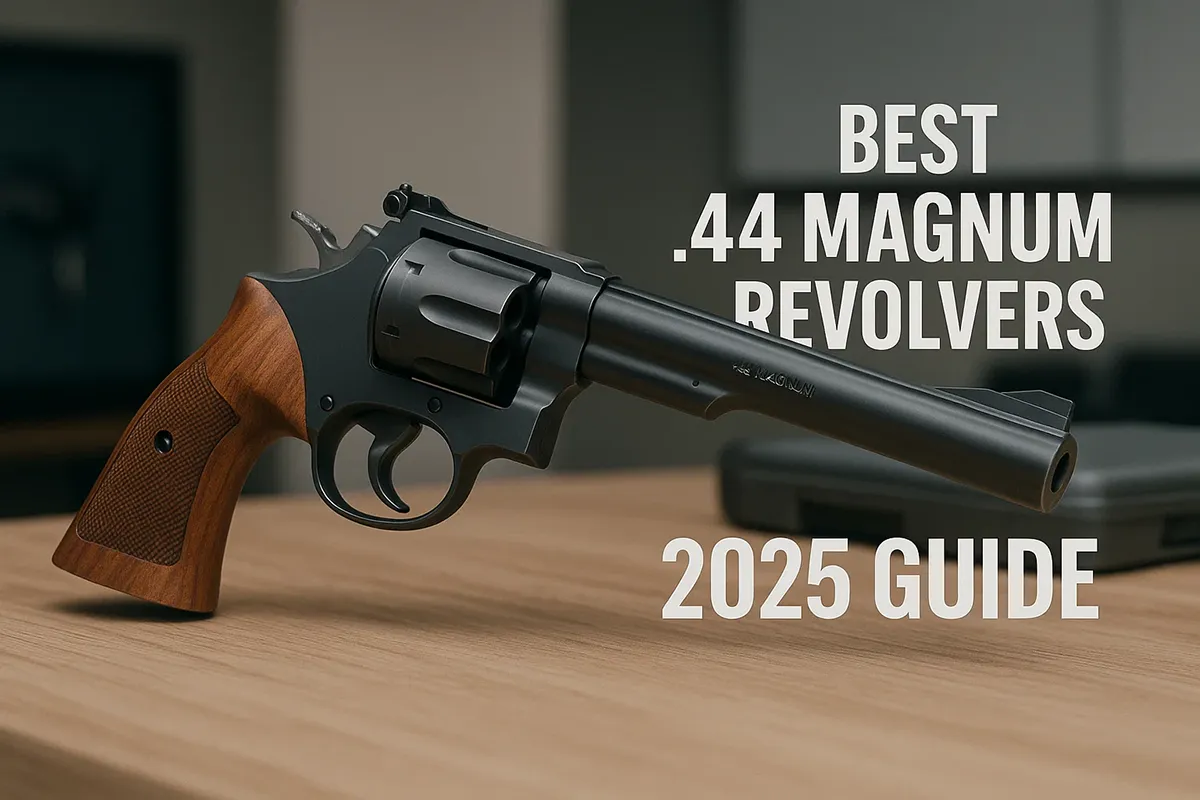
The best .44 Magnum revolvers balance strength, shootability, and practical features for hunting, backcountry defense, and serious range work. This 2025 guide explains what matters, compares standout models by role, and links you to our revolvers category and top brands so you can zero in fast.
As of November 25, 2025, the .44 Magnum remains a go-to for handgun hunters and outdoors-focused shooters who value deep penetration, reliable expansion with modern bullets, and the simple durability of a big-bore wheelgun. Below, we break down trends, key specs, and practical comparisons to help you choose the right fit. (One quip, promise: pick good grips—your wrists will write you a thank-you note.)
The Trend
The .44 Magnum’s appeal in 2025 is steady rather than flashy. Hunters appreciate broad ammo availability from mild “.44 Special-level” training loads to full-house hunting rounds, while hikers and guides value big-bore authority in bear country. Revolver makers continue refining recoil management with cushioned or finger-groove grips, ported barrels on select models, and longer sight radii for better field accuracy. Stainless finishes remain popular for weather resistance. The upshot: if you’re choosing a single revolver to cover whitetail, hogs, and backcountry carry, a thoughtfully set-up .44 Mag is still hard to beat.
Spec Highlights & Standouts for the Best .44 Magnum Revolvers
- Frame & strength: Full-size stainless-steel frames handle hot hunting loads and thousands of rounds. Check cylinder lockup and manufacturer guidance on steady use of high-pressure ammo—robust designs stay in time longer.
- Barrel length options: 4–5 inches carry better; 6–7.5 inches give you more velocity, less blast per ft-lb, and a longer sight radius for the field. Optics-ready topstraps (integral cuts or screw-on rails) are increasingly common on hunting-focused variants.
- Weight vs. recoil: Heavier guns tame recoil and muzzle rise, improving follow-up shots on hogs. Lighter L-frame or medium-frame options carry beautifully but ask more of your technique and grip selection.
- Single-action vs. double-action: Single-action (SA) hunting revolvers offer crisp triggers and long barrels; double-action (DA) models add fast second-strike capability and simpler close-range operation under stress.
- Sights & optics: High-visibility irons (black rear/orange front) remain standard. Many hunting trims ship drilled & tapped for scope rings or micro red-dot plates—huge help at dawn and dusk.
- Ammunition flexibility: Practice with .44 Special or “mid-range” .44 Mag loads; hunt with bonded or monometal 240–300 grain bullets tuned for your barrel length. The platform thrives on smart load pairing.
Comparisons
Big-frame DA workhorses (general-purpose & hunting): Look for stainless, 6–7.5-inch barrels, and grips that actually fit your hand. This format best balances velocity, controllability, and sight radius. Brands like Smith & Wesson and Ruger anchor this class with long-running, proven lines and wide aftermarket support.
Medium-/L-frame carry-hunting hybrids: Some .44 Magnums trim weight with shorter barrels and leaner frames. They carry easier under a jacket or chest rig but magnify recoil and muzzle rise. These are excellent for backcountry defense with heavy hard-cast loads, but they’re the most sensitive to grip choice and stance. Consider swapping to tacky rubber grips for cold or wet environments.
Single-action hunting revolvers: SA .44s with 5.5–7.5-inch barrels offer crisp triggers and often handle heavy hunting loads very well. They’re slower to reload but shine from shooting sticks or a supported field position where deliberate accuracy matters.
Ported & optics-ready “hunting trims”: Factory porting and red-dot provisions shift weight and gas to mitigate flip and speed sight acquisition. If you’re primarily a handgun hunter or shoot from a tripod, these variants make practical sense and can extend your ethical range.
Use Cases
Whitetail, hogs, and black bear: For most North American game, a 240–270 grain controlled-expansion load from a 6-inch barrel offers reliable penetration with manageable recoil. Zero at 50 yards with irons or a dot; confirm drop at 75–100 yards if your hunting area allows longer shots.
Backcountry defense: Choose a DA revolver with a 4–5-inch barrel for quicker presentation and holster friendliness. Favor hard-cast or monometal flat-nose loads that track straight through bone. Invest in a secure chest rig that doesn’t fight your pack straps.
Range training & fundamentals: Start with .44 Special or “mid-range” .44 Mag to refine grip pressure, locked wrists, and smooth trigger press. Progress to your hunting or defense load only after you can run clean strings without flinch tells. A timer and simple recoil-drill progression pay off quickly.
Model Archetypes Worth a Look
- Stainless DA, 6–6.5-inch barrel: The classic do-most-things hunting revolver. Good balance, broad holster options, easy to mount optics with factory drill-and-tap or accessory rails.
- Medium-frame DA, 4–4.25-inch barrel: Packable, lighter, and quick into action—ideal for hikers who want real .44 Mag punch without a huge holster footprint.
- SA long-barrel (7–7.5 inches): Purpose-built for deliberate field shots and load experimentation. A favorite among tinkerers who handload for specific game and ranges.
- Ported, optics-ready “hunter” trims: Recoil and muzzle flip are notably softer. If you shoot a lot from braced positions, this is a smart upgrade path.
Best Practices for Setup
- Grips: Fit trumps looks. Try contour and circumference that keep your support-hand thumb from crowding the cylinder gap. Sticky rubber or textured G10 helps in cold/wet weather.
- Sights/optics: For irons, a black rear with an orange or fiber-optic front speeds alignment on dark hide. If your revolver is D&T, a micro red dot with a 3–6 MOA dot is excellent out to 75–100 yards.
- Holsters: Chest rigs distribute weight and keep the gun accessible with a pack on. Strong-side belt holsters work for still hunting; look for designs that protect the front sight.
- Maintenance: Big-bore blast drives residue under the topstrap and around the forcing cone. Keep a nylon brush and dental pick in your range kit; a clean crown and front sight face matter for precision.
What to Watch Next
Expect continued growth in optics-ready .44 Magnum trims and incremental refinements to grips and porting. If you’re brand-loyal, watch the product pages for Smith & Wesson, Ruger, and Taurus—they tend to refresh finishes, barrel options, and optic footprints ahead of hunting seasons. Also keep an eye on ammunition makers rolling out modern monometal and bonded bullets tuned for handgun velocities; the right load can noticeably flatten trajectories and tighten groups from field positions.
Browse related models on Revolvers at GunGenius.