
Best .357 Magnum Revolvers (2025 Guide)
November 20, 2025
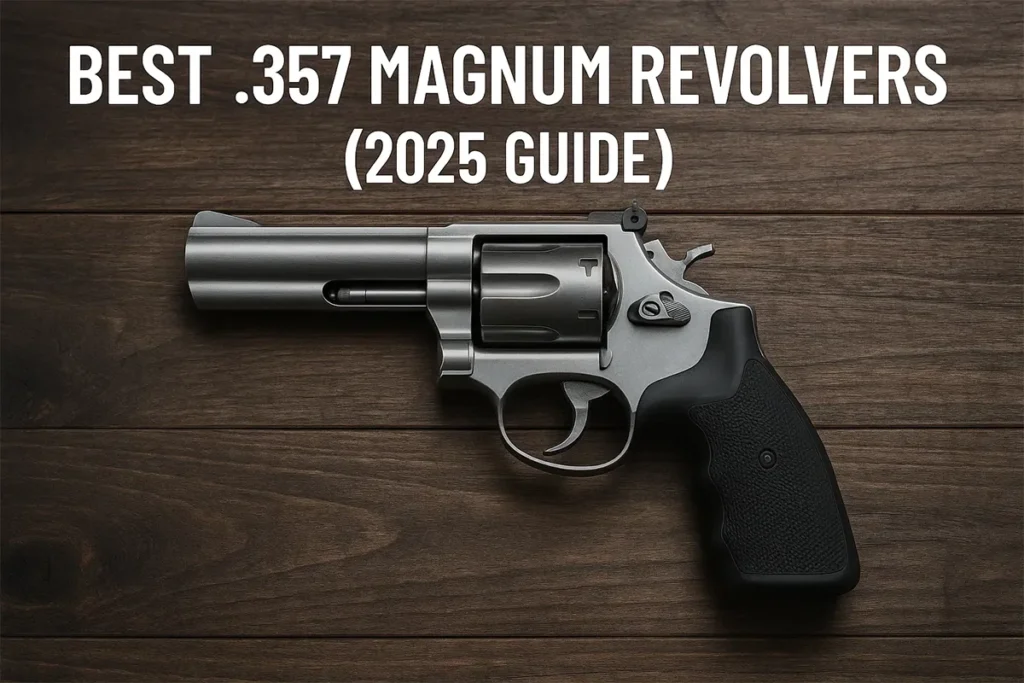
Looking for the best .357 Magnum revolvers for defense, the range, or the deer woods? This 2025 guide explains what matters, compares standout models, and links you to our revolver category and top brands so you can zero in fast.
As of November 19, 2025, .357 Magnum remains the most versatile revolver chambering in the U.S. — mild with .38 Special, serious with .357 Mag. In the first 100 words we’ll say it plainly: the best .357 Magnum revolvers balance shootability, durability, and support for modern sights/optics while still fitting real carry or field roles. Below we break down the trend, highlight specs that truly affect performance, and compare well-known options from Smith & Wesson, Ruger, Colt, Kimber, and Taurus.
The Trend
Two forces are steering buyers in 2025. First, users want one gun that can do many jobs: inexpensive practice with .38 Special, controllable defense with mid-weight .357 loads, and practical hunting or trail use with heavier bullets. Second, revolver makers keep adding modern features — better triggers, improved corrosion resistance, and optics-friendly top straps — without abandoning the reliability wheelguns are known for. If you’re browsing widely, start at our Revolvers category to survey the field.
Spec Highlights & Standouts for the Best .357 Magnum Revolvers
- Barrel length & weight: 2–3” barrels favor concealed carry and fast handling; 4” is the do-everything length; 6–8” maximizes velocity and sight radius for hunting or steel.
- Capacity: Traditional six-shots rule, but 7- and 8-shot cylinders give you more tries without adding much bulk — nice for competition or home defense.
- Frame & materials: Stainless steel = durability and softer recoil feel; scandium/light alloys = easier carry with more snap; monolithic frames and robust lockwork matter for a steady diet of magnums.
- Sights & optics: Drift-adjustable rears and high-visibility fronts are minimums; drilled-and-tapped top straps or optics-ready trims expand your options.
- Trigger quality: Smooth double-action pull makes the gun easier to shoot well at speed; crisp single-action helps for precise shots or field use.
- Aftermarket & support: Holsters, grips, springs, and sight options turn a good revolver into your revolver.
Comparison Table (Representative Trims)
| Model | Platform | Action | Caliber | Barrel / Weight | Capacity | Overall Length | MSRP / Street |
|---|---|---|---|---|---|---|---|
| Smith & Wesson 686 Plus (4″) | Handgun | DA/SA | .357 Mag / .38 Spl | 4″ / ~38–40 oz | 7 | ~9.6″ | Upper-mid / varies |
| Ruger GP100 (4.2″) | Handgun | DA/SA | .357 Mag / .38 Spl | 4.2″ / ~40–45 oz | 6 (7 on select) | ~9.5″ | Mid / varies |
| Colt King Cobra (3″ Target) | Handgun | DA/SA | .357 Mag / .38 Spl | 3″ / ~28–32 oz | 6 | ~8.0″ | Mid-high / varies |
| Kimber K6s (3″) | Handgun | DA (internal hammer) | .357 Mag / .38 Spl | 3″ / ~23–25 oz | 6 | ~7.6″ | Mid-high / varies |
| Taurus 66 (4″) | Handgun | DA/SA | .357 Mag / .38 Spl | 4″ / ~38–40 oz | 7 | ~10.5″ | Value / varies |
Notes: Specs vary by exact SKU and trim (finishes, grips, sight packages). Use the table to rough-in fit and purpose, then jump to brand pages for deeper dives: Smith & Wesson, Ruger, Colt, Kimber, Taurus.
Comparisons
686 Plus vs. GP100: The 686+ adds a seventh round and a famously smooth DA pull. The GP100 counters with a tank-like frame and easy parts support. If you prefer a buttery trigger out of the box, the S&W wins; if you want “built like a brick” simplicity, the Ruger shines.
King Cobra vs. K6s (3”): Both split the difference between concealment and shootability. Colt gives you classic lines, a full underlug, and crisp SA/DA. Kimber’s K6s is trimmer with an internal hammer and a very good DAO pull — ideal for carry with snag-free draw.
Taurus 66 vs. the field: If value drives your choice, the 66 brings 7-shot capacity and practical features at an approachable price point. Expect a bit more variability in triggers and finishes gun-to-gun compared with premium lines; many owners tune springs and swap grips to taste.
How to Choose the Best .357 Magnum Revolvers
- Role first: If daily carry is priority one, look to 2–3” barrels, rounded grips, and snag-free sights. For home defense + range work, 4” guns are the sweet spot. Hunters and silhouette shooters should start at 6”.
- Recoil reality: Steel frames absorb magnum recoil better. If you want lightweight carry, consider .38 +P practice and .357 mid-weights for defense. Grips make a huge difference — don’t be shy about swapping.
- Sight picture: A high-visibility front (fiber-optic or bright insert) and a clean, square notch rear pay off more than you think. Adjustable rears help you zero to your chosen load.
- Capacity vs. size: Seven and eight shooters are great, but cylinder diameter and holster fit may change. Check your carry method and speedloader compatibility.
- Maintenance & support: Revolvers are robust but appreciate clean chambers and a drop of oil on the crane and ejector. Choose brands with strong parts/holster ecosystems — S&W, Ruger, and Colt are standouts, with Taurus and Kimber growing fast.
What to Watch Next
Expect more optics-ready revolver trims and friendlier top straps for micro-red dots. We’re also seeing incremental trigger improvements and lighter, corrosion-resistant finishes geared toward everyday carry. If you prefer browsing by type, keep an eye on our Revolvers category for the latest models across all five brands above.
Browse more brand families: Smith & Wesson, Ruger, Colt, Kimber, Taurus.
One quick quip: Wheelguns don’t jam — they just politely ask for fresh ammo.