
Beretta APX A1 Ported: Specs, Reliability, and Buyer Checks
September 17, 2026
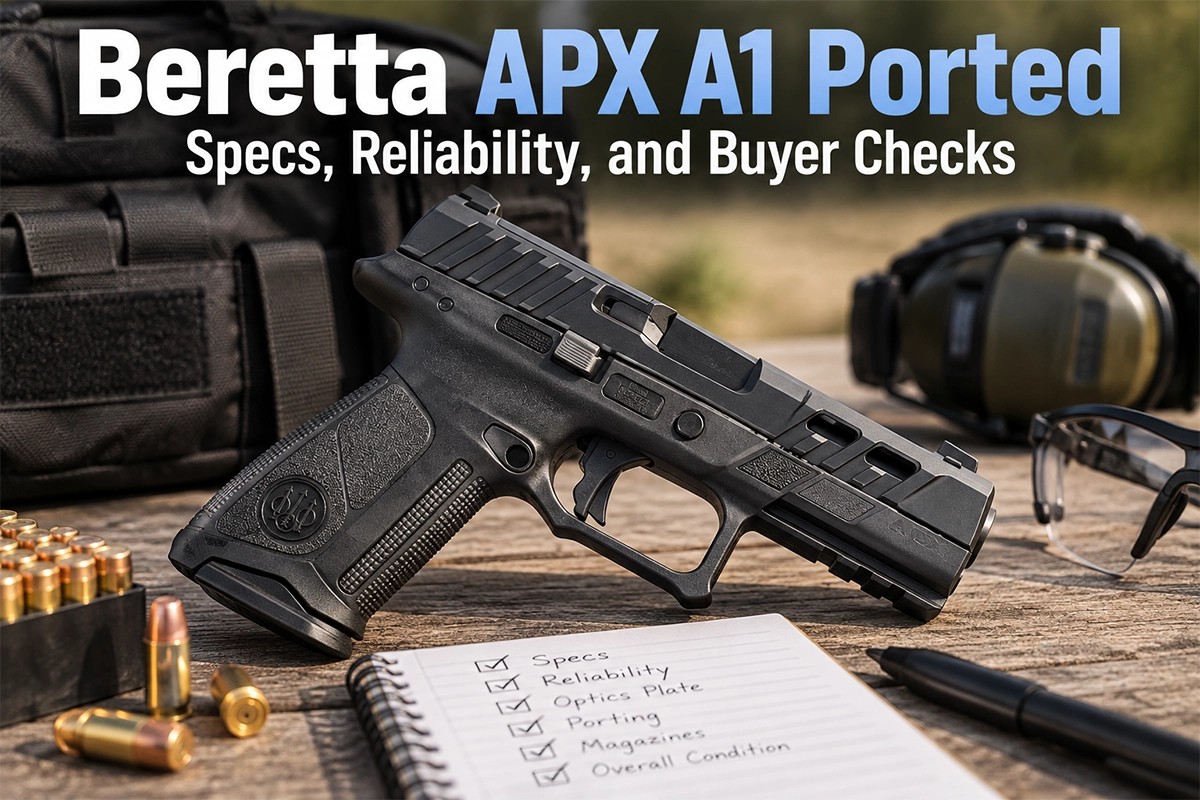
The Beretta APX A1 Ported is a full-size, striker-fired 9mm with factory barrel and slide porting. It targets buyers who want less muzzle rise without adding a threaded compensator. The design offers useful control and ergonomic upgrades, but a recent independent test also raises fair reliability questions. This guide explains the tradeoffs and the checks to make before choosing one.
Short answer: the factory porting can help the sights return faster, but buyers should verify ammunition function, magazine performance, optic-plate fit, holster clearance, and competition rules.
What the Beretta APX A1 Ported changes
Beretta cuts one angled opening near the muzzle of the 4.25-inch barrel. That opening aligns with seven cuts across the top of the slide. Gas vents upward as the bullet approaches the muzzle, which counters some of the upward rotation shooters feel during recoil.
Porting does not remove recoil, and results vary with grip, ammunition, and shooting pace. Its clearest benefit appears during faster strings, when less muzzle rise can shorten the visual trip back to the target. A slow single shot may not reveal much difference.
The model also receives enlarged controls. Its magazine release is reversible, while slide releases appear on both sides. The optic-ready slide uses adapter plates rather than a direct-mount footprint. Beretta retains the serialized internal chassis and interchangeable backstraps found across the APX A1 family.
| Platform | Action | Caliber | Barrel/Weight | Capacity | OAL | MSRP/Street |
|---|---|---|---|---|---|---|
| Full-size APX A1 | Striker-fired semi-auto | 9mm Luger | 4.25 in / 28.5 oz | Varies by SKU: 10, 15, or 21 rounds | 7.5 in | $629 MSRP / varies |
Beretta lists both olive drab green and flat dark earth versions. Magazine packages depend on the SKU and local restrictions. Confirm the exact box contents rather than assuming every listing includes the extended magazine. The official Beretta APX family page is the best starting point for current factory configurations.
Factory porting versus a threaded compensator
A ported barrel keeps the recoil-control system inside the pistol’s normal overall length. There is no separate device to time, tighten, or remove. That can simplify storage and avoid the extra length of a threaded barrel plus compensator.
The tradeoff is flexibility. A threaded APX A1 Tactical can accept compatible muzzle devices or return to a bare muzzle. The Ported model’s cuts are permanent parts of its factory configuration. Shooters should also expect more blast and flash near the front sight, especially with some loads or in dim conditions.
Ports require sensible maintenance because residue collects around the barrel opening and slide cuts. Follow the owner’s manual, unload the pistol completely, and use routine cleaning methods. Avoid placing fingers or other objects over the openings when firing.
What does the reliability evidence show?
New-model reliability claims deserve careful wording. One recent 700-round independent review reported good recoil control but inconsistent function across several practice and defensive loads. The tester recorded feeding, ejection, and last-round lock-back issues. An extended magazine also failed during that sample.
That test is valuable evidence, but it is not a verdict on every pistol. It covered one sample, a limited set of magazines, and six ammunition types. Manufacturing variation, shooter technique, lubrication, magazine condition, and individual load characteristics can change results.
The practical response is to test the exact configuration you plan to rely on. Start with a clean, properly lubricated pistol and factory magazines. Track each malfunction by magazine and ammunition lot. If trouble follows one magazine, mark it and remove it from serious use until the cause is resolved.
A simple APX A1 Ported function check
- Read the manual and inspect the unloaded pistol, magazines, and ammunition.
- Confirm normal function with several factory magazines and quality practice ammunition.
- Test the exact defensive or competition load you intend to use.
- Record failures to feed, eject, fire, or lock open, including the magazine involved.
- Stop if you see damaged parts, abnormal primers, or repeated malfunctions, then contact a qualified armorer or Beretta.
A buyer should not assume that one bullet weight will solve every issue. The published test found mixed results even among broad weight categories. Performance with your chosen load matters more than a rule of thumb from a forum.
Optic plates, sights, and holster fit
The slide is optics-ready, but mounting plates are separate components. Identify the optic footprint first, then confirm the matching Beretta plate, correct screws, and installation torque. A plate that seems too tight or poorly aligned should be checked before force is applied.
Iron sights pair an orange high-visibility front with a black serrated U-notch rear. Their visibility through an optic depends on the plate and sight height. Buyers planning a red dot should evaluate the full stack rather than treating “optics-ready” as a promise that every optic mounts directly.
Holster fit needs equal attention. The full-size frame, slide cuts, optic, and enlarged controls all affect compatibility. In particular, verify that the holster does not press the prominent magazine release. Test retention and a safe draw with an unloaded pistol before live-fire use.
Will it fit your competition division?
Factory porting may move the pistol out of divisions that require a non-ported barrel. Rule sets differ, and they change over time. Check the current rulebook and ask the match director before buying this model for a specific division.
This point matters because the large controls and optic cut look competition-friendly. Those features do not guarantee division eligibility. A non-ported APX A1 may be the simpler research choice when a rules-compliant production or carry-optics setup is the main goal.
Compare the complete setup cost
The $629 suggested price is only the opening number. Add the correct optic plate, a compatible red dot, a model-specific holster, spare magazines, and enough ammunition for a meaningful function check. Those items can change the value comparison more than a small difference in pistol price.
Compare equivalent packages rather than bare pistols. A lower-priced standard APX A1 plus an optic may cost less, while a Tactical model plus a quality compensator may cost more and extend farther beyond the slide. The Ported model packages recoil control neatly, but it does not eliminate accessory expenses.
Availability also matters. A good local price has limited value if the needed plate, holster, or compliant magazine is difficult to source. Build a short parts list before buying and confirm that every component matches the exact full-size APX A1 configuration.
Who should research the Beretta APX A1 Ported?
The strongest fit is a range-focused buyer who wants a factory-integrated recoil-control feature at a midmarket price. Existing APX users may value familiar grip geometry, controls, and the modular chassis. Left-handed shooters also gain useful ambidextrous handling features.
A cautious buyer will compare it with a standard or Tactical APX A1 before deciding. The standard model avoids the porting tradeoffs. The Tactical model offers a threaded barrel and greater muzzle-device flexibility, although added devices bring their own fit and reliability questions.
Browse GunGenius semi-auto pistol research to compare similar full-size 9mm options. The Beretta brand catalog helps place this model beside the company’s other handgun families.
Pre-purchase research checklist
- Confirm the exact color, magazine capacities, and included magazines by SKU.
- Price the correct optic plate, compatible screws, sights, and holster as a complete setup.
- Plan a function test with every magazine and the intended ammunition.
- Compare blast, flash, cleaning, and permanent porting against a standard barrel.
- Verify current competition eligibility if match use matters.
- Inspect used examples for altered springs, modified ports, or non-factory parts.
The Beretta APX A1 Ported offers real design advantages, not just decorative slide cuts. Its value depends on the buyer’s priorities and on the performance of the individual pistol. Treat the factory porting as one part of a complete system, then verify ammunition, magazines, optic mounting, and holster fit before relying on it.