
Beretta A400 L Field: Buyer Fit and Shotgun Checks
July 1, 2026
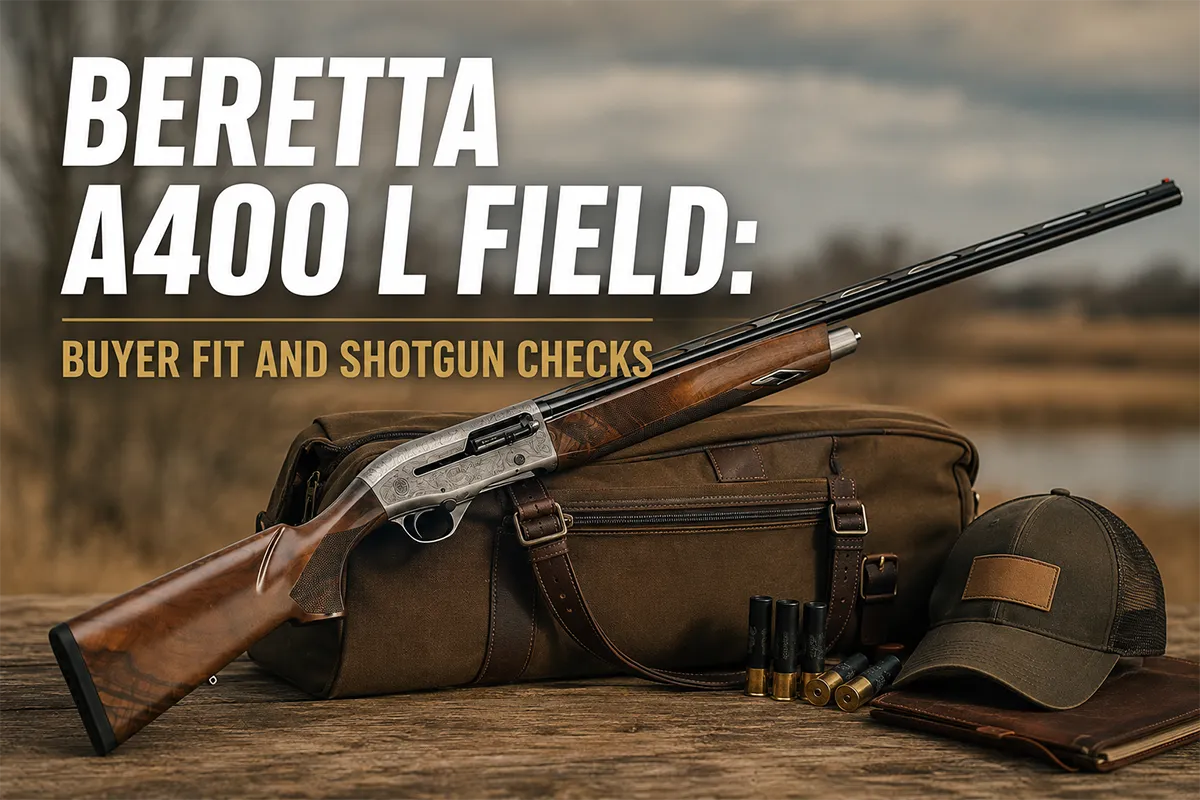
The Beretta A400 L Field is aimed at shooters who want one premium semi-auto shotgun for upland hunting, casual clays, and high-volume field practice. It is not the cheapest way into the A400 family, and that is the point. This model is about polished handling, upgraded controls, a walnut-stock look, and the soft cycling feel that keeps the A400 line in the conversation.
If you are comparing semi-auto shotguns, the real question is fit. A fast gas system matters less if the stock does not point naturally. Fancy engraving also matters less if the gun feels too lively for sporting clays or too heavy for a long walk. Use this guide to decide whether the A400 L Field belongs on your short list.
What is the Beretta A400 L Field?
The Beretta A400 L Field is a refined version of Beretta‘s A400 semi-automatic shotgun platform. It keeps the gas-operated A400 core, then adds a nickel-plated engraved receiver, Grade 2.5+ walnut, enlarged checkering, an ambidextrous palm swell, and larger operating controls. The design target is clear: a field gun with sporting-clays manners, not a plain utility repeater.
Beretta describes the broader A400 semi-automatic family around the B-Link gas system, a rotating bolt, simple takedown, and Steelium barrel technology. For buyers, that means the A400 L Field should be researched as part of a proven family, while still being judged on its own stock dimensions, barrel options, balance, and price at the dealer counter.
Beretta A400 L Field fit questions
Fit starts with the mount. Close your eyes, mount the shotgun, then open them. Your eye should land naturally down the rib without lifting your head or driving your cheek down hard. Repeat the mount from a low-ready field position and from a clays station stance. A gun that feels elegant on the rack can still miss your shoulder pocket under speed.
The ambidextrous palm swell is worth checking in person. Some shooters like the extra hand fill because it gives the trigger hand a clear index point. Others prefer slimmer field stocks, especially with gloves or smaller hands. Pay attention to reach to trigger, wrist angle, and whether the grip lets you run the safety and bolt controls without shifting your firing hand.
| Buyer question | Why it matters | What to check |
|---|---|---|
| Will it be mostly field or clays? | Field carry and target volume reward different balance. | Mount it with hunting clothing and clay-vest pockets. |
| Does the stock align your eye? | Point of impact follows eye position on a shotgun. | Check rib view, cheek pressure, and head lift. |
| Are the controls easy to reach? | Larger controls should help under gloves and speed. | Test bolt handle, bolt release, loading port, and safety. |
| Can you maintain it easily? | Gas guns need routine cleaning to stay consistent. | Ask how the gun strips and which parts need attention. |
Features that matter in the field
The headline feature is the B-Link gas operation. Beretta promotes fast cycling and reduced recoil in the A400 family. In practical terms, that matters when a second shot comes quickly, when a clay pair is close together, or when a long practice day starts to expose small fit problems. Gas operation will not replace practice, but it can reduce fatigue compared with sharper-recoiling designs.
Steelium Plus barrel technology is another item to verify. The goal is consistent patterns and smoother recoil behavior, especially with modern hunting and target loads. Pattern testing still matters because every shotgun, choke, and shell combination behaves a little differently. Before committing to a field load, pattern the gun at realistic distances and record which choke gives even coverage.
The enlarged loading port, oversized bolt handle, and extended bolt release are practical upgrades. They help during cold-weather loading, fast station changes, and basic administrative handling. Those parts should feel positive, not just bigger. Look for clean movement, no sharp edges where your thumb enters the loading port, and a bolt release you can hit without changing grip.
A400 L Field versus other Beretta shotguns
The A400 L Field sits in a middle lane between a dedicated waterfowl workhorse, a pure clays semi-auto, and a traditional over-under. If you mostly hunt rough country, a lighter field model may carry better. When your schedule is mostly sporting clays, a heavier target-focused gun can feel steadier. For mixed use, the A400 L Field makes sense because it blends fast cycling, refined furniture, and field-friendly controls.
Compared with value-focused semi-autos, this Beretta asks buyers to care about finish, long-term parts support, and A400 handling. Compared with an over-under, it offers softer gas-gun recoil and a third shell where legal and appropriate. The over-under still wins on mechanical simplicity and easy chamber visibility. Choose based on how you actually shoot, not on which action type sounds more traditional.
Specs and listing details to verify
Final listings can vary by SKU, market, and dealer inventory. Treat the spec sheet as a checklist, not a promise. Confirm gauge, chamber, barrel length, choke set, stock dimensions, included accessories, and warranty details before you compare prices. Ask whether the shotgun ships with shims or stock-adjustment hardware, because small fit changes can matter more than a small discount.
| Area | Known direction | Buyer check |
|---|---|---|
| Action | A400 gas-operated semi-auto | Confirm cycling with the loads you plan to use. |
| Barrel tech | Steelium Plus | Pattern your chosen hunting and clay loads. |
| Stock | Grade 2.5+ walnut with palm swell | Check length of pull, cast, drop, and hand fit. |
| Controls | DLC-coated bolt assembly and enlarged controls | Run loading and unloading drills at the counter. |
| Use case | Upland hunting and clay targets | Balance carry comfort against target stability. |
Research checklist before you buy
- Handle the gun with the clothing you normally wear for hunting or clays.
- Check that your eye sits centered on the rib with a normal cheek weld.
- Dry-cycle the bolt, bolt release, safety, and loading port with safe counter handling.
- Confirm the exact SKU, barrel length, choke set, and stock-adjustment parts.
- Compare total cost with other A400 models and at least one over-under option.
- Plan a patterning session before choosing a hunting or target load.
Used listings deserve the same discipline. Inspect the receiver finish, stock edges, rib, choke threads, bolt face, and gas-system condition. Ask for clear photos if you are researching online. A clean A400 can be a long-term shotgun, but finish wear, missing chokes, or a stock that does not fit can erase the value of a cheaper listing.
Who should shortlist the Beretta A400 L Field?
The Beretta A400 L Field fits the shooter who wants a polished semi-auto for upland birds, preserve hunts, five-stand, and sporting clays practice. It is especially interesting if you already like A400 recoil behavior but want a more refined look than a hard-use synthetic model. It is less compelling if your priority is the lowest entry price or a dedicated competition gun with more weight up front.
Bottom line: research the Beretta A400 L Field as a premium crossover shotgun. Its appeal comes from the A400 action, softer shooting feel, upgraded controls, and classic walnut presentation. The buying decision should still come down to fit, balance, pattern results, and whether the price makes sense next to the other Beretta shotguns on your list.