
Auto-Ordnance TAO50-18: Buyer Fit and Barrel Tradeoffs
September 4, 2026
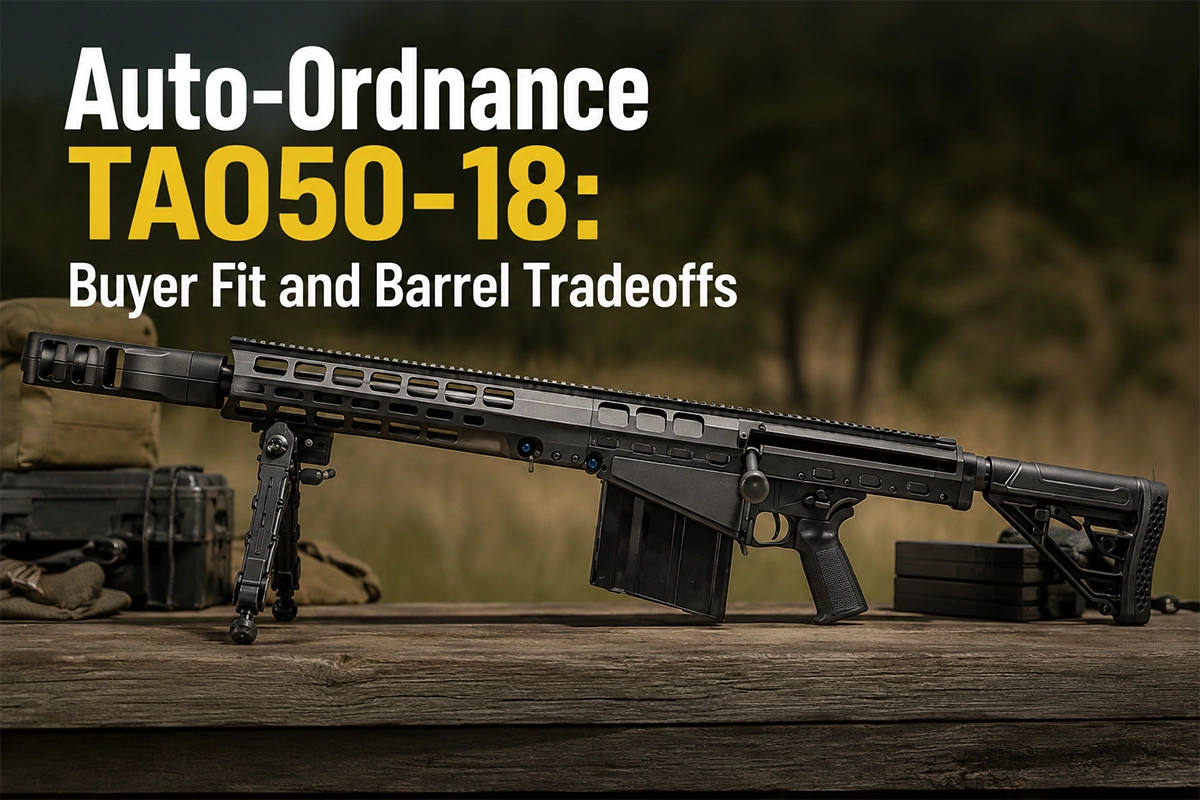
The Auto-Ordnance TAO50-18 compresses a large .50 BMG bolt-action platform into a rifle with an 18-inch barrel and 43.5-inch overall length. It is easier to transport than the full-length TAO50, but it is not a lightweight field rifle. The announced unloaded weight is still 23 pounds. Buyers should compare range rules, ammunition cost, blast, optics, transport, and confirmed pricing before treating the shorter configuration as the practical choice.
That distinction matters because “compact” is relative here. This rifle is more manageable than a 61-inch TAO50, yet it remains a specialized platform. The short barrel changes handling and storage more clearly than it changes the basic ownership commitment.
Auto-Ordnance TAO50-18 specifications at a glance
| Platform | Action | Caliber | Barrel/Weight | Capacity | OAL | MSRP/Street |
|---|---|---|---|---|---|---|
| TAO50-18 | Bolt action | .50 BMG | 18 in. / 23 lb. | 10-round magazine | 43.5 in. | Not announced |
Auto-Ordnance lists a precision-machined steel receiver and an 18-inch barrel with a 1:15 twist. A proprietary high-efficiency muzzle brake sits at the front. The rifle uses a full-length top Picatinny rail, an M-LOK handguard, and an adjustable Adaptive Tactical stock. It ships with a bipod, one Barrett M107A1-pattern 10-round magazine, and a soft case.
These are launch specifications, not independent test results. Auto-Ordnance had not published an MSRP in the material reviewed for this article. Confirm the exact SKU, included equipment, and current price with the seller. The manufacturer announcement is also the best place to watch for updated details.
What the 18-inch barrel changes
The obvious gain is a much shorter package. Auto-Ordnance lists the standard 29-inch TAO50 at about 61 inches overall. The TAO50-18 cuts 17.5 inches from that figure. It can fit more vehicles and storage cases without the awkward reach of the original configuration. Moving it from a case to a supported firing position should also be simpler.
Weight falls less dramatically. The shorter rifle is listed at 23 pounds, compared with roughly 25.5 pounds for a standard model with a Magpul PRS stock. Once a suitable optic, mount, loaded magazine, and other equipment are added, the complete setup will be heavier. A sturdy bench and support system remain central to the experience.
A shorter barrel also gives propellant gases less time to work before the bullet exits. Exact velocity loss depends on the load, temperature, chamber, and individual barrel. Buyers should not rely on a generic feet-per-second estimate. Published chronograph testing with the chosen ammunition is more useful than assumptions based only on barrel length.
Blast and recoil still need serious planning
The tuned brake is intended to manage recoil, but a brake redirects gas and sound. An 18-inch .50 BMG can create an intense blast around the firing line. Ask the range about caliber limits, brake rules, target restrictions, and required distances before arriving. Quality eye protection and hearing protection are essential. Many shooters use both plugs and muffs when range policy permits.
People beside the rifle also need consideration. A spacious outdoor firing point is a better research match than a crowded bench line. Follow the manual, keep everyone clear of the muzzle and brake, and use only ammunition that the firearm maker and range allow.
How the TAO50-18 compares with the full-length model
- Storage: The 43.5-inch rifle is plainly easier to case and transport.
- Weight: The reduction is useful, but 23 pounds remains substantial.
- Velocity: Expect load-specific differences; wait for credible chronograph data.
- Accessories: Both layouts provide a long optics rail and supported-fire focus.
- Case: Launch information says the TAO50-18 includes a soft case, while full-length versions have been sold with hard cases.
- Price: Do not assume the shorter barrel means a lower retail price.
The best choice depends on where the rifle will actually be used. A buyer with limited vehicle space may value the short model immediately. Someone focused on maximum velocity may prefer the longer barrel. Neither version makes sense without access to a safe range that accepts .50 BMG and enough distance to use the platform responsibly.
Optic, mount, and support questions
The integrated Picatinny rail provides flexibility, but recoil tolerance should guide optic selection. Confirm that the scope, rings, and any rail accessories are rated for the platform. The optic also needs enough elevation adjustment for the intended distance. A qualified retailer or optic manufacturer can help verify compatibility in writing.
Plan eye relief and stock position before settling on ring location. The adjustable stock can help fit different shooters, although the final position must keep the eye safely behind the optic. Tightening values should come from the component makers. Guessing at torque can damage parts or allow movement.
The included bipod covers the front support point. Buyers should still budget for a stable rear support and a bench that can carry the system. Browse GunGenius bolt-action rifles to compare the broader category, then review the Auto-Ordnance brand page for other cataloged models.
Ownership costs beyond the rifle
The purchase price is only one line in the budget. Suitable ammunition costs far more per round than common centerfire rifle cartridges. Shipping rules and local supply can affect availability. Add an appropriate optic, rings, maintenance supplies, protection, targets, range fees, and a transport solution if the included case does not meet your needs.
Storage deserves equal attention. The shorter overall length helps, but the rifle is heavy and valuable. Verify that a safe or cabinet can support its size and weight. Check federal, state, and local rules before purchase or transport. Laws and range policies change, so current official guidance matters more than an old forum post.
Auto-Ordnance TAO50-18 buyer checklist
- Confirm the listing says TAO50-18 and shows the 18-inch barrel.
- Verify the current price, finish, stock, magazine, bipod, and case contents.
- Ask whether the range permits .50 BMG and muzzle brakes.
- Estimate total setup weight with the optic, mount, support, and ammunition.
- Check optic and ring ratings with their manufacturers.
- Compare expected performance using credible testing for the exact ammunition.
- Review storage, transport, transfer, and local compliance requirements.
- Inspect a used example through a qualified professional before committing.
Who should research it?
The TAO50-18 suits an experienced buyer who already understands large-caliber range logistics and wants a shorter transport footprint. It may also interest a collector who values an unusual configuration. The design is less convincing for anyone seeking a light hunting rifle, a low-cost range setup, or a casual first step into long-range shooting.
What to inspect before accepting one
For a new rifle, compare the box label and firearm markings with the invoice before completing the transfer. Check the manual and included-parts list. Ask the dealer to explain the maker’s inspection process if the finish, controls, magazine, stock, rail, or brake appears different from the advertised configuration. Do not manipulate or load the rifle where store rules forbid it.
A used example deserves a professional inspection. Confirm its service history when records exist, and ask whether parts differ from the original specification. The bore, chamber, bolt, locking surfaces, muzzle device, rail, stock, and magazine should receive attention from a qualified gunsmith. This review is especially important on a high-pressure cartridge platform. A low price does not offset uncertain condition, missing parts, or an unsuitable place to use it.
Ultimately, portability is the central benefit, not simplicity. The Auto-Ordnance TAO50-18 removes considerable length while retaining most of the weight, expense, blast, and support needs of a .50 BMG platform. Confirmed pricing and independent velocity testing will sharpen the comparison. Until then, the most sensible approach is to judge the rifle by fit, facilities, and total ownership cost.